
Every mechanical watch Grand Seiko sells is tested before it goes into its case against a standard the company sets and administers itself. It is called the Grand Seiko Standard, and it exists because the Swiss would not let anyone else play their game. In the 1960s, the Swiss bureaus that awarded chronometer titles would only certify watches tested in Switzerland, so Seiko built its own certification and made it stricter than the Swiss one. The figures below are Grand Seiko’s published figures, verified against the company’s own pages where possible.
The Grand Seiko Standard
The history, in Grand Seiko’s own telling, runs like this. For the first six years after the brand’s creation in 1960, each watch was tested in-house to the highest international chronometer standard of the day. In 1966 the company set a new, higher standard of its own, and every Grand Seiko mechanical watch since has been tested against it. When the 9S caliber family launched in 1998, the bar moved again, producing the current version of the standard.
The current test works like this. Each uncased 9S movement is assessed over 17 days, in six positions meant to reflect real-life use, at three temperatures: 8, 23 and 38 degrees Celsius. The published mean daily rate is +5 to -3 seconds per day. That is tighter than the Swiss COSC benchmark of -4 to +6 seconds per day that most luxury mechanical watches are measured against. Published comparisons of the two programs, using Seiko’s own figures, put the Grand Seiko program slightly ahead on nearly every axis: 17 days of testing against COSC’s 15, six positions against five, a tighter allowance for thermal variation, and a second thermal test between 23 and 38 degrees Celsius (close to body temperature) that COSC does not run at all. In 2023 the standard was refined once more for the 9SC5 Tentagraph chronograph, whose movements get three extra days of testing with the chronograph running continuously.
All of this happens at the Shizukuishi Watch Studio in Iwate, where Grand Seiko’s mechanical movements are built and regulated. The testing is done by the manufacturer, not an independent lab, which is worth keeping in mind when comparing certifications.

A Grand Seiko SBGA011, the model with the textured dial collectors call the Snowflake. Photo: Wikimedia Commons, CC BY-SA 3.0.
The Special Standard
One rung above the standard sits the Grand Seiko Special standard, applied to select limited editions: a mean rate of +4 to -2 seconds per day. Grand Seiko used it on the gold 9S 20th-anniversary edition of 2018 (the SBGH266), while the steel edition of the same trio carried the regular +5 to -3 rating.
The Special name has older roots. Dials marked “Special” appeared on high-grade Grand Seikos in the 1960s, denoting movements adjusted beyond the standard of the day. The most extreme historical expression of the idea was V.F.A., short for Very Fine Adjusted. The first V.F.A. Grand Seikos were introduced in 1969, led by the reference 6185-8000, and they carried an extraordinary promise for a mechanical watch: accuracy within one minute per month, guaranteed for the first two years after purchase, with testing conducted in six positions. The movements were the hi-beat calibers 6185 and 6186 (automatic) and 4580 (manual), assembled and adjusted by specially selected watchmakers. The line was short-lived. Quartz arrived, and the commercial case for heroic mechanical regulation collapsed.
Grand Seiko revived the V.F.A. name for the same 2018 anniversary trio. The platinum SBGH265, limited to 20 pieces, was rated at -1 to +3 seconds per day, with its 9S85 regulated and tested over 34 days, double the standard program. These are brand-published figures for limited editions, not the standard production rating, but they show how far the in-house testing apparatus can be pushed when the company wants to make a point.
Quartz: the 9F standard
Grand Seiko’s quartz standard may be the more impressive of the two. The 9F calibers are rated at plus or minus 10 seconds per year, measured between 5 and 35 degrees Celsius. That yearly tolerance is roughly what a decent mechanical movement manages in a single day. Select models go further: the 9F86 GMT in the anniversary edition SBGN001 was rated at plus or minus 5 seconds per year.
The method is documented in unusual detail for a quartz movement. The 9F is thermo-compensated, meaning the rate variation caused by temperature swings is programmed into the integrated circuit. Grand Seiko grows its own quartz crystals, ages them for three months, selects only the best, and programs each crystal’s individual characteristics into that watch’s IC. The movements are assembled and finished by hand, with an instantaneous date change, a backlash auto-adjustment mechanism for the hands, and a sealed construction that protects the movement during battery changes. As with the mechanical standard, these are brand-published specifications, but they are unusually specific, and independent testing over the years has generally found 9F watches performing inside their ratings.

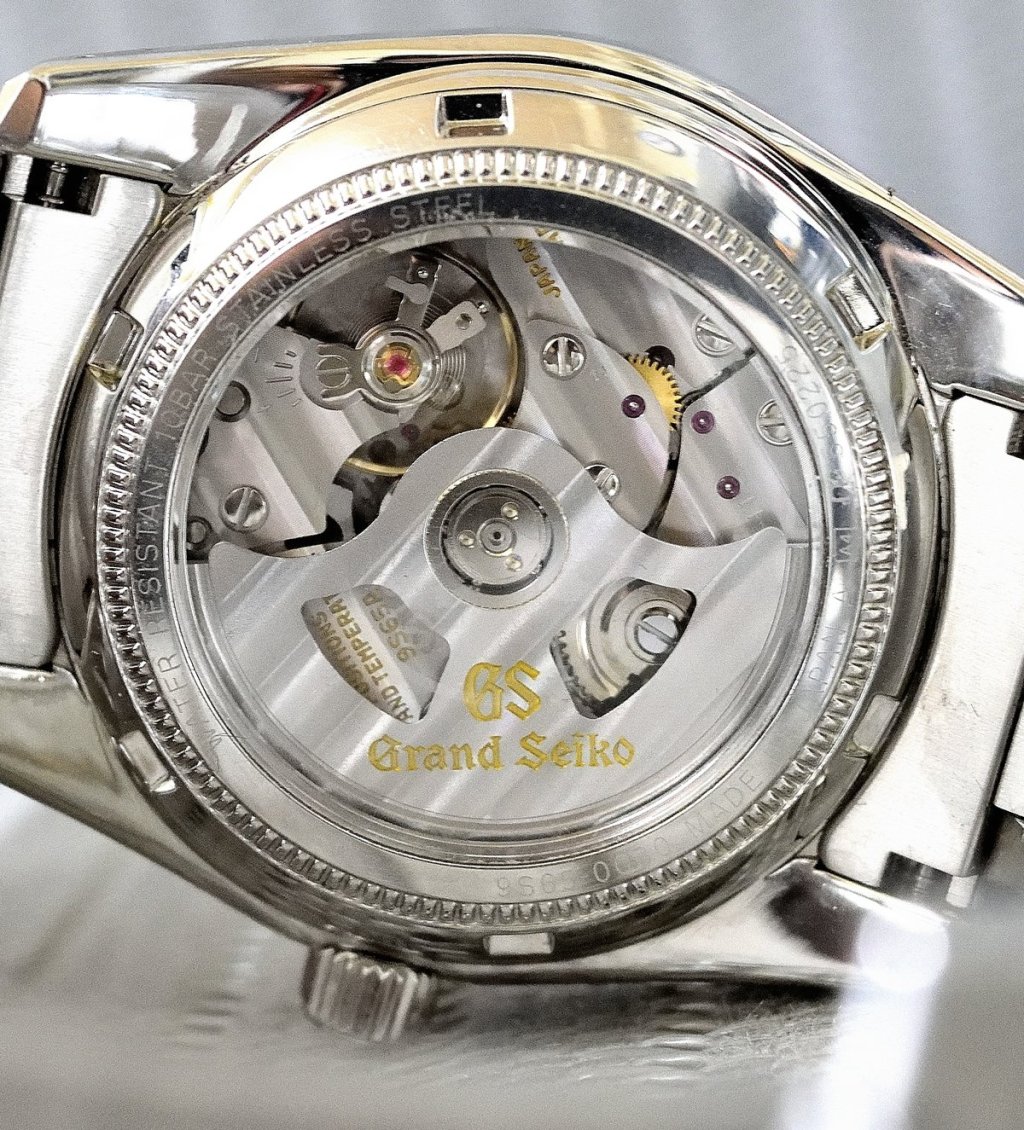
The Caliber 9S65, a 9S mechanical movement of the kind tested to the Grand Seiko Standard. Photo: Wikimedia Commons, CC BY-SA 4.0.
Keep digging
For the Swiss benchmark this standard was built to beat, see COSC. For how chronometer certification works in general, see Chronometer Testing and Accuracy Standards. For the older Japanese system that came before, see JIS / Historical Standards. For the two newer Swiss certifications, see METAS and Geneva Seal. For how a watchmaker actually brings a movement inside these tolerances, see Regulation.
Why it matters
An in-house standard is marketing and engineering at the same time, and the honest way to read it is as both. The engineering is real: 17 days, six positions, three temperatures, and a published rate tighter than COSC is a genuinely demanding program, and the 9F’s plus-or-minus-10-seconds-per-year rating remains one of the strictest quartz specifications sold. The marketing is real too: Grand Seiko administers the test itself, so the standard is only as trustworthy as the company behind it. Seiko’s reputation rests on exactly this kind of claim, so that counts for something, but it is a brand promise rather than an independent certification. When a dial says the watch passed the Grand Seiko Standard, it means the watch passed Grand Seiko’s test. The numbers are public, the method is documented, and that transparency is the point.
Thanks for reading this.

