
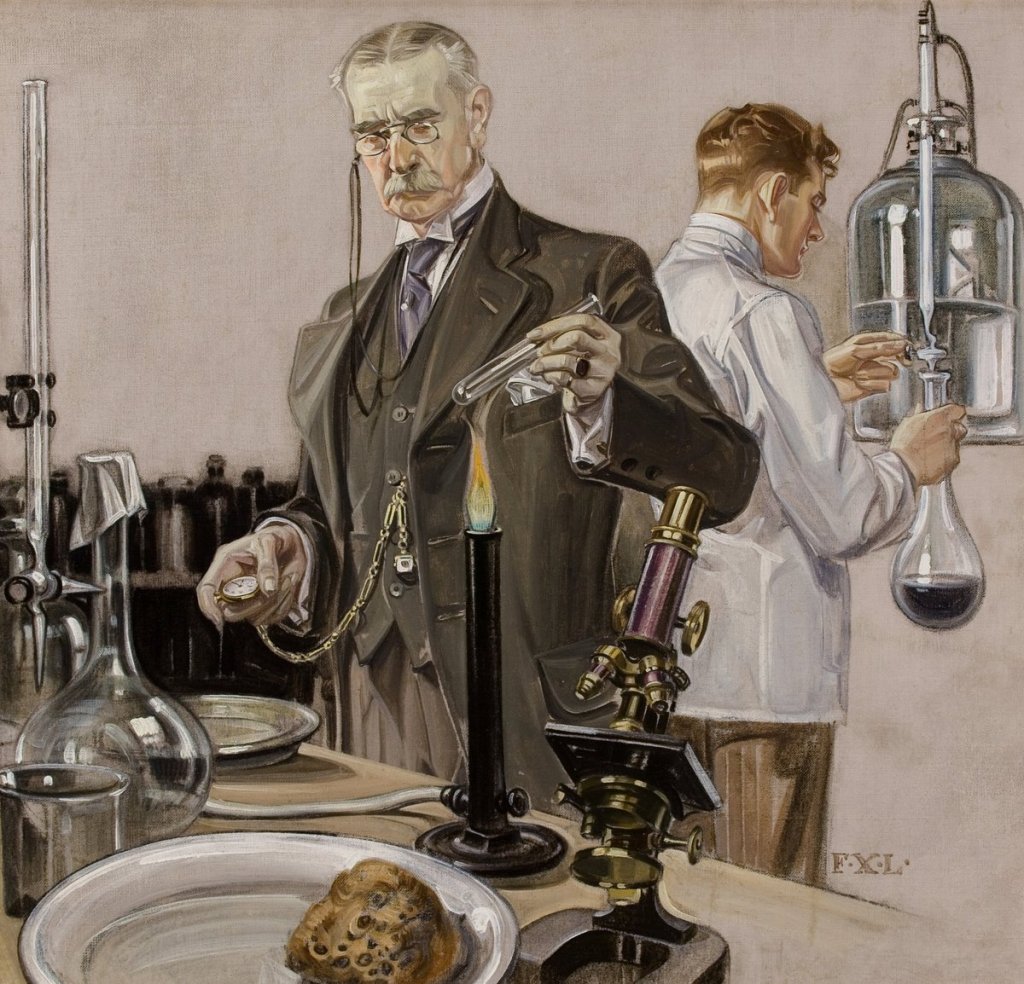
A chronometer is not a type of watch. It is a verdict about a watch: an independent authority tested this timekeeper and found its rate good enough to earn the title. The word comes from the Greek chronos (time) and metron (measure), and the London maker John Arnold introduced “chronometer” as the name for a precision timekeeper (established fact).
The first chronometers were marine instruments, not wristwatches. In the 18th century, navies and merchant fleets needed clocks that kept reliable time at sea so navigators could determine longitude, and makers like John Harrison built large, gimballed timekeepers for the job. The marine chronometer set the template for what the word means: a timekeeper whose rate has been independently verified, not merely claimed.
The observatory era
From the late 19th century into the 1960s, the prestige contests of watchmaking were the observatory trials. Astronomical observatories at Kew in London (later the National Physical Laboratory at Teddington), Geneva, and Neuchâtel ran competitions in which manufacturers submitted movements to be tested for weeks under controlled conditions, and the results were published as rankings. A winning entry earned a bulletin de marche, a “march report,” or a class certificate, and brands built entire reputations on them. Rolex earned a Class A certificate from Kew in 1914 for a wristwatch, a distinction previously reserved for marine chronometers (established fact); surviving National Physical Laboratory records identify the watch as No. 492282, tested June 1 to July 15, 1914, receiving 77.3 marks. Omega’s 47.7 mm calibre, adjusted by Alfred Jaccard, scored 97.8 out of 100 at Kew in 1936, a record the brand says still stands (brand claim). Zenith accumulated more than 2,330 chronometry prizes across the trial years (industry reporting).

Kew Observatory in London, home of some of the most famous chronometer trials in watchmaking history. Photo: Wikimedia Commons, CC BY-SA 4.0.
How the competitions worked
The observatory trials were head-to-head contests, and the entries were ringers. Manufacturers submitted specially prepared movements, hand-adjusted by their best chronometrists, built for the test rather than for wrists. The trials rewarded the best possible performance of a single movement under ideal conditions. This is the crucial difference from every modern certification: the observatories were measuring the ceiling of what a watchmaker could achieve, not the consistency of what it shipped to customers. Girard-Perregaux’s run at Neuchâtel in 1966 and 1967 is the famous late example: the brand’s high-frequency Calibre 32A won the observatory’s Centenary Certificate in 1967, the only time the award was ever given (established fact), and a small run of about 670 wristwatches carrying the calibre was sold to the public (industry reporting).

A marine chronometer, the instrument that gave the word its meaning. The first chronometers kept time for ships, not wrists. Photo: Wikimedia Commons, CC BY-SA 4.0.
What ended them
Quartz. When battery-powered quartz oscillators arrived in the late 1960s, vibrating at 32,768 Hz against a balance wheel’s few hertz, no mechanical movement could stay on the scoreboard. The observatory competitions were wound down in the late 1960s and early 1970s (established fact). In their place, Switzerland consolidated its regional testing laboratories into a single body, the Contrôle Officiel Suisse des Chronomètres, founded in 1973 (established fact). The game changed from competition to certification: instead of crowning one winning movement a year, COSC would test every movement submitted and certify each one that passed. A revived chronometry competition, run by the Watch Museum of Le Locle and based on the ISO 3159 standard, launched in 2009 (established fact), but it remains a niche event. The main line of descent from the observatory trials is COSC.
What “chronometer” means today
In Swiss certification practice, the chronometer designation is tied to the ISO 3159 definition and testing by an accredited laboratory. A Swiss watch may only carry the word if its movement has passed an official certification, in practice COSC testing to the ISO 3159 standard, or an equivalent regime such as METAS Master Chronometer. The modern test differs from the observatory trials in three ways that matter. First, it is pass or fail, not a ranking. Second, it tests production movements, not specially prepared competition pieces. Third, the certificate follows the movement through manufacturing: each COSC movement is tested individually and identified by serial number. Outside Switzerland the term is used more loosely, and some German makers test to the DIN 8319 standard, which resembles COSC but tests the cased watch (industry reporting). The observatory era survives mainly as heritage marketing and as one of the hobby’s favorite pieces of trivia, but the logic it established, that precision claims should be verified by someone other than the seller, is the foundation of every certification on this page.
Keep digging
COSC is the direct descendant of the observatory system and the baseline certification. METAS Master Chronometer tests the finished, cased watch, including magnetic resistance. Geneva Seal certifies finishing and Geneva origin, with a rate test added in 2012. For the 18th-century root of it all, see Marine Chronometers.
Why it matters
The observatory trials are the reason “chronometer” means anything at all. Before Kew, Geneva, and Neuchâtel, accuracy was a claim a maker made about its own work. The trials created the idea that an independent body should check, and that idea is what every modern certificate is selling. Knowing the history also keeps the marketing honest: when a brand invokes its observatory prizes, it is invoking wins by hand-built competition movements, not by the watch on the shelf. The lineage is real, and so is the distance.
Thanks for reading this.

