
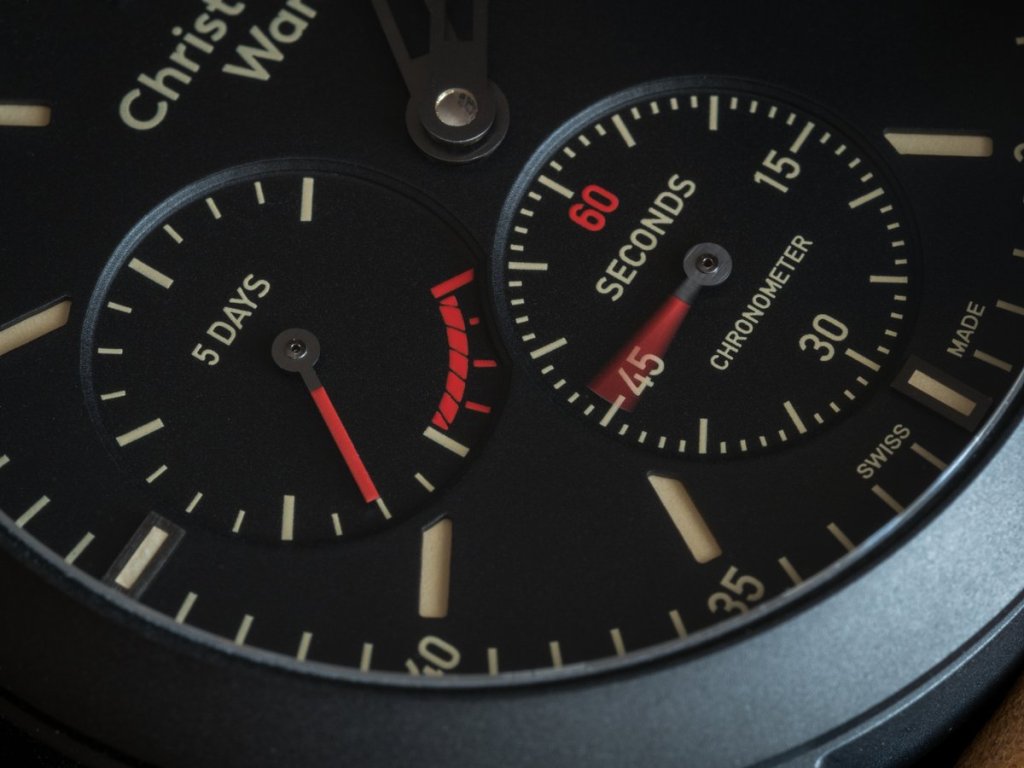
COSC stands for Contrôle Officiel Suisse des Chronomètres, the Official Swiss Chronometer Testing Institute. It is an independent, nonprofit body founded in 1973 by Switzerland’s five watchmaking cantons (Bern, Geneva, Neuchâtel, Solothurn, and Vaud) together with the Federation of the Swiss Watch Industry, consolidating the regional testing laboratories that preceded it (established fact). Its headquarters are in La Chaux-de-Fonds, and it operates three testing laboratories at Biel/Bienne, Saint-Imier, and Le Locle (established fact).
COSC tests uncased movements, not finished watches. A manufacturer submits bare movements, each of which is tested individually over a series of days in multiple positions and at multiple temperatures, against the criteria of the ISO 3159 standard. Movements that pass are issued certificates and identified by an engraved serial number and a COSC certification number (established fact). The scale is industrial: COSC now certifies well over two million movements annually, with recent reported volume at about 2.4 million in 2024, the large majority for mechanical movements (industry reporting). Its biggest clients are Rolex, Omega, and Breitling; Breitling states that its entire production has been COSC-certified since 2000 (brand claim), and the Saint-Imier and Biel laboratories are reported to be devoted almost entirely to Rolex movements (industry reporting).

An Omega Seamaster Professional carrying the Chronometer inscription on its dial, earned through COSC testing of its movement. Photo: Wikimedia Commons, CC BY-SA 3.0.
The mechanical test
Mechanical movements are tested for 15 days in five positions (dial up, dial down, crown up, crown down, crown left) at three temperatures (8, 23, and 38 degrees Celsius), simulating the conditions a movement faces in wear (established fact). Seven criteria are graded, summarized here rather than exhaustively: the average daily rate must fall between -4 and +6 seconds per day; the mean variation in rate must not exceed 2 seconds per day; the greatest variation in rate must not exceed 5 seconds per day; the difference between rates in horizontal and vertical positions must stay within -6/+8 seconds; the largest variation in rate must not exceed 10 seconds per day; the thermal variation must stay within ±0.6 seconds per day; and the rate resumption, the rate measured after the movement is restarted, must stay within ±5 seconds per day (established fact, ISO 3159). The -4/+6 headline figure is the one marketing uses, but a movement has to clear all seven to earn the certificate.
The quartz test
Quartz movements get a separate protocol under ISO 3158, tested across temperatures and humidity levels (established fact). The bar is far tighter, as it should be for quartz, with tolerances an order of magnitude stricter than the mechanical limits (established fact, summarized). COSC does not publish the full current quartz control requirements in the same detail as the mechanical criteria, so this article does not quote the exact day counts and temperature-specific figures: treat any precise numbers from retailer guides as unverified. COSC-certified quartz chronometers are rare, but they exist; Breitling and Longines have both submitted thermo-compensated quartz movements (industry reporting).

A Bucherer World Time watch carrying the chronometer designation. The word on the dial means the movement passed the full COSC protocol. Photo: Wikimedia Commons, CC BY-SA 4.0.
What the certificate proves, and what it does not
A COSC certificate proves that a specific uncased movement kept good time on a test bench. Three limits follow from that sentence. First, the movement is tested before casing, and casing can shift the rate; the case, dial, hands, and crown assembly all change how the finished watch behaves. Second, it is a snapshot of a new movement. It says nothing about magnetism, water resistance, shock, or how the watch performs after years of wear. Third, the certificate follows the movement, not the watch on the wrist; wearing patterns, resting position overnight, and temperature exposure will move the rate around. COSC certification represents only a portion of Swiss watch production, although annual certification volume now exceeds two million movements (industry reporting), so the certificate is a genuine filter, just a narrow one: rate, in a lab, before casing.
In Swiss certification practice, the chronometer designation is tied to the ISO 3159 definition and testing by an accredited laboratory, which is why the certificate matters more than the word on the dial (industry reporting).
Keep digging
Chronometer Testing covers the observatory trials that COSC replaced. METAS Master Chronometer starts where COSC stops, testing the finished, cased watch. Geneva Seal adds finishing and Geneva origin to a rate requirement.
Why it matters
COSC is the baseline against which every other accuracy claim in Swiss watchmaking is measured, and it is worth knowing exactly what the baseline is: the movement, not the watch, over 15 days, against seven criteria, before casing. Read that way, the certificate is solid evidence of one thing and no evidence of several others, and that distinction is the difference between understanding what was bought and repeating what the dial says.
Thanks for reading this.

