
Greubel Forsey is a Swiss watch company founded in La Chaux-de-Fonds in 2004 by Robert Greubel and Stephen Forsey. Both men spent their early careers building complications for other brands, and the company they founded was a way to put their own research into a wristwatch. Its signature is the tourbillon in unfamiliar arrangements, tilted, doubled, quadrupled, and its owners are now the founders themselves, after they bought back the minority stake that Richemont held from 2006.

Robert Greubel (left) and Stephen Forsey. Photo: Wikimedia Commons, CC BY-SA 3.0.
Two watchmakers at a complications workshop
Robert Greubel grew up in Alsace, France, and started in his father’s business, Greubel Horlogerie. He studied complications and worked at IWC on grand complications, and in 1990 he joined Renaud & Papi as a complications prototypist, later becoming managing director and then partner.
Stephen Forsey grew up in St. Albans, in the United Kingdom, and attended classes at the Neuchâtel watchmaking school while working in London. From 1987 to 1992 he specialized in restoring old watches, and in 1988 he became head of the restoration department at Asprey. In 1992 he joined Greubel at Renaud & Papi to work on complications. The two met there.
From suppliers to a brand
During the 1990s they worked on high-complication projects together. By 1999 they shared a view of where mechanical watchmaking could go, and that year they began working together as independent watchmakers. They were doing research on the tourbillon for other companies and wanted to find new uses for it in the wristwatch. In 2001 they founded CompliTime to develop and craft complication movements for prestigious brands.
Greubel Forsey was founded in La Chaux-de-Fonds in 2004, and its first timepiece, the Double Tourbillon 30° Vision, with an inclined double tourbillon, was presented at Baselworld in April that year. It took about five years, from 1999 to 2004, to reach launch, and the first pieces were delivered to clients in the United States and Asia. Output at the start was about 20 to 25 watches a year.
Richemont and the patented parts
The Richemont group acquired a minority stake in 2006. The Tourbillon 24 Secondes debuted in 2007 with a patented part, the Quadruple Tourbillon in 2008, and the Double Balancier 35° in 2013, each with its own patented part. In 2009 Greubel and Forsey met the micro-sculptor Willard Wigan, and the three created the Art Piece 1. The Tourbillon 24 Secondes Vision won the Aiguille d’Or at the Grand Prix d’Horlogerie de Genève in 2015.

The Quadruple Tourbillon à Différentiel: two double tourbillons, four cages, one spherical differential. Photo: Wikimedia Commons, CC BY 3.0.
The founders prioritized research, craftsmanship and hand-finishing, 350 to 500 hours per movement, over volume. They designed the watches to be worn, not just collected, and tested them for shock and temperature extremes in an in-house laboratory. By 2010 the company had about 65 staff and expected to produce roughly 100 to 110 watches a year.
The Hand Made 1
The Hand Made 1 is the brand’s hand-built watch. According to Greubel Forsey, 95 percent of it is hand-made, including the hairspring, with hand-operated tools. The movement, case, leather strap, dial and hands are all made by hand. The exceptions are the sapphire crystals, case gaskets, spring bars, jewels and mainspring. Each watch takes about 6,000 hours of work.
Buying back the stake
Antonio Calce became CEO at the end of 2020. In 2022 the company’s management bought back the 20 percent that Richemont had held since 2006, and Calce said independence would let the brand define its next stages with complete freedom. Michel Nydegger became CEO in August 2024, succeeding Calce.
The brand made fewer than 100 watches a year before the pandemic and around 260 in 2023. An atelier expansion due for completion in 2025 was expected to bring capacity to around 350 watches a year.
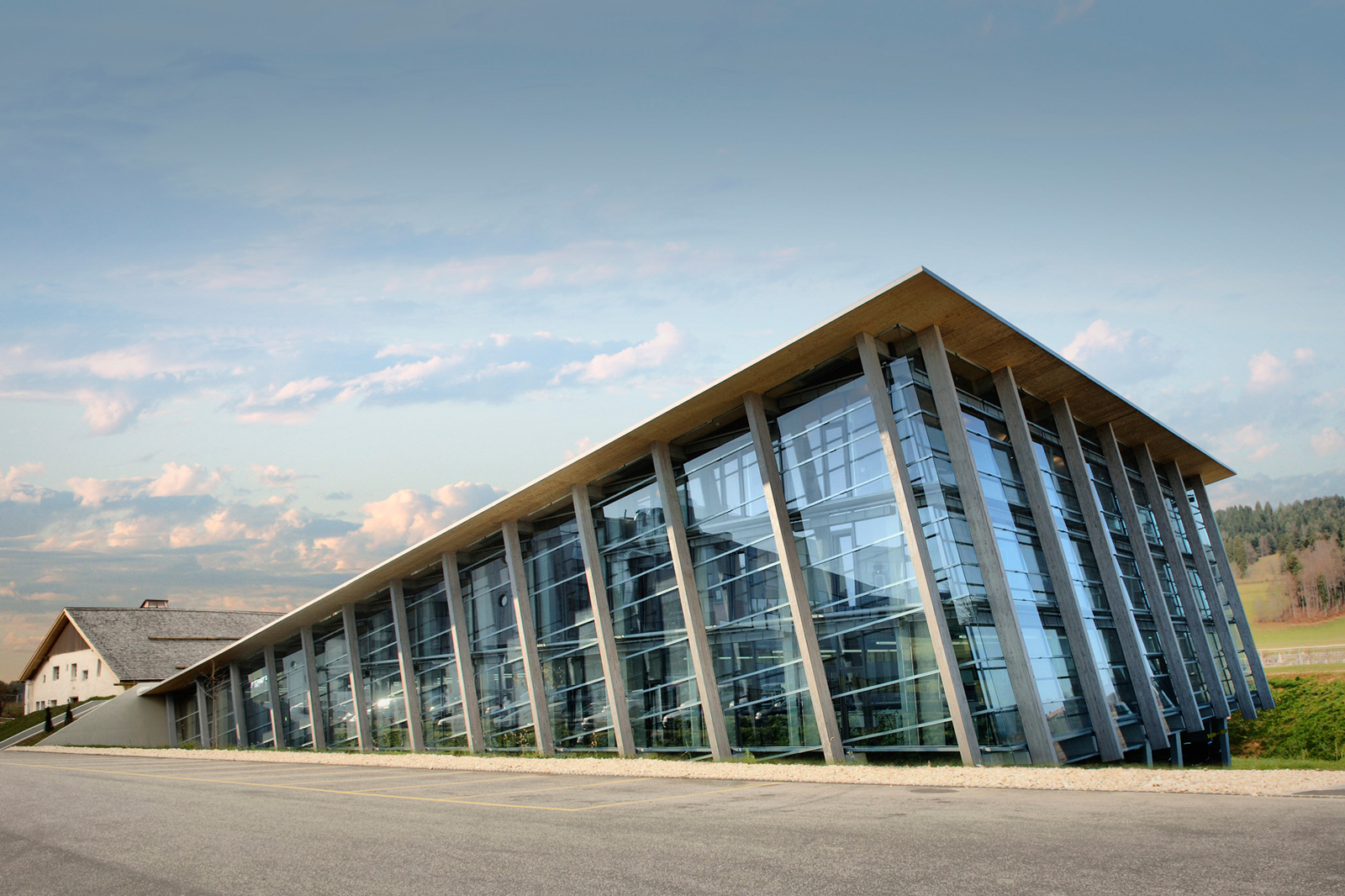
The Greubel Forsey manufacture, built behind a 17th-century farmhouse in La Chaux-de-Fonds. Photo: Wikimedia Commons, CC BY-SA 3.0.
Stephen Forsey stepped down from the board in early 2026. He remains the largest minority shareholder and is no longer involved in design, business or operations. Robert Greubel holds the majority stake, and the two are the only shareholders.
The Nano Foudroyante
The Nano Foudroyante won the Mechanical Exception Watch Prize at the Grand Prix d’Horlogerie de Genève in 2025. The limited edition is 22 pieces, in a 37.9 mm white gold case, the slimmest the brand has made. The movement measures 31 mm across and has fewer than 430 components. A foudroyante seconds hand between 4 and 6 o’clock divides each second into six segments. A 3 Hz balance wheel drives it directly, and a flying tourbillon sits alongside. Each jump of the hand uses 16 nanojoules, compared with 30 microjoules for a traditional foudroyante, a reduction by a factor of 1,800.
Sources
- Greubel Forsey brand page, Worldtempus
- “Stephen Forsey,” LEADERS
- Greubel Forsey Richemont stake buyback, WatchPro
- “Stephen Forsey, co-founder of Greubel Forsey, steps down from company board,” Hodinkee Japan
- “GPHG 2015: Greubel Forsey wins the Aiguille d’Or,” Watchonista
- “Greubel Forsey Nano Foudroyante wins the Mechanical Exception Watch Prize at GPHG 2025,” Tatler Asia
- “Greubel Forsey Hand Made 1: It takes 6,000 hours to produce one timepiece,” Gulf News
Thanks for reading this.
From the Dispatch:


