
A sapphire case is exactly what it sounds like: the entire case machined from blocks of synthetic sapphire, the same aluminum oxide used for the crystal over the dial, just vastly more of it. The result is a watch you can see straight through from every angle. The result is also a price tag that looks like a typo.

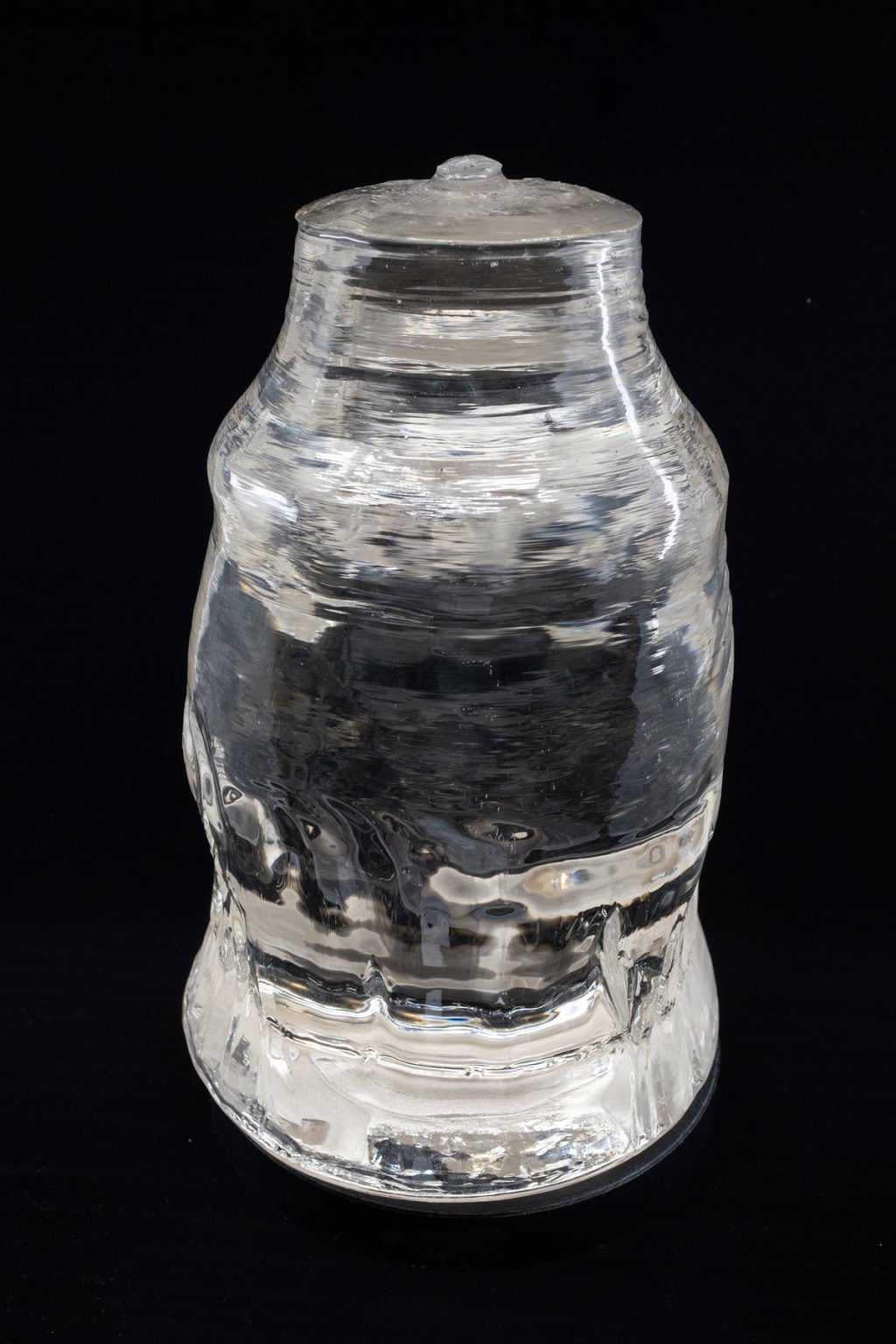
A sapphire crystal, close up. Case makers start from synthetic blocks of the same material. Photo: Wikimedia Commons, CC BY-SA.
Why bother
Two reasons, one practical and one theatrical. The practical one is hardness: sapphire rates around 2,000 on the Vickers scale, harder than any metal used in watches and second only to diamond among common watch materials. A sapphire case barely scratches. The theatrical one is transparency. With the case, bezel, and back all cut from clear sapphire, the movement is visible from the front, the sides, and the back, floating in what looks like solid air. Richard Mille pushed this furthest with the RM 56-01, which also machined the movement’s baseplate and bridges from sapphire, making it arguably the most transparent mechanical watch ever built.
Why it costs supercar money
Sapphire is miserable to machine. The raw material starts as large laboratory-grown crystals, which are cut into blocks, and from there every shaping step has to be done with diamond tooling, slowly. The work is slow, and the failure rate is high: one wrong move and hours of machining become scrap. Hublot’s MP-05 LaFerrari Sapphire, a 20-piece edition from 2016, involved more than 600 hours of work and 3D machining across its seven-piece sapphire case, per Hublot. Richard Mille’s RM 56-02 Tourbillon Sapphire, limited to 10 pieces and priced at about two million dollars, needed roughly 960 hours of machining per case, the equivalent of 40 days of round-the-clock work, plus another 400 hours for the sapphire bridges. Hublot later scaled the idea slightly with the Big Bang Unico Sapphire, a 500-piece run in 2016 that counted as mass production by sapphire standards. Greubel Forsey’s Double Balancier Sapphire put the material on one of independent watchmaking’s most decorated movements, with a price reported around $700,000.

Corundum, the mineral that is called sapphire in gem-quality form. Photo: Wikimedia Commons, CC BY-SA.
The catch
Everything that makes sapphire appealing comes with a penalty. It is brittle, so a drop that would dent steel can be catastrophic for a sapphire case. Every fingerprint shows, and a transparent watch worn daily spends half its life looking smudged. Water resistance is modest, since sealing a multi-piece sapphire case is harder than sealing metal. Servicing is another quiet cost: a sapphire case needs factory gaskets and factory hands, so your local watchmaker is not opening it, and owners generally insure these watches specifically, because a cracked case is not a repair bill, it is a new case at whatever price the brand sets. And the price is not really about telling time. This is halo-product territory: brands build sapphire watches to prove they can, collectors buy them as trophies, and the actual business runs on steel models far below. There is nothing wrong with that, but nobody should pretend a two-million-dollar transparent watch is a rational purchase.
Keep digging
For the sane end of the hardness scale, see Ceramic and Tungsten. For how cases are actually put together, Case Construction.
Why it matters
Sapphire cases are the purest example of watchmaking as spectacle: staggering machining, total transparency, prices that belong in a different industry. They will never be practical, and that was never the point. They exist so the rest of the catalog has something to point at.
Thanks for reading this.

