
What the case actually does
A watch case is the housing that carries the movement and the dial, and it is the part of the watch you touch all day. It keeps dust, water, knocks, and the contents of your pocket away from the movement, and it is also the thing that decide class=”frame-shadow”s how a watch sits on your wrist, how thick it feels under a cuff, and what the neighbors see when you check the time in a grocery line.
The movement gets all the romance. The case does all the work. It is the bodyguard, the frame, and the face the watch shows the world, and most of what separates a thirty dollar watch from a three thousand dollar watch, physically, lives in the case: the machining, the tolerances, the finishing, and whether water gets in.

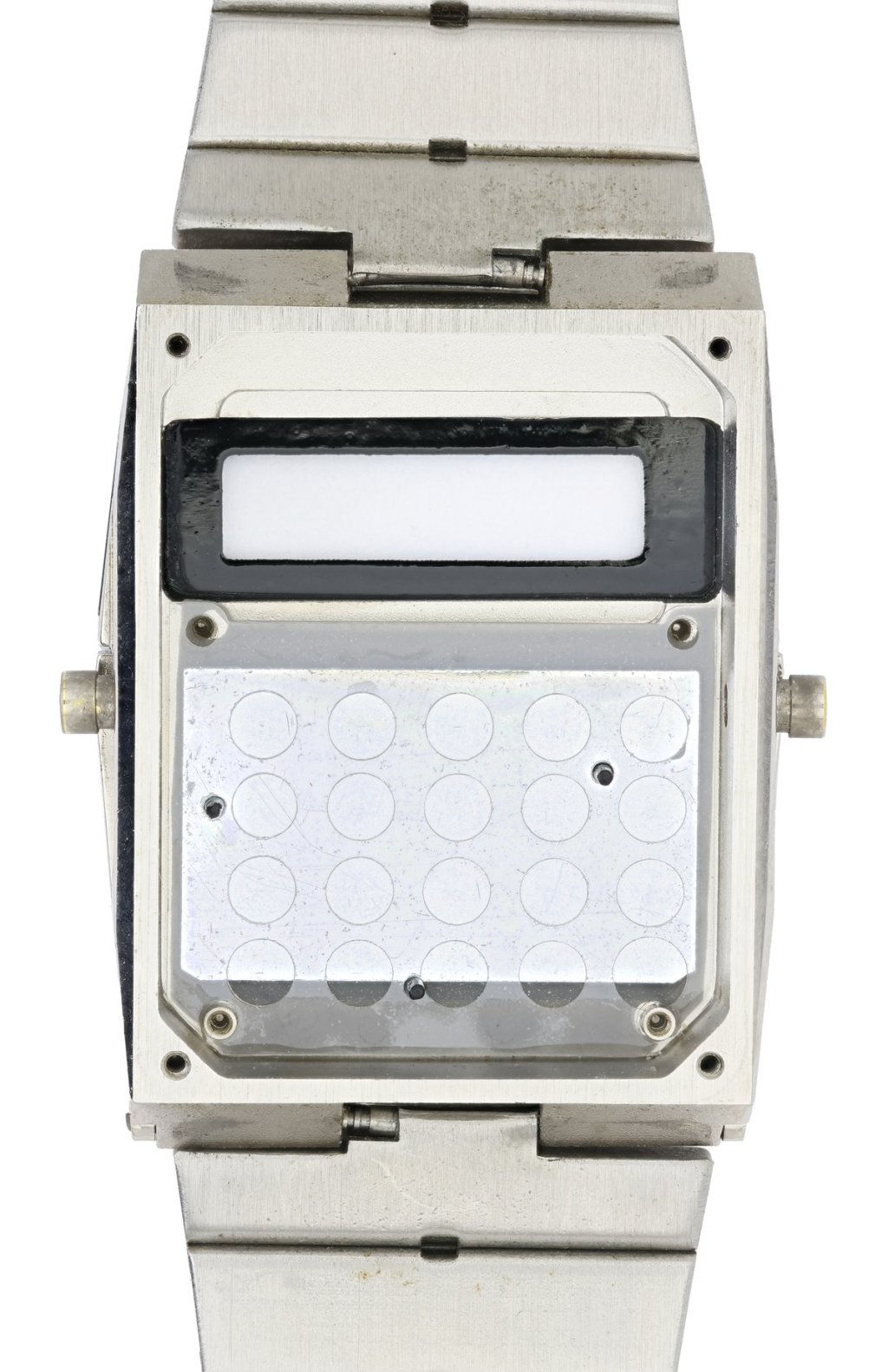
A complete case doing its whole job: protecting everything inside while looking like something. Photo: Wikimedia Commons, CC BY-SA 4.0.
The main parts
Most watch cases are an assembly of a few parts, and the standard modern arrangement is a three piece sandwich. The middle case, also called the case band, is the central ring that the movement drops into. The bezel sits on top and holds the crystal. The caseback closes the bottom. Around that core you get the lugs, which hold the strap, and the crown and its tube, which let you wind and set the watch without opening anything.
The crown deserves a moment because it is a small engineering problem hiding in plain sight. It has to connect the outside of the watch to the inside, which means punching a hole through the case wall and then sealing it, usually with a tiny gasket inside the crown tube and a screw down thread on dive watches. Every time you pull the crown out to set the time, you are briefly defeating the case’s defenses. A good case design makes that defeat as small as possible.
How cases are made
A century ago, cases were stamped, soldered, and hand finished. Today, a quality case may begin as a forged or stamped blank, or be machined directly from solid stock of steel, titanium, or gold. Precision CNC machining is commonly used to establish the final geometry, cutting to tolerances measured in hundredths of a millimeter. The gasket seats, the threads for a screw down back, the recess the crystal presses into, all of it has to be exact, because water is a relentless trespasser. A case that is off by a hairline does not seal.
The marketing part is when a brand describes its case as “sculpted” or “hewn,” which makes it sound like a man with a chisel shaped it by candlelight. It was a machine, a very good machine, run by a skilled operator. There is no shame in that. Machining to that precision is genuinely impressive. It just is not sculpting.

A screw-down caseback carrying the engraved markings that document the watch. Photo: Wikimedia Commons, CC BY-SA 4.0.
Polishing, brushing, and the flanks
The sides of the case, the flanks, are where finishing does its quiet work. A polished flank catches the light and looks dressy. A brushed flank, finished with fine parallel lines, shrugs off small scratches and looks sporty. Most interesting cases mix the two, and the contrast between polished and brushed surfaces is what makes a case’s geometry readable: the polished bevels draw the eye along the lug lines, the brushed flats recede.
This is not decoration for its own sake. Brushing exists because it hides wear, which is why tool watches brush the surfaces that will get bumped. Polishing exists because it is beautiful, and because it photographs well, and because on a dress watch nobody expects the case to survive a parking meter. My read is that a brand’s finishing choices tell you what the watch is actually for, whatever the catalog copy says.
The case as the watch’s face to the world
Collectors talk endlessly about dials, but in daily life you experience the case more than the dial. The case is what you feel when you rest your wrist on a desk. Its weight, its edges, the way the lugs curve or do not curve, these are the things that decide whether a watch is comfortable by three in the afternoon or gets left in the box. A dial can be gorgeous and the watch still unwearable if the case is a badly proportioned lump.
So when you look at a watch, look at the case the way you would look at a house’s foundation instead of its paint color. The dial is the paint. The case is the structure. Everything interesting about how a watch is made, and how long it will last, is sitting right there in the metal.
Why it matters
Understanding case construction changes how you shop. You stop asking only what a watch looks like and start asking how it is put together: is the back screwed down or snapped on, is the crystal pressed or glued, are the lugs part of the case or soldered on. Those answers tell you how water resistant the watch really is, how serviceable it will be in twenty years, and whether the price is paying for machining or for marketing. The case is the least romantic part of a watch and the most honest.
Thanks for reading this.

