
Gold is the oldest watch case metal and the most honest one about what it is selling. A gold watch does not keep better time than a steel one. It is not tougher, lighter, or more practical. It is heavier, softer, more expensive, and unmistakable. Everything about gold in watchmaking follows from three facts: it is rare, it is dense, and people have wanted it for about six thousand years.

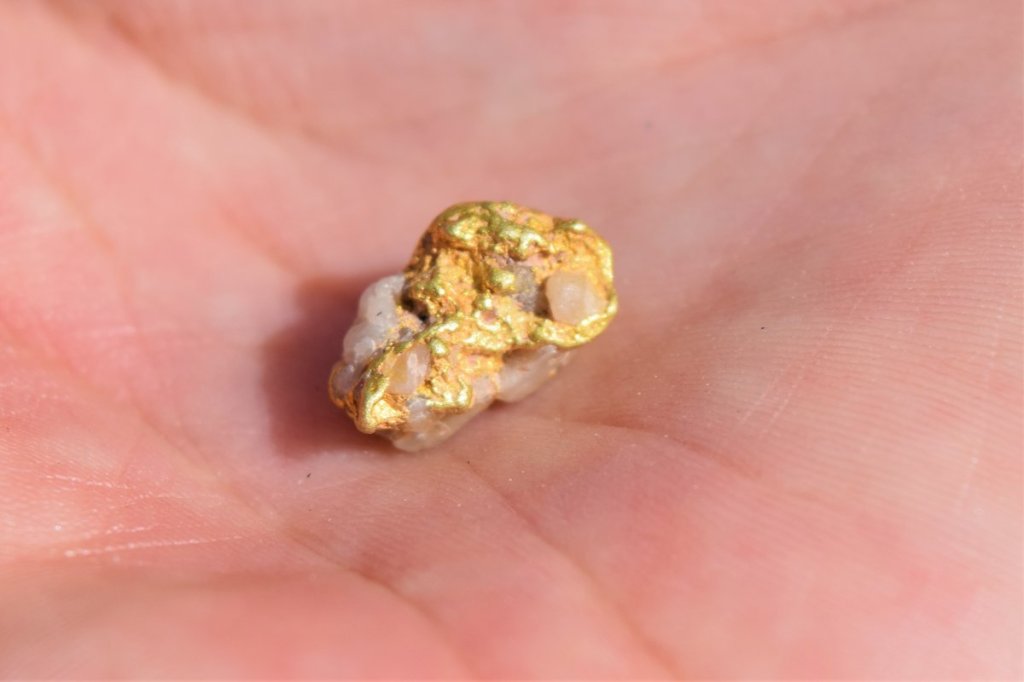
The raw material. Most of a gold watch’s price is the metal in the case and bracelet. Photo: Wikimedia Commons, CC0
What “18k” actually means
Karat is a purity fraction, measured in twenty-fourths. 24 karat is pure gold; 18 karat is 18 parts gold out of 24, or 75 percent, with the remaining quarter made up of other metals. That “750” stamped inside a case back means the same thing: 750 parts per thousand gold. Watches are almost always 18k because pure gold is too soft to be a watch case. It would not hold threads for a case back, would deform around spring bars, and would dent if you looked at it firmly. The alloying metals are what make the case functional. They are also what make the colors, which is covered below.
The weight is the point, and the problem
Gold’s density is 19.3 grams per cubic centimeter, against about 7.9 for steel. In plain language: the same volume of gold weighs nearly two and a half times what steel weighs. A gold watch is HEAVY on the wrist in a way no photograph conveys, and it is the first thing every first-time gold watch owner mentions. Some people love it; the heft reads as substance and value. Others find a full gold bracelet tiring by the end of the day. There is no wrong answer, but it is worth knowing before buying, because it is the single biggest day-to-day difference between a gold watch and its steel twin.
Why it costs what it costs
Most of a gold watch’s price is the metal. A gold case and bracelet contain a serious quantity of gold alloy, and the brand paid commodity prices for it plus refining, casting, and the slower machining that soft gold requires. This is also why gold watches hold a price floor that steel watches do not: melt value. Nobody is suggesting you melt a Patek, but the metal in the case is worth real money on its own, and the market knows it. It is also why servicing costs more. Parts are gold, refinishing has to remove as little metal as possible (you cannot just buff a gold case the way you would steel, because the metal you remove is money), and watchmakers price accordingly.
The colors, mapped
All watch gold starts as 18k. The color comes from the other 25 percent:
Yellow gold is gold alloyed with copper and silver: the classic, the dress-watch metal for most of the twentieth century. See Yellow gold.
Rose gold uses more copper for its pink color, with proprietary versions like Rolex’s Everose (a touch of platinum to stop the color fading) and Omega’s Sedna (palladium for the same job). See Rose gold.
White gold is bleached with palladium or nickel and usually rhodium-plated for extra whiteness. It looks like steel from across the room and costs like gold up close. See White gold.

A gold-tone watch. From across the room, the color is the entire message. Photo: Wikimedia Commons, CC BY-SA 4.0
The tradeoffs
Gold is soft: around 120 to 160 Vickers depending on the alloy, softer than stainless steel, and it dents and scratches more visibly because the metal is less springy. A gold watch shows wear. It needs more careful treatment than a steel sports watch: doorframes, desk edges, and luggage are all hazards. It also draws attention, which is either the point or a drawback depending on the wearer and the room. None of this is a flaw in the metal. It is the price of the look, and buyers should go in with eyes open rather than discovering it on the first scratch.
Keep digging
Each color gets its own article: Yellow gold, Rose gold, White gold. For the beginner’s tour of what a watch is made of, see Watches 101: The outside.
Why it matters
Gold is about looks, weight, and money, in that order. It makes nothing work better, and the sales pitch never claimed otherwise. What it does is mark the watch as an object of value in the oldest way humans have: the heavy, warm, unmistakable metal. Buy it for that, with full knowledge of the softness and the weight, and it delivers exactly what it promises.
Thanks for reading this.

