
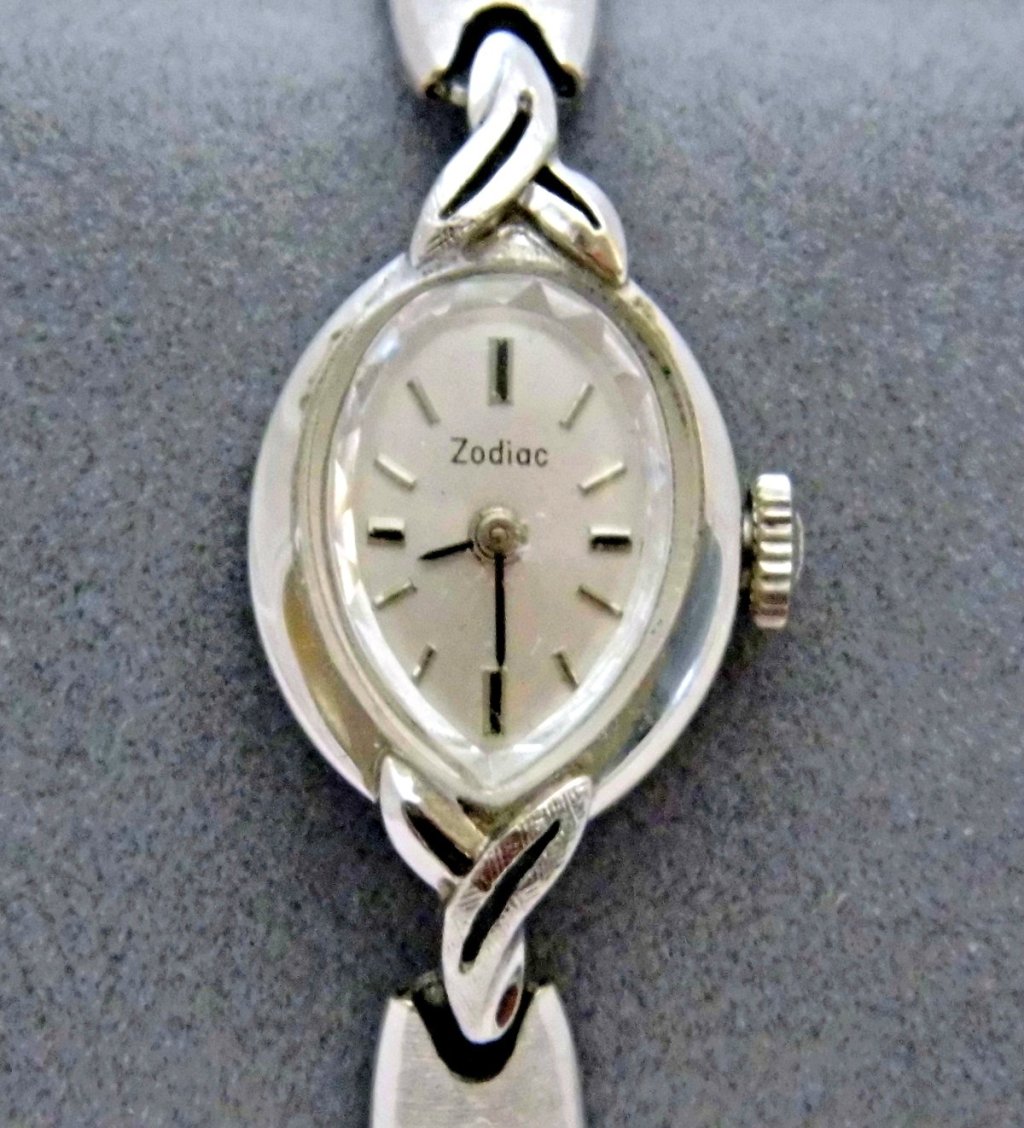
White gold is 18k gold bleached white by alloying it with palladium or nickel instead of copper and silver. Left alone, the result is not really white: it is a warm grayish tone, sometimes described as the color of old nickels. So nearly all white gold jewelry and watches get rhodium-plated, a thin electroplated layer of rhodium (a platinum-group metal) that gives the bright, cold white finish buyers expect. That plating is the whole story of white gold: its look, its maintenance, and its one real drawback.

A 14k white gold dress watch. Note how little the metal announces itself: that restraint is the appeal. Photo: Wikimedia Commons, CC BY-SA 2.0
The plating problem
Rhodium plating is thin, and thin things wear. On a watch, the high points wear first: case edges, lugs, the crown, bracelet links where they rub. Over years of wear the plating thins through and the warmer gray of the underlying alloy starts to show, usually as a slightly yellowish cast on the edges. This is normal, expected, and fixable: a jeweler or watchmaker strips and replates the piece, a routine job. But it is a maintenance cycle that yellow and rose gold do not have, and buyers should know it exists before the first replate, not after. Palladium-alloyed white gold shows a whiter natural color than nickel-alloyed, so it can be worn unplated by owners who like the softer gray tone and want to skip the cycle entirely.
Nickel and skin
The alloying metal matters for more than color. Nickel-alloyed white gold, the traditional and cheaper recipe, can irritate nickel-sensitive skin, and nickel allergy is common enough (and can develop over time) that this is worth taking seriously in something worn daily. The rhodium plating initially sits between skin and nickel, but plating is not a reliable barrier: it wears, and wear exposes the alloy. Palladium-alloyed white gold avoids the issue almost entirely, since palladium is a platinum-group metal with very low allergy incidence. Anyone with known metal sensitivity should ask which alloy is under the plating before buying, and treat “it is rhodium-plated” as no answer at all.
How stealthy is it
White gold’s reputation is as the stealth-wealth metal: from across the room it reads as steel, and only up close, in the warmth of the color and the weight on the wrist, does it declare itself as gold. That is accurate, and it is the reason many buyers choose it: the precious metal without the announcement. The stealth is partly an accident of the plating. A rhodium-plated white gold watch looks like a steel watch because it is wearing a bright white coating over a gray alloy; the discretion is real, but it is maintained, not inherent.
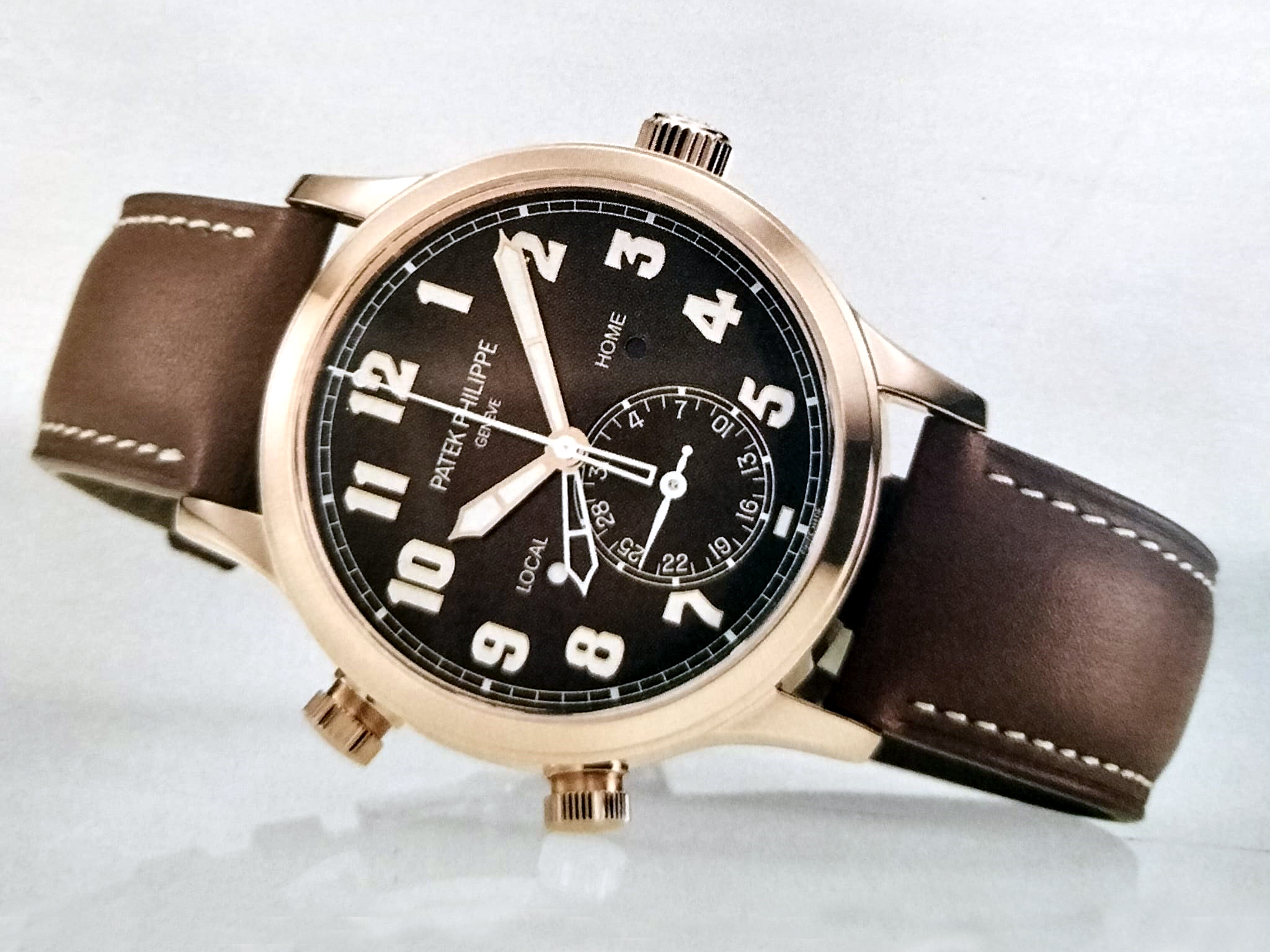
A white-metal Patek Philippe Calatrava. White gold is made to look like this; from across the room you cannot tell it from steel, which is the point. Photo: Wikimedia Commons, CC BY-SA 4.0
White gold vs. platinum
The natural comparison is platinum, the other white precious metal, and it is worth making carefully. Platinum is denser (21.45 grams per cubic centimeter against gold’s 19.3), so a platinum watch is heavier still. It is never plated: the white color goes all the way through, so there is no plating to wear off and no maintenance cycle. And it wears differently: platinum is soft enough that scratches displace the metal rather than removing it, developing a soft patina over time instead of the crisp scratch-and-shine cycle of gold. Platinum costs more, weighs more, and asks nothing of the owner. White gold costs less, looks brighter when freshly plated, and needs replating every few years. Neither is objectively better; they are different answers to the white-metal question.
Keep digging
For the full picture, see Gold, and for the other colors, Yellow gold and Rose gold. For the beginner’s tour of watch exteriors, see Watches 101: The outside.
Why it matters
White gold is the discreet gold: steel’s look with gold’s weight and price, maintained by a plating cycle the buyer should know about going in. Ask about the alloy under the plating, budget for replating every few years, and compare honestly with platinum before deciding. The metal rewards informed buyers and quietly taxes everyone else.
Thanks for reading this.

