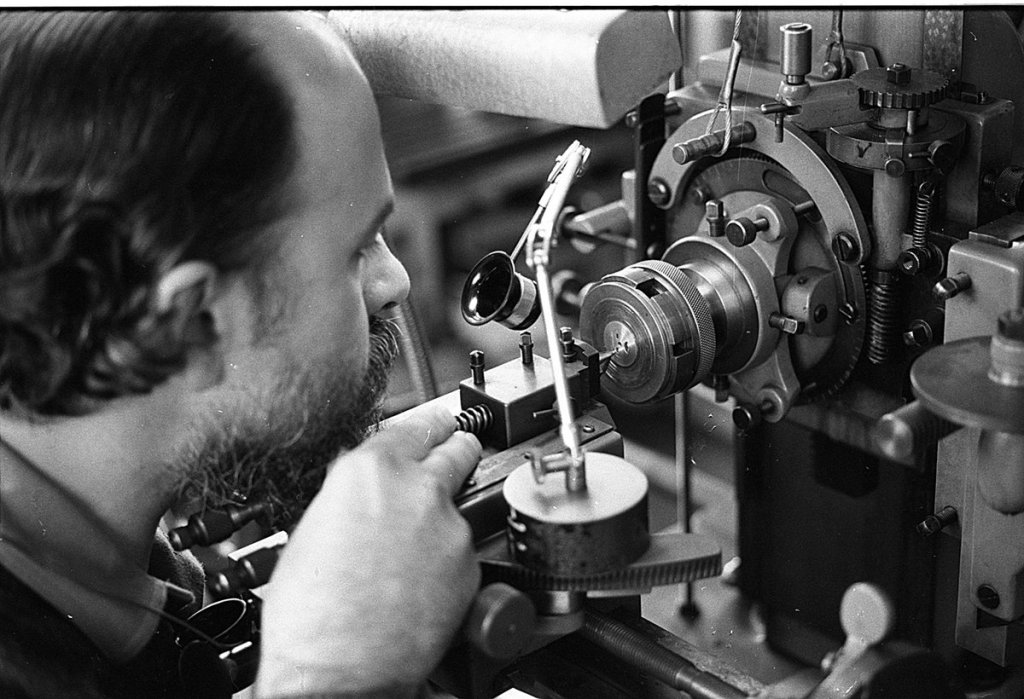
The dial is the face of the watch, the part you actually look at, and making one is a longer job than most collectors guess. A single dial can pass through 40 to 75 separate steps between a blank disc of metal and the finished face.
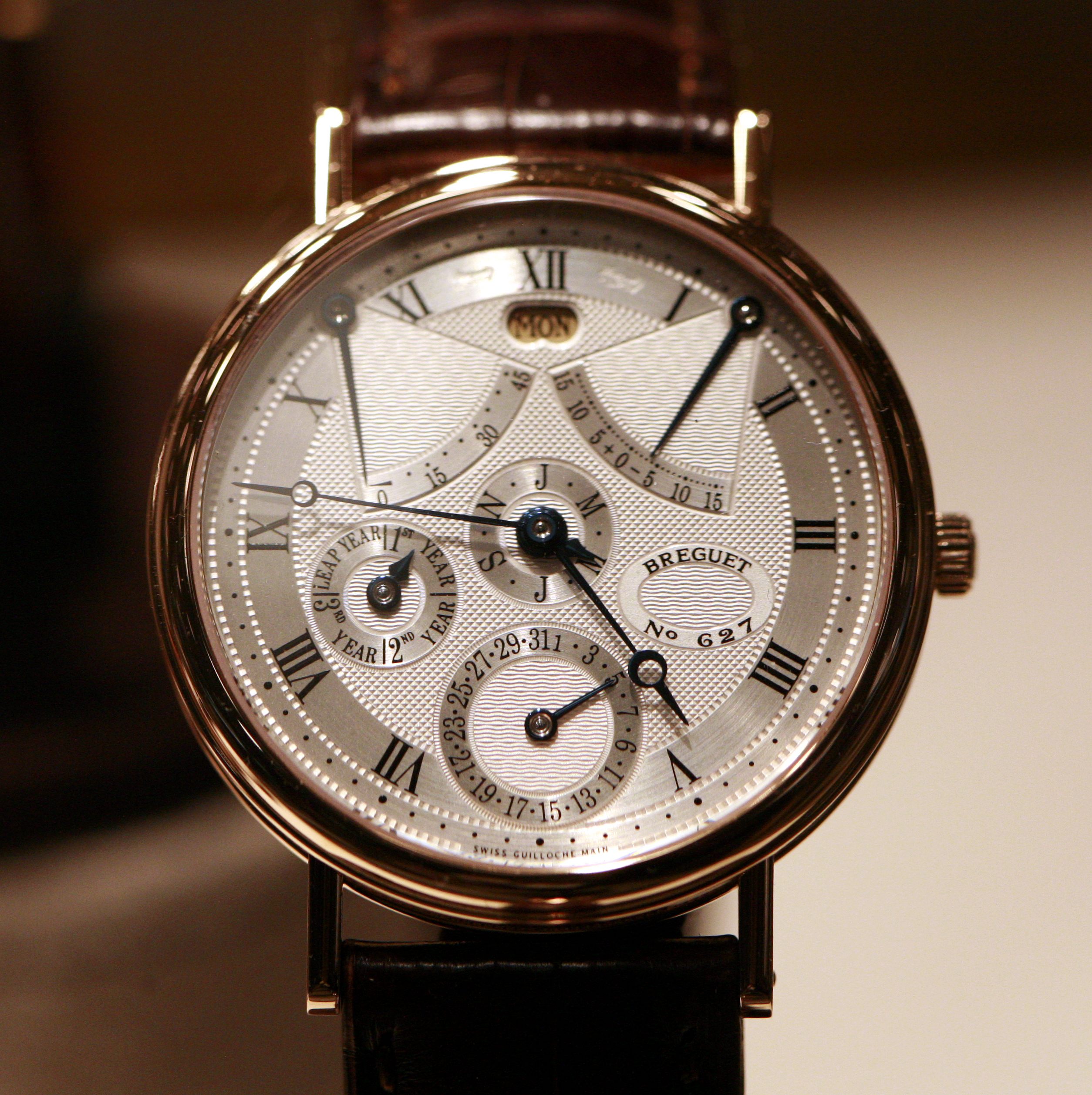
A Breguet with a hand-guilloché dial; the engine-turned pattern is cut into the metal before finishing. Photo: Wikimedia Commons, CC BY-SA 2.0 fr.
It starts with a brass blank
Brass is the industry standard base for dials: dimensionally stable, easy to work, and friendly to lacquer and plating. Precious metal dials exist at the high end, and Glashütte Original’s in-house dial shop mills blanks in gold, silver, bronze, and brass. The blank is stamped or milled to size, pierced for the hands, the date, and any subdials, and given small feet on the back that anchor it to the movement.
Surface, color, and lacquer
Texture comes next: brushing, sunburst brushing, snailing, sandblasting, each cut or blasted into the blank before color goes on. Color comes from galvanic baths or from lacquer, built up in thin coats with curing between each, which is where the depth in a good black or blue dial comes from. Much of the step count lives here: clean-room work, inspection, and repeat. The specialist dial maker Rubattel & Weyermann, part of the Swatch Group, is routinely described as needing 40 to 70 steps per dial; Glashütte Original cites up to 75 for its own.
Printing
Text and minute tracks are usually pad printed: a silicone pad picks up ink from an etched plate and presses it onto the dial, one color at a time. It is precise and repeatable, which is why every line of text on a production dial looks identical. Luminous plots are applied separately, printed or filled by hand depending on the price point.

A Fortis pilot chronograph dial: printed numerals, luminous plots, and subdials, the standard industrial dial in finished form. Photo: Wikimedia Commons, CC BY-SA 4.0.
Applied indices
Applied hour markers are separate pieces, usually metal, polished or brushed and then fixed to the dial, often filled with luminous material. They catch the light in a way print cannot, which is the entire justification for the extra labor. On better dials the markers are mirror-polished before the lume goes in.
Enamel, guilloché, and the exotics
Grand feu enamel is powdered glass fused onto the dial at around 800 degrees Celsius and fired multiple times; dials that crack or bubble in the kiln are scrapped, which is why enamel dials are rare, expensive, and never quite identical. Guilloché is engine-turning, fine repeating patterns cut with a rose engine lathe, by hand on the best examples. Then there are the exotic dial materials: meteorite, aventurine, mother-of-pearl, wood, stone, each bringing its own cutting, stabilization, and finishing problems.
Keep digging
For hand-applied dial work, see Hand Manufacturing and Hand Finishing. For dial decoration techniques, see Dial Lacquer and Enamel Dials.
Why it matters
The dial is the watch’s face in the most literal sense, and its quality is visible at a glance in a way movement finishing never is. Knowing the steps, from brass blank to lacquer to print, is what lets you tell a dial with real depth from one that just looks dark in photos.
Thanks for reading this.

