
A lacquered dial is a metal dial blank coated in layer after layer of lacquer, polished between coats, until the surface is a deep, wet-looking mirror. That piano-black gloss you see on certain dress watches, the one that seems to have depth behind it, is almost always lacquer. It is worth saying up front that “lacquer” on a spec sheet is a finish description, not a chemistry lesson. The word covers two very different materials: natural lacquers, above all Japanese urushi made from tree sap, and modern synthetic lacquers based on polyurethane or acrylic resins. Most lacquered dials in production watches are the synthetic kind. They are sprayed on in multiple thin coats, flatted back with fine abrasives between coats, and polished at the end, the same basic routine as a piano finish or a high-end car panel, shrunk to 30 millimeters.

A Japanese jewel box in lacquered wood with gold and ivory, circa 1640. Layered lacquer and polishing are what give the surface its depth. Photo: Daderot, Wikimedia Commons, CC0 1.0.
What lacquer actually is
Lacquer is a coating that hardens into a tough, glossy film. Synthetic lacquers cure at room temperature as their solvents evaporate and the resins cross-link, which makes them fast and predictable, ideal for production. Natural urushi works completely differently: it cures through polymerization that only happens in warm, humid air, around 20 to 25 degrees Celsius and 70 to 85 percent humidity, and each layer needs roughly a day in those conditions. The Japanese perfected that slow process over thousands of years, and it produces a finish of unusual depth and durability, but nothing about it is fast. Urushi gets its own article here, because it deserves one.
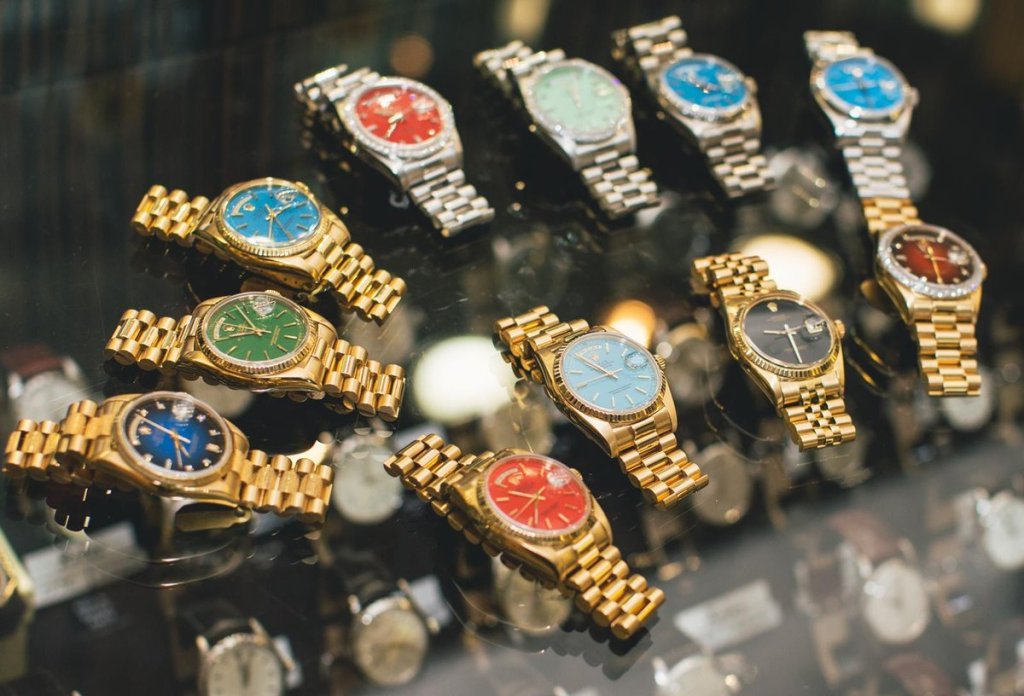
On a watch dial, the routine for synthetic lacquer goes like this. A brass blank is cleaned and primed, then sprayed, usually black, in several coats. Between coats the surface is flatted with very fine abrasives to knock down orange-peel texture and dust. The final coats are polished to a mirror. The result has a visual depth that paint cannot match, because you are looking through multiple translucent layers to the base, the way you look into a pond rather than at a puddle. Black is the classic color, but lacquer takes color well, and you will find lacquered dials in deep blues, greens, and reds.
Lacquer versus enamel
Lacquer and enamel are often confused because both can produce a glossy black dial, and the marketing rarely helps. They are different materials with different trade-offs. Enamel is powdered glass fused to metal at 800 degrees Celsius or more: extremely hard, chemically inert, and permanent, but brittle. Drop an enamel dial and it chips down to the copper. Lacquer is a resin coating applied without heat: softer, so it can scratch and can haze with long UV exposure or harsh chemicals, but it is also repairable in a way enamel is not. A scuffed lacquer dial can be refinished. A chipped enamel dial is a new dial.
There is also a visual tell, though it takes a practiced eye. Enamel has a cold, glassy brilliance. Lacquer, especially urushi, has a warmth to its depth, a slightly organic glow. Collectors tend to describe black lacquer as “deep” and black enamel as “bright,” which is impressionistic but not wrong.
Who uses it
Grand Seiko is the name most associated with lacquered dials, and it uses both kinds. The famous black dials include conventional lacquered finishes across the regular collections and true urushi lacquer on special editions like the SBGW295, the 110th-anniversary re-creation of the first Grand Seiko, whose jet-black urushi dial carries maki-e hour markers in 24k gold powder. Seiko’s Presage line has carried lacquered dials for years, including urushi editions, which is how many collectors outside Japan first encountered the material. On the Swiss side, black lacquered dials appear across the dress-watch ranges of several major houses, usually described in the catalog simply as “black lacquered.” The exact resin is rarely specified, which is fine: for a production dial, the look and the durability are what count, and modern synthetics deliver both.

A Burmese offering container in lacquered bamboo with gilding and inlaid glass, late 19th to early 20th century. Lacquer has been a prestige finish in Asia for centuries. Photo: Daderot, Wikimedia Commons, CC0 1.0.
Living with it
A lacquered dial asks little of its owner. Keep it out of prolonged direct sun if you want the black to stay black, and do not attack it with solvents. Synthetic lacquers are reasonably hard once cured, but they will show swirl marks under harsh light if someone gets enthusiastic with a polishing cloth on an open dial, so the usual advice applies: admire it, do not service it yourself. The finish should outlast the fashion cycle that bought it. A good black lacquer dial looked right in 1960 and looks right now.
Keep digging
Lacquer is the accessible end of a spectrum. See Urushi lacquer for the traditional Japanese extreme, Enamel dials for the glass-fired alternative, and Grand feu enamel for the classic black dial benchmark.
Why it matters
The lacquered dial is one of the best values in watch finishing: a genuinely craft-intensive surface, layers of coating and hand polishing, available on production watches at sane prices. It is also a reminder to read spec sheets carefully. “Lacquer” tells you how the dial looks, not what it is made of. The urushi dial and the polyurethane dial are cousins, not twins, and the price difference tells you which one you are looking at.
Thanks for reading this.

