
Power reserve is how long a mechanical watch keeps running on a full wind, stated in hours. A 40-hour reserve means about a day and a half after you take it off; an 80-hour reserve means it survives the weekend on the nightstand and is still ticking Monday morning.
Why the last hours matter most
The reserve number is not only about convenience. A mainspring does not deliver constant force as it unwinds: torque is highest at full wind and falls off fastest near the end. Less torque means the balance swings through a smaller arc, and a smaller arc means the rate changes. The ideal, that the rate stays constant regardless of amplitude, is called isochronism, and every real movement departs from it as the spring runs down.
This is why accuracy claims are tied to the state of wind. Chronometer testing winds the movement fully on a fixed daily schedule, because a rate at full wind says nothing about the rate at hour 70 of an 80-hour reserve. METAS checks that the stated precision holds while the reserve runs from full down to about a third. The honest question about any long reserve is how the watch behaves in the last of its hours, not how many are printed on the dial.

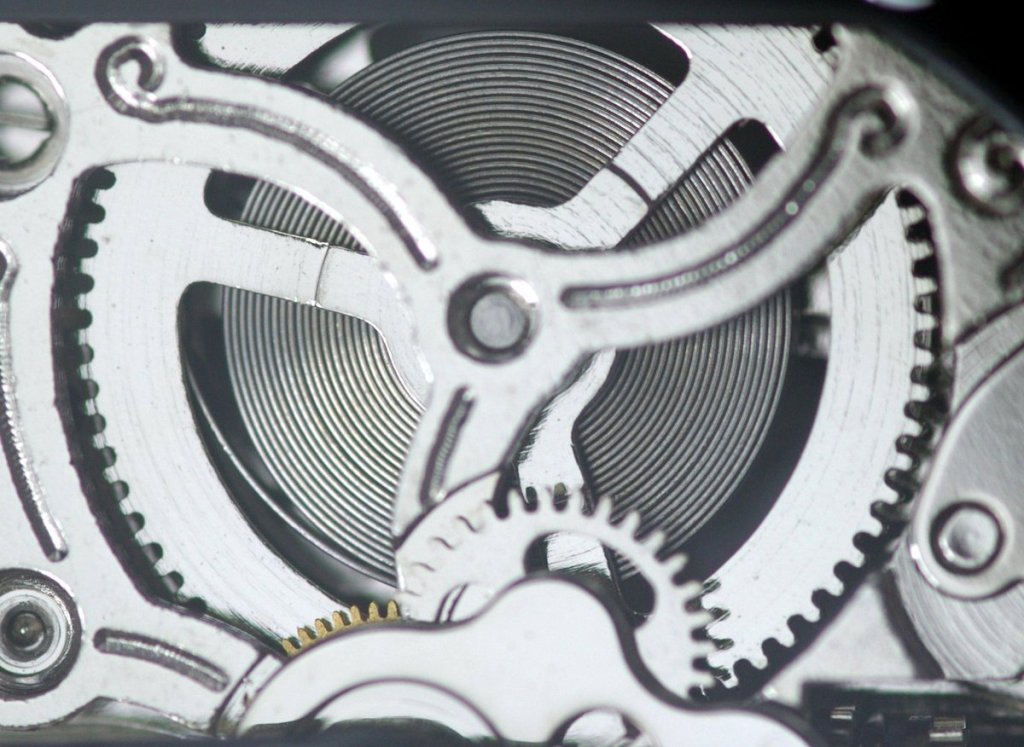
Mainspring torque falls as the spring unwinds, and drops fastest near the end, which is why the last hours of reserve are the least accurate. Photo: Wikimedia Commons, public domain.
Forty hours, then eighty
For decades the standard was about 40 hours. The workhorse ETA 2824 runs roughly 38 hours on a full wind, and most ordinary automatics clustered near the 40-hour mark. Fine for a watch worn daily, since the rotor tops the spring up continuously, but it failed the weekend test: off on Friday evening, dead by Sunday.
The 70-to-80-hour norm started with Tissot’s Powermatic 80 (2012): an ETA 2824 derivative with a larger barrel and a beat rate cut from 4 Hz to 3 Hz, so the movement consumes less energy. The formula spread: Omega’s METAS-era calibers run 55 hours (8800) to 60 hours (8900), and 70-plus hours is now unremarkable. “Weekend-proof” stuck as marketing because it describes a real annoyance that is now gone.
How reserves get longer
There are only a few ways to store more energy. The straightforward one is a longer or taller mainspring in a bigger barrel, which is why long-reserve movements tend to be thicker. Another is two barrels in series, which doubles the available energy without doubling the torque. The third is to spend energy more slowly, by lowering the beat rate, as the Powermatic 80 did, or by cutting friction in the escapement.
Each has a cost. Bigger barrels need bigger movements. Lower beat rates mean a coarser sweep and, in theory, a slightly less disturbance-resistant rate. Twin barrels add parts and complexity. There is no free energy in a watch, only tradeoffs, and the reserve figure is the visible end of whichever compromise the brand chose.
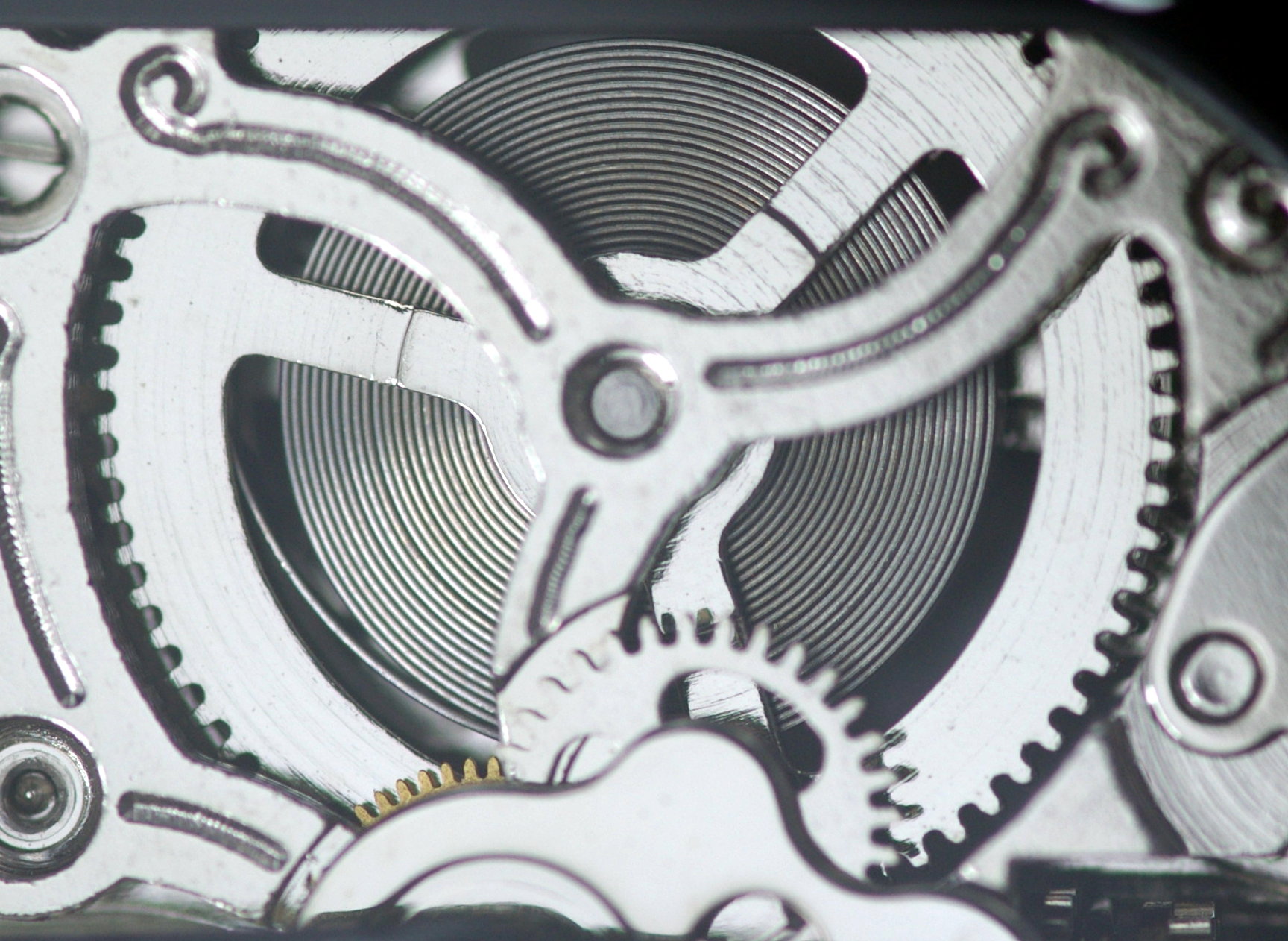
The mainspring stores the energy; everything about the reserve starts here. Photo: Wikimedia Commons, CC BY-SA 3.0.
Multi-day and beyond
Past the 80-hour mainstream, reserves become a statement. IWC’s caliber 52010 runs seven days, Panerai’s P.5000 runs eight, and A. Lange & Söhne’s Lange 31 runs a full 31 days on a single wind, with a constant-force mechanism to keep torque even across that span.
The consensus is that beyond about a week, extra reserve is mostly bragging rights. A 31-day watch still needs wearing or winding to stay set, and hardly anyone tests the full span. The practical sweet spot remains the long weekend: alive on Monday, without turning the movement into a science project.
Living with it
In daily use, reserve matters less than the number suggests. An automatic worn every day never runs down, because the rotor replaces what the movement spends. Manual-wind watches ask for a daily ritual, and the traditional advice is to wind at the same time each day, which keeps the spring in the same part of its torque curve and the rate consistent.
One honest note: a long reserve does not make a watch more accurate, and brands sometimes let the big number imply that it does. What it buys is convenience and a wider margin of full-torque running. Accuracy still comes from the balance, the hairspring, and the regulation.
Keep digging
The reserve feeds everything downstream. Isochronism explains why the rate should hold steady as the spring weakens. Frequency covers the beat rate, which decides how fast the reserve is spent. Positional Variation and Temperature cover the other two classic enemies of a steady rate.
Why it matters
Power reserve is the most practical specification in this section, because it decides how the watch fits into a life rather than how it performs on a test bench. The number to care about is not just the hours but the behavior across them: a 40-hour watch that holds its rate to the end is a better timekeeper than an 80-hour watch that wanders in the last twenty.
Thanks for reading this.

