
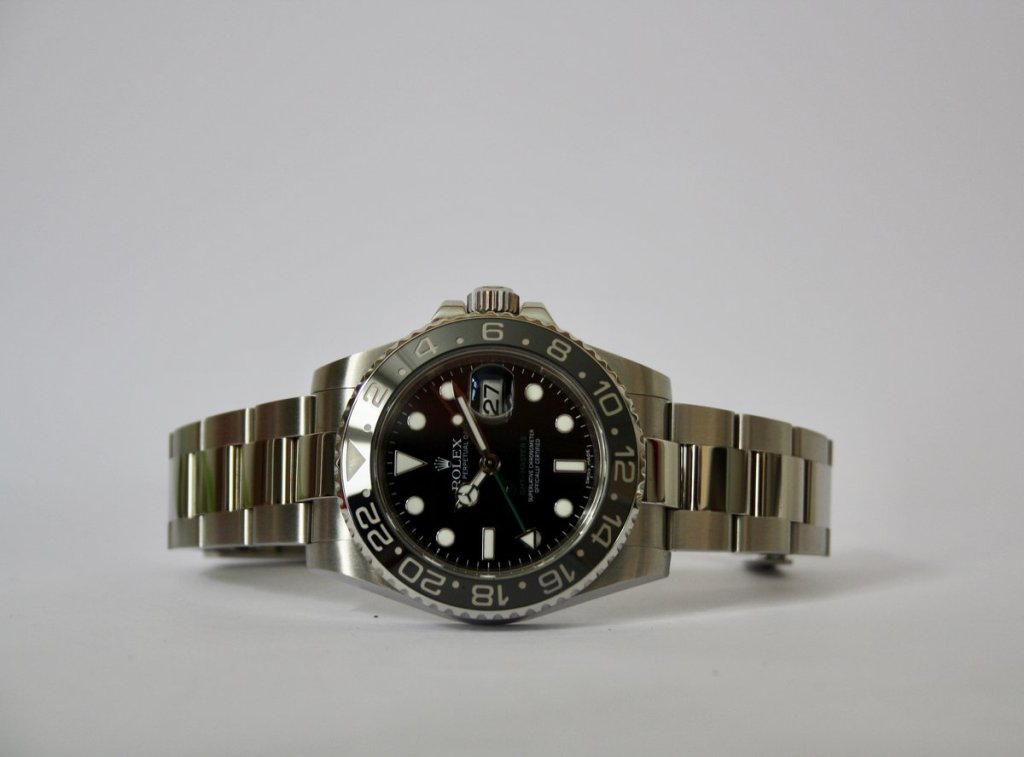
904L is the steel Rolex uses, and for a long time it was the steel only Rolex used. The brand began using it for certain watch cases in 1985, then in 2018 gave it a trademarked name, Oystersteel, and built a marketing campaign around the line “at Rolex, steel is a precious metal.” The alloy itself is real and chemically defined, not a Rolex invention. Before watchmaking got hold of it, 904L was a chemical-industry material, built for plants full of acid, not wrists full of sweat.
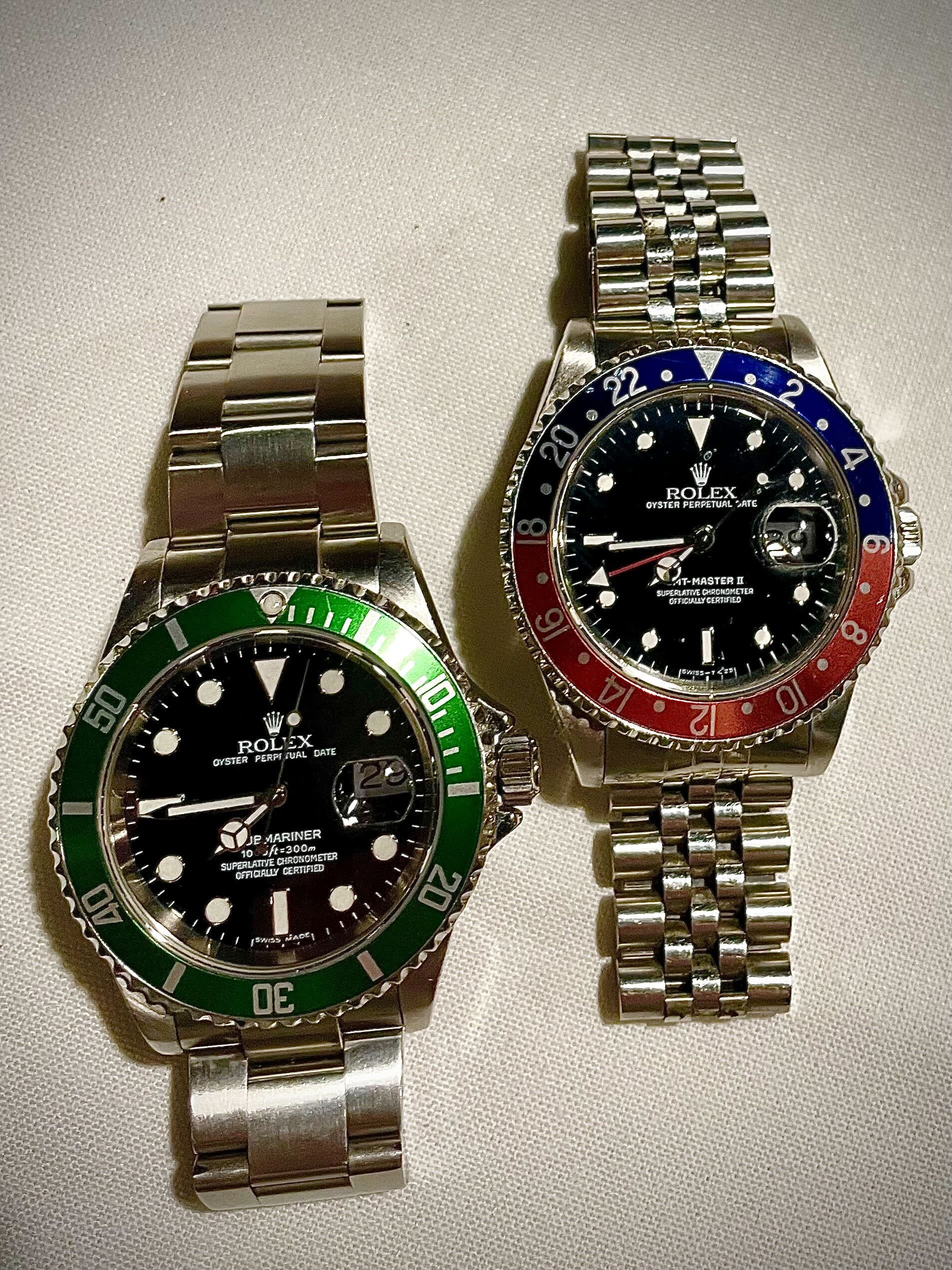
Rolex Submariner and GMT Master II, both in 904L steel, trademarked as Oystersteel. Photo: Wikimedia Commons, CC BY-SA 4.0.
The recipe
904L is iron with roughly 19 to 23 percent chromium, 23 to 28 percent nickel, 4 to 5 percent molybdenum, and 1 to 2 percent copper. Compare that to 316L’s 16 to 18 percent chromium, 10 to 14 percent nickel, and 2 to 3 percent molybdenum, and the pattern is clear: more of everything that fights corrosion, plus copper, which 316L does not have at all. On the standard pitting-resistance index that metallurgists use, 904L typically lands around 34 to 36, versus roughly 24 to 26 for 316L, a materially higher resistance to chloride pitting, the kind of corrosion salt water starts. That is a genuine, measurable advantage, not a vibe.
What it is genuinely better at
Corrosion resistance, full stop. 904L was engineered for chemical plants handling aggressive acids, and it brings that overbuilt chemistry to the wrist. It also takes an exceptional polish: the high chromium and nickel content gives it a brighter, whiter shine than 316L, which is the one difference you can actually see across a room. Rolex says the alloy was so difficult to machine that the company had to develop special tooling to work it. The machining pain is real, and it is a large part of why almost nobody else bothered: 904L is tough, it work-hardens as you cut it, and it demands slower speeds, different tooling, and more patience than 316L.
What the brochures skip
Here is the part the brochures skip. For actual watch-wearing, the practical difference between 904L and 316L is small. Both alloys sit near 150 on the Vickers hardness scale, and if anything 904L is marginally softer, not harder, so it is not more scratch-resistant despite what some marketing implies. Against the quartz grit and doorframes that actually scratch watches, the difference between the two steels is meaningless. The corrosion advantage is real but mostly theoretical on a wrist: 316L already handles sweat, rain, and salt water fine for decades, and divers have been rinsing 316L watches after dives forever without incident. So what does the buyer get? A brighter polish, extra corrosion headroom they will probably never need, and the knowledge that their watch cost more to make. Much of the mystique around Oystersteel is Rolex marketing doing its job, which is a fine thing to enjoy as long as you know what you are enjoying. It is a good steel with a great publicist.

The Submariner Professional. The visible 904L difference is the brighter, whiter polish. Photo: Wikimedia Commons, CC BY-SA 3.0.
One caveat: nickel
904L contains roughly twice the nickel of 316L, around 23 to 28 percent versus 10 to 14. For most wearers that means nothing, since the nickel is locked into the alloy. But people with serious nickel allergies react more often to 904L than to 316L, and collectors generally agree that anyone with a known sensitivity should test-wear before committing. Titanium, which is nickel-free, is the usual escape hatch.
Keep digging
316L steel: the industry standard it gets compared to. Stainless steel overview: the full family. Proprietary steel alloys: Sinn and Damasko’s alternative answers. Titanium: the nickel-free alternative.
Why it matters
904L matters less as a material than as a case study in how this industry works. It is a genuinely better alloy in one specific way, wrapped in genuinely excellent marketing that implies it is better in every way. Learning to tell those two things apart is a skill that pays off far beyond one steel grade. Buy the polish and the story if you like them. Just know which one you are paying for.
Thanks for reading this.

