The crystal is the transparent cover over the dial, and there are three materials in common use: acrylic, mineral glass, and synthetic sapphire. The differences come down to how each one handles scratches and impacts, and the manufacturing behind each is completely different.

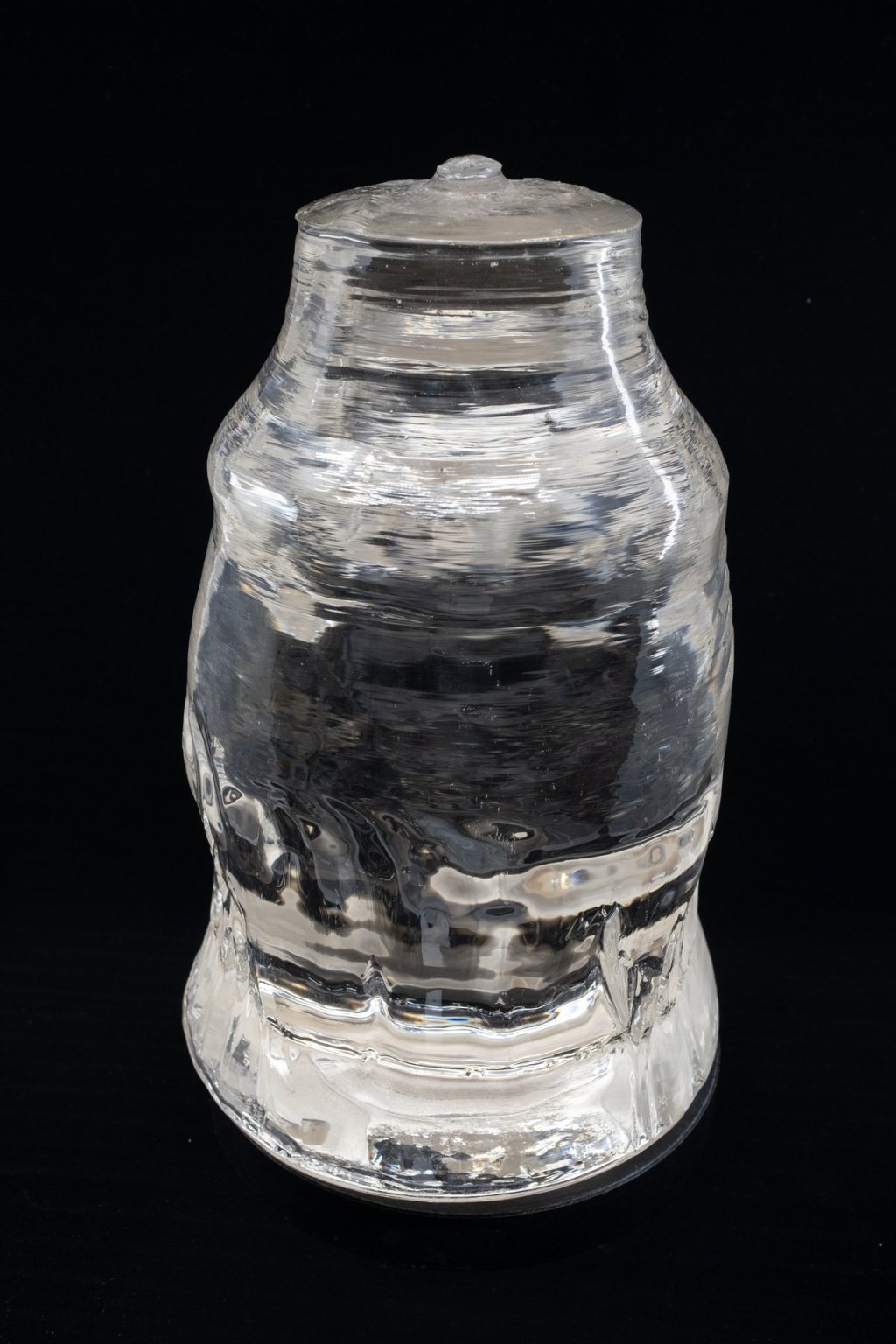
A synthetic sapphire boule grown by the Kyropoulos method. Watch crystals are cut from boules like this one, and from Verneuil-grown boules; Swiss suppliers offer both. Photo: Wikimedia Commons, CC0.
The three materials
Acrylic is plastic, usually polymethyl methacrylate, sold under names like Hesalite. It scratches easily, resists shattering, and the scratches can be polished out, which is why it survived for decades on tool watches and still shows up on reissues. Mineral glass is tempered glass: harder than acrylic, cheaper than sapphire, sitting in the middle on scratch resistance and on shatter resistance alike. Synthetic sapphire is corundum, aluminum oxide, with a Mohs hardness of 9, second only to diamond. It barely scratches and it can crack under a hard enough impact. Every sapphire crystal on a watch is synthetic; nobody is mining dial windows.
Growing synthetic sapphire
The classic method is the Verneuil process, also called flame fusion, developed by the French chemist Auguste Verneuil in the 1880s and announced publicly in 1902. Highly purified alumina powder falls through an oxyhydrogen flame at around 2,000 degrees Celsius, melts into droplets, and crystallizes on a rod below into a tapered cylinder called a boule. Once cooled, the boule is split along its length to relieve internal strain; skip that step and it will crack when worked. Other melt-growth methods, notably Kyropoulos and Czochralski pulling, grow the large boules used for optical and industrial sapphire. For watchmaking itself, suppliers offer both: the Swiss crystal maker Erma sells Verneuil-grown and Kyropoulos-grown blanks for watch crystals, and no single method supplies the whole industry.
From boule to crystal
The boule is cored or sliced into blanks with diamond tooling, because almost nothing else will cut corundum. Each blank is ground to its final profile: flat, gently domed, double-domed, or the tall box crystals of vintage-style pieces. Edges are beveled so the crystal seats cleanly, and the faces are polished until optically clear. Tolerances are tight throughout, since the crystal has to seal against a gasket.

A faceted synthetic sapphire. The material is corundum, aluminum oxide, the same compound used for watch crystals. Photo: Wikimedia Commons, CC BY 2.0.
Anti-reflective coating and fitting
Most sapphire crystals get an anti-reflective coating, microscopically thin layers of metal oxides that cut reflections and produce the faint blue or purple tint visible at an angle. Coating the outer face improves legibility the most and scratches the most easily, which is why some makers coat only the inside while others coat both faces; both practices are current at various price levels, with no industry rule tying placement to price. Fitting is mechanical: the crystal is pressed into the case against a gasket, and it is the gasket, not the crystal, that keeps the water out.
The crystal is the most handled optical surface on the watch and the one you look through every time you check the time. Knowing which material you have, and what its coating situation is, tells you whether a scratch can be polished out, whether it was inevitable, and what you are paying for when a brand specifies sapphire.
Thanks for reading this.

