
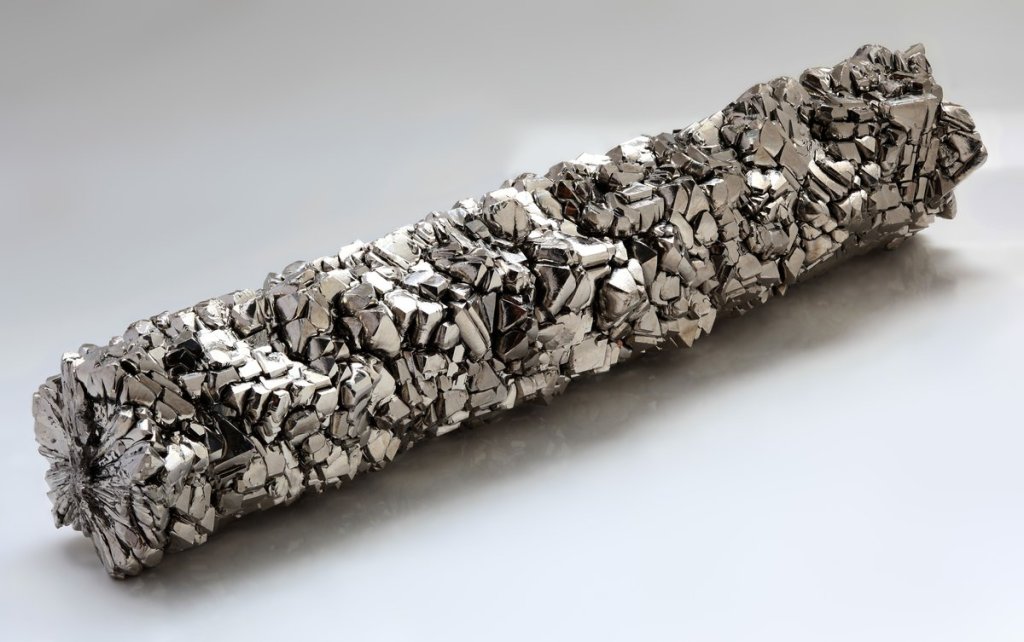
Grade 2 titanium is the titanium in most titanium watches. Despite the name suggesting some exotic formula, it is commercially pure titanium, at least 99 percent titanium with only traces of oxygen, iron, and carbon. It is not really an alloy in any meaningful sense. It is simply titanium, cleaned up and standardized, and it dominates watch cases for the most practical reason in manufacturing: it is the grade you can actually afford to machine.

A Tudor Pelagos on the wrist. Its case, bezel, and crown are Grade 2 titanium. Photo: Wikimedia Commons, CC BY-SA 4.0.
Soft, and proud of it
Grade 2 sits around 170 on the Vickers hardness scale, the diamond-dent test explained on the 316L page. That puts it in the same neighborhood as 316L steel at 150 to 200, and far below Grade 5 titanium at around 350. Modest hardness sounds like a flaw until you are the one paying for machine time. Grade 2 cuts, forms, and finishes far more easily than Grade 5, which means lower tooling costs, faster production, and a finished watch that does not carry a machining surcharge. That ease of manufacturing is the entire reason it became the default titanium for watch cases. The metal still brings everything that makes titanium attractive: the low density, the self-healing oxide layer that shrugs off salt water, and the nickel-free hypoallergenic chemistry. None of that depends on hardness.
The Pelagos example
Tudor’s Pelagos is the reference implementation. The middle case, bezel, and crown are Grade 2 titanium, which keeps the big 42 to 43mm dive watch light and comfortable, while the caseback is Grade 5, the harder alloy, where extra toughness pays off and nobody sees it. Tudor’s own product materials confirm the split, and it is a neat illustration of how brands think about the grades: Grade 2 where the metal has to be shaped and finished economically, Grade 5 where hardness matters more than machinability. Other brands follow the same logic without advertising it. When a watch just says “titanium” on the spec sheet with no grade mentioned, Grade 2 is the safe assumption.

A limited-edition Pelagos. Grade 2’s matte grey finish is part of the watch’s tool-watch character. Photo: Wikimedia Commons, CC BY-SA 4.0.
The tradeoffs
Grade 2’s softness is also its honest downside. It scratches more easily than Grade 5, and because titanium scratches show as bright shiny marks on the matte grey finish, the marks are visible. Collectors who baby their watches sometimes wish for the harder grade; collectors who actually wear their divers tend to accept the marks as the price of a light, comfortable watch. There is no wrong answer, but there is a wrong expectation: a Grade 2 titanium watch will not stay pristine, and no coating or treatment on a standard production watch changes that. Buy it for the weight and the comfort, not for scratch resistance.
Keep digging
Titanium overview: the metal’s properties and tradeoffs. 316L steel: the steel most titanium watches compete with. Case construction: how cases get made. Brands: the directory, including Tudor.
Why it matters
Grade 2 matters because it is the reason titanium watches exist at prices normal people pay. The fancier Grade 5 gets the specification-sheet glory, but Grade 2 does the actual work: it takes titanium’s best qualities, light, corrosion-proof, skin-friendly, and delivers them in a form factories can shape without charging a fortune. Most of the titanium on wrists is Grade 2, and most of the people wearing it have never needed to know. Now you do.
Thanks for reading this.

