
Bronze is copper plus tin, and it is the only historical case metal to stage a genuine comeback. The common watch alloy is CuSn8, roughly 92 percent copper and 8 percent tin, the same family of bronze used for ship fittings and diving equipment for centuries. Some brands use aluminum bronze instead, copper plus aluminum, which behaves a little differently. Either way, the selling point is the same: bronze changes with wear. It oxidizes in contact with air, sweat, and seawater, developing a brown or green lived-in coating called patina. Every bronze watch ages differently, and that unpredictability is the entire appeal.
The patina story
A new bronze watch arrives looking like a shiny penny. Then life happens. Moisture, salt, and skin chemistry darken it, first unevenly, then into a deep brown, sometimes with greenish tones in the recesses. Six months in, the watch looks like it has a history, because it does: yours. Collectors post patina-progress photos the way gardeners post tomato photos, and the comparison is apt. You do not fully control the outcome. You influence it.
This is also the honest risk. Patina is unpredictable. It can develop into a gorgeous even brown, or it can go blotchy, with dark patches around the lugs and pale streaks where your sleeve rubs. Two identical watches worn by two different people will look like different watches within a year. If you need your watch to look the same every day, bronze will quietly refuse.

The Longines Legend Diver in bronze, issued in 2020. Every example ages into a slightly different watch. Photo: Wikimedia Commons, CC BY-SA 4.0.
The practical downsides
Bronze has a metallic smell. Worn against the skin, especially in heat, it can leave a faint coppery scent on the wrist that some people notice and some do not. It can also irritate sensitive skin, which is why several brands fit titanium casebacks: Panerai’s Bronzo models use a titanium retaining ring so the bronze never touches the wrist. If you react to cheap jewelry, think twice about a bronze case.
Then there is verdigris, the green corrosion that is patina’s less attractive cousin. In normal wear it is not an issue, but bronze left wet and uncleaned, particularly in salt water, can develop green crusty patches that are corrosion, not character. Rinse a bronze watch after seawater and dry it. Bronze is a chemically active metal by design, and that rinse is basic maintenance, not babying.
Who makes them
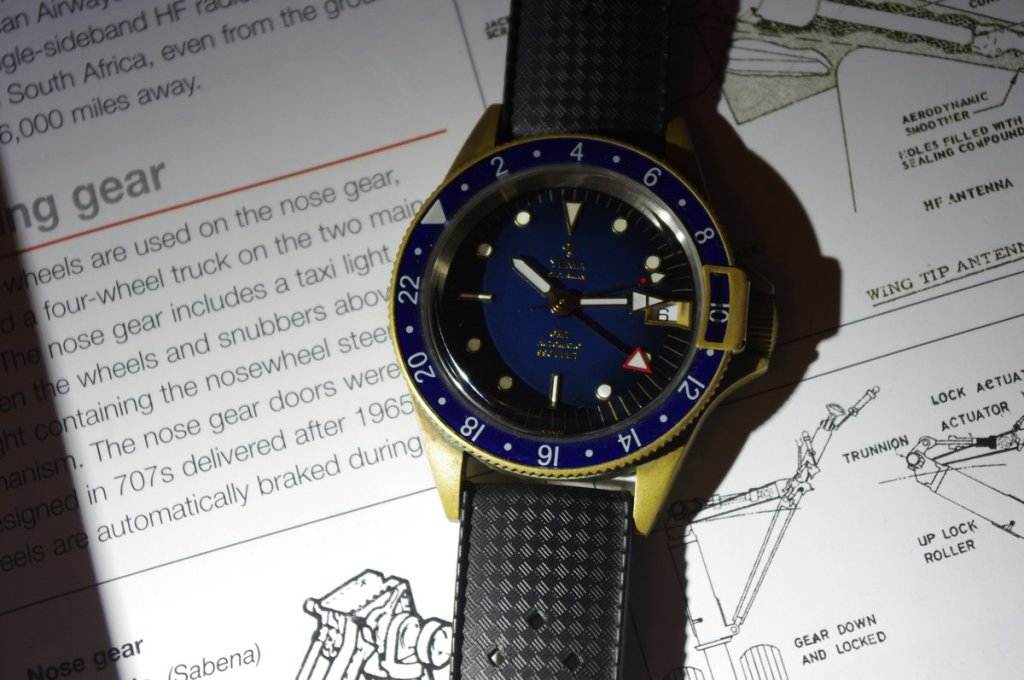
The modern bronze trend started with Panerai: the Luminor Submersible 1950 Bronzo, reference PAM 382, in 2011, a 1,000-piece limited edition with a titanium caseback ring, which sold out and proved the demand. Tudor followed in 2016 with the Heritage Black Bay Bronze, a 43mm diver that made bronze mainstream, and later added a 39mm Black Bay 58 version. Oris has done several bronze pieces including the Big Crown Bronze Pointer Date. Longines issued the Legend Diver in bronze in 2020. Yema’s Superman GMT Bronze covers the affordable end. The pattern is consistent: mostly dive watches, mostly with brown or green dials, all trading on the nautical heritage of the metal.

A Yema Superman GMT Bronze. Bronze now spans from affordable microbrands to five-figure divers. Photo: Wikimedia Commons, CC BY-SA 4.0.
CuSn8 versus aluminum bronze
Worth knowing because brands rarely explain it. Tin bronze (CuSn8) patinas more dramatically: deeper browns, more green in the recesses, more variation. Aluminum bronze patinas more subtly and more evenly, which is why Tudor chose it for the Black Bay Bronze; the brand describes the result as a controlled, homogeneous patina rather than a wild one. Tudor describes its aluminum bronze as a high-performance alloy chosen for the Black Bay Bronze. Neither alloy is “better.” Tin bronze gives you drama, aluminum bronze gives you manners. Pick your personality.
Keep digging
Brass: bronze’s cheaper cousin, and why it never came back. Tantalum: the other patina-free oddity at the opposite end of the personality scale. Tudor and Panerai: the two brands that built the modern bronze trend. Watches 101, Lesson 5: The Outside: case materials in context.
Why it matters
Bronze is the proof that a case metal can sell an experience, not just a look. Nobody buys a bronze watch for how it looks new; they buy it for how it will look in two years. That is a strange thing to sell and a revealing one: it means the watch is a collaboration between the manufacturer and your wrist chemistry. Go in clear-eyed about the smell, the unpredictability, and the maintenance, and it is one of the most fun case metals there is. Go in expecting it to behave like steel and you will be disappointed by month three.
Thanks for reading this.

