
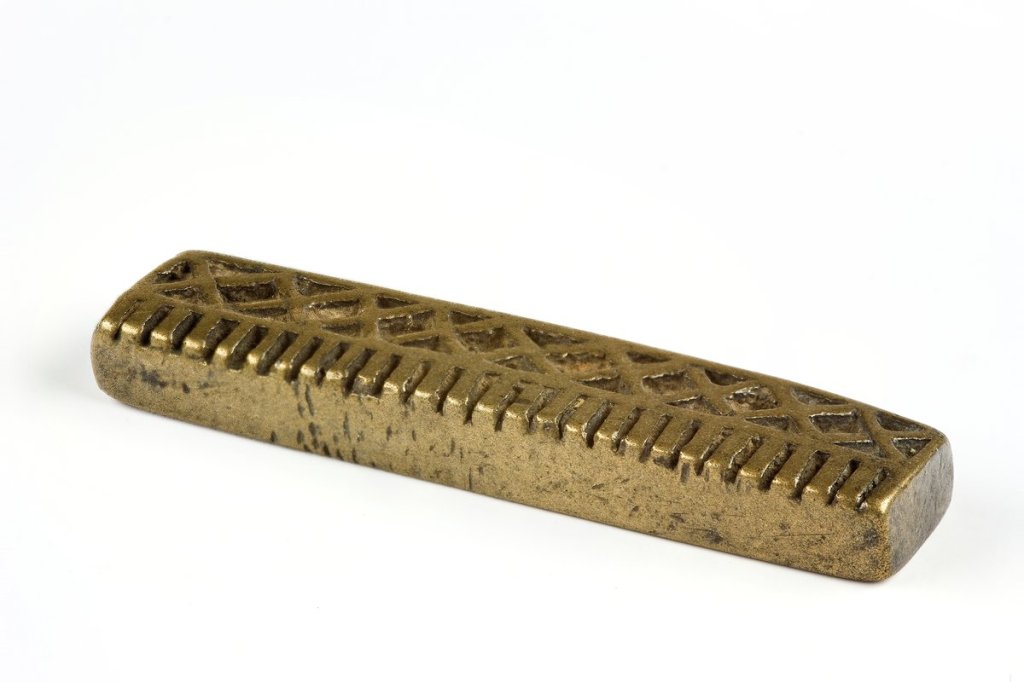
Brass is copper plus zinc, and it is bronze’s cheaper cousin in every sense that matters to watchmaking. Like silver, it was once a normal case metal: cheap, easy to machine, and it takes a beautiful polish. Like silver, it tarnishes fast and lost to steel without much of a fight. Unlike bronze, it never got a comeback. This is the short, honest story of a metal that still runs the industry from the inside while nobody will put it on the outside.
The cheap, cheerful case metal
Brass was the budget case metal of the pocket watch era and the early wristwatch years. It machines beautifully, which kept production costs down, and fresh off the polishing wheel it looks rich and golden. The problem is that the golden look has a short half-life. Brass tarnishes quickly in air, going dull brown, and with moisture and neglect it develops the same green corrosion as bronze, except that on brass it reads as decay rather than character. A brass case needs regular polishing to look good, and every polishing removes metal. For a daily-worn watch, that is a losing bargain.
Steel beat it on every practical measure: harder, no tarnish, cheaper at scale once stainless production matured. The industry moved on, and unlike bronze, brass had no romance to fall back on. Nobody writes forum poetry about brass patina.

A pocket watch movement. The plates and bridges are brass, which is why the metal shows through wherever plating wears. Photo: Wikimedia Commons, CC BY-SA 4.0.
Where brass still lives: inside the watch
Here is the twist. Open up most mechanical watches and you are looking at brass. The mainplate, the foundation every part mounts to, and the bridges are usually made of brass, because brass is easy to machine to fine tolerances and dimensionally stable. What you actually see is usually rhodium plating: brands plate the brass silvery-white, partly for corrosion protection and partly because a bright silvery movement reads as higher quality. When the plating wears through on a vintage movement, the yellow brass shows underneath, which collectors call “brassing.” German silver, the fancy alternative used by makers like A. Lange & Söhne, is itself a brass-like copper alloy with nickel. The point stands: the metal the industry abandoned for cases is still the default for the parts that matter most.
The microbrand revival that was not
A few microbrands have tried brass cases, pitching patina at a discount: the living-metal experience of bronze for less money. It has not caught on the way bronze did, and the reason is instructive. Bronze patina trends toward attractive browns and greens; brass tarnish trends toward dull, muddy brown that looks dirty rather than storied. Bronze has centuries of nautical heritage to trade on; brass has connotations of cheapness, which is exactly what it was hired for in the first place. And the price gap is not big enough to matter: bronze is not an expensive metal, so “bronze-like but cheaper” saves little and gives up the good looks.

An 1899 Waltham pocket watch movement, brass plates on display. The metal never left watchmaking; it just moved inside the case. Photo: Wikimedia Commons, CC BY-SA 3.0.
Why it never came back the way bronze did
Compare the two directly. Bronze ages into character; brass ages into a chore. Bronze’s patina is the product; brass’s tarnish is a maintenance issue. Bronze got the Panerai Bronzo and the Tudor Black Bay Bronze as flagship ambassadors; brass got a handful of microbrand experiments. The lesson is not that one metal is morally superior. It is that a comeback needs the aging to look like something you want. Brass never had that, so it stays where it has always been most useful: inside the watch, plated silvery-white, doing the structural work nobody sees.
Keep digging
Bronze: the copper alloy that managed the comeback brass could not. Silver: the other historical case metal that lost to steel. Case construction: why case metals get chosen the way they do.
Why it matters
Brass is the reminder that the metal on the outside of a watch and the metal on the inside are chosen by different logic. Cases are fashion and marketing; movements are engineering, and engineering still picks brass for its machinability nearly every time. When you admire a beautifully finished movement through a display back, you are admiring brass in a rhodium suit. It never left. It just stopped being the face of the operation.
Thanks for reading this.

