
Almost every watch you have ever seen is an assembly job. Somewhere along the line, someone decided which movement to buy, which factory would stamp the case, which supplier would print the dial, and which bench would screw it all together. Outsourcing is not a corner the industry cut. It is the system the industry was built on.
Établissage: outsourcing is the original system
For most of its history, Swiss watchmaking was organized around the établisseur, a firm that assembled finished watches from parts bought from specialists. One valley town made the wheels, another made the cases, a third printed the dials, and the établisseur put the pieces together, regulated the movement, and sold the watch under its own name. Vertical integration (one company doing everything under one roof) is the exception, not the rule, and even the great manufactures have never stopped buying parts from outside.
The supplier map
A modern wristwatch has on the order of a hundred parts, and there is a specialist somewhere whose entire business is one of them:
Movements. ETA (Swatch Group) and Sellita are the two big Swiss names, both selling finished movements and kits to other brands. Japan’s Citizen supplies Miyota movements to the whole industry, and Seiko’s TMI arm does the same. Ronda, long a quartz specialist, sells to brands at every price level. Beyond the volume players there are specialists like La Joux-Perret (a Citizen Group subsidiary, in which LVMH took a capital investment in 2025), Vaucher Manufacture Fleurier (controlled within the Sandoz industrial structure, with Hermès holding 25%, and serving Hermès, Parmigiani, and outside customers), Soprod (Festina Group since 2008), STP (Fossil Group), Concepto (chronograph specialists), and Agenhor (known for the AgenGraphe developed with Singer Reimagined, as well as work with independent brands such as MB&F).
Regulating organs. Hairsprings and balances are made by almost nobody. Nivarox, a Swatch Group company, is the dominant supplier of hairsprings in Switzerland, which is one reason the industry watches Swatch Group’s supply decisions so closely.
Modules and complications. Dubois-Dépraz in Le Lieu has built chronograph and calendar modules that other brands bolt onto base movements for decades. Buying a module is how a small brand offers a chronograph without building one from scratch.

A balance spring next to a human hair. Hairsprings are made by almost nobody, which is why specialists like Nivarox matter so much. Photo: Wikimedia Commons, CC BY-SA 4.0.
Cases. Independent case makers such as Les Artisans Boîtiers (part of the Vaucher Manufacture Fleurier group) build cases for brands that do not stamp their own, while large Swiss case manufacturers supply much of the industry’s volume.
Dials and hands. Dial making is its own craft: pad printing, lacquering, appliqué indices, guilloché. Independent dial makers such as Metalem in Le Locle supply dials across the industry. Hands are made by a small number of specialists too.
Straps, crystals, crowns. Nobody raises an eyebrow when a brand buys these in. Leather straps, sapphire crystals, and crowns are commodity parts made by dedicated suppliers, and even the most vertically integrated brands buy most of them.
Why brands still do it
Making everything in-house is expensive in a way that is easy to underestimate. A case stamping line, a dial printing shop, and a movement department each need machines, people, and steady volume to pay for themselves. A brand selling a few thousand watches a year cannot keep all three busy. Buying from specialists means the brand gets parts made by people who do nothing else, on machines that run all day, at a unit cost no small manufacture could match. Outsourcing is usually not laziness. It is arithmetic.

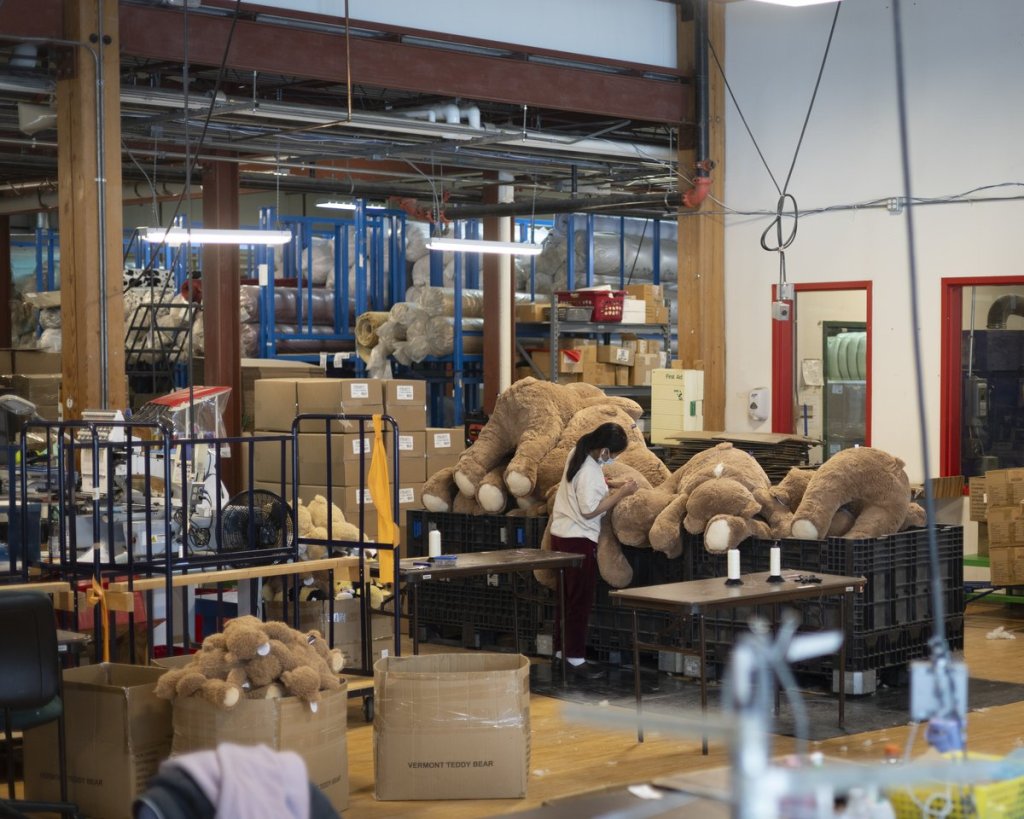
Inside a Swiss watch factory. Very few brands own a building like this, so most rent other people’s capacity instead. Photo: Wikimedia Commons, CC BY-SA 3.0.
Swiss Made and the 60% rule
Since January 1, 2017, a watch labeled Swiss Made must have at least 60 percent of its manufacturing costs generated in Switzerland. The movement has its own tests: at least 50 percent of the value of its constituent parts must be Swiss-made, and at least 60 percent of the movement’s manufacturing costs must be generated in Switzerland, with technical development of the watch and movement also done in Switzerland. The rule is about costs, not parts count, and it says nothing about who made what. A brand can outsource its cases, dials, hands, and even its whole movement to Swiss suppliers and still be perfectly compliant. Outsourcing inside Switzerland is the normal, legal, expected way most Swiss watches get made.
What it means for buyers
The useful question is never “did the brand make this itself” but “who made the parts, and how well.” A Sellita SW200 assembled carefully, regulated properly, and cased well is a better watch than a sloppy in-house caliber, and the price tags will not always tell you which is which. Brands that are open about their suppliers are giving you information. Brands that hide behind words like “manufacture” while buying everything in are giving you marketing. Tell those two apart and outsourcing stops being a scandal and becomes what it is: a supply chain.
Keep digging
The movement side of this story gets its own article: Ébauches explains what an unfinished movement kit is and how ETA’s near-monopoly shaped the industry. Private Label Manufacturing covers what happens when outsourcing goes one step further and the factory makes the whole watch. For the movement landscape in general, see Movements, and the Reference index has the full directory.
Why it matters
Outsourcing is how the watch industry actually works, and pretending otherwise is how marketing works. Knowing which parts get bought from whom turns vague claims of craftsmanship into questions you can answer.
Thanks for reading this.

