
Raw titanium scratches easily. That is the metal’s original sin as a watch material: light, comfortable, hypoallergenic, and soft enough that a year of desk diving leaves a plain titanium case looking tired. Rather than switching alloys, a few brands attacked the surface itself, hardening the outside of the metal while keeping the light titanium underneath. These are the proprietary treatments worth knowing, what each one actually is, and whether any of it matters.

A Citizen diver, the brand that has done more with titanium surfaces than anyone. Photo: Wikimedia Commons, CC BY-SA 4.0
Citizen Super Titanium (Duratect)
The standout in this category, by a distance. Citizen identifies its 1970 X-8 Chronometer as the world’s first titanium watch, and has spent the decades since solving titanium’s softness. Super Titanium is the name for titanium treated with Citizen’s proprietary surface-hardening process, Duratect. What Duratect actually is: a treatment that hardens the surface of the titanium itself, rather than a coating sitting on top of it. Citizen claims surface hardness above 1,000 Vickers (untreated titanium is around 170 to 200; stainless steel is roughly 150 to 220), and describes Super Titanium as about five times harder than stainless steel at roughly 40 percent less weight.
Does it matter? Genuinely, yes, more than any rival treatment here. The hardened surface resists the fine scratches that make plain titanium look worn, and because it is a treatment of the metal rather than a layer, there is nothing to chip or peel. It also lets Citizen polish titanium to a bright finish and offer it in colors (black, gold, pink gold tones), which plain titanium does not take well. Citizen sells Duratect in variants (TiC, DLC, MRK, Platinum) that differ in color and hardness, but the core idea is the same. The honest caveat: 1,000-plus Vickers is the surface reading, and marketing numbers are marketing numbers, but owners consistently report that Super Titanium watches stay looking new far longer than untreated titanium. This one earned its reputation.
Seiko DiaShield
Seiko’s answer is DiaShield, a hard coating applied to cases and bracelets, including its titanium models (Seiko lists “titanium case with super-hard coating” on watches like the Presage SARX055). What it actually is: a surface treatment in which metals ionized in a vacuum are combined with nitrogen, carbon, and oxygen ions to form a harder alloy layer bonded onto the watch. Seiko offers it in standard, rose gold, platinum, and black (“Super Black DiaShield”) versions, with the black variant claimed at about 1.5 times the hardness of conventional hard coatings.
Does it matter? It helps, with an asterisk. A hard coating does raise scratch resistance, and Seiko’s titanium watches with DiaShield hold up better than bare titanium. But it is a coating, which means it is a layer on top of the metal: it can eventually wear through on high points like bezel edges and clasp corners, and once it does, the softer titanium underneath shows. That is the structural difference from Citizen’s approach. DiaShield is a good coating; it is still a coating.

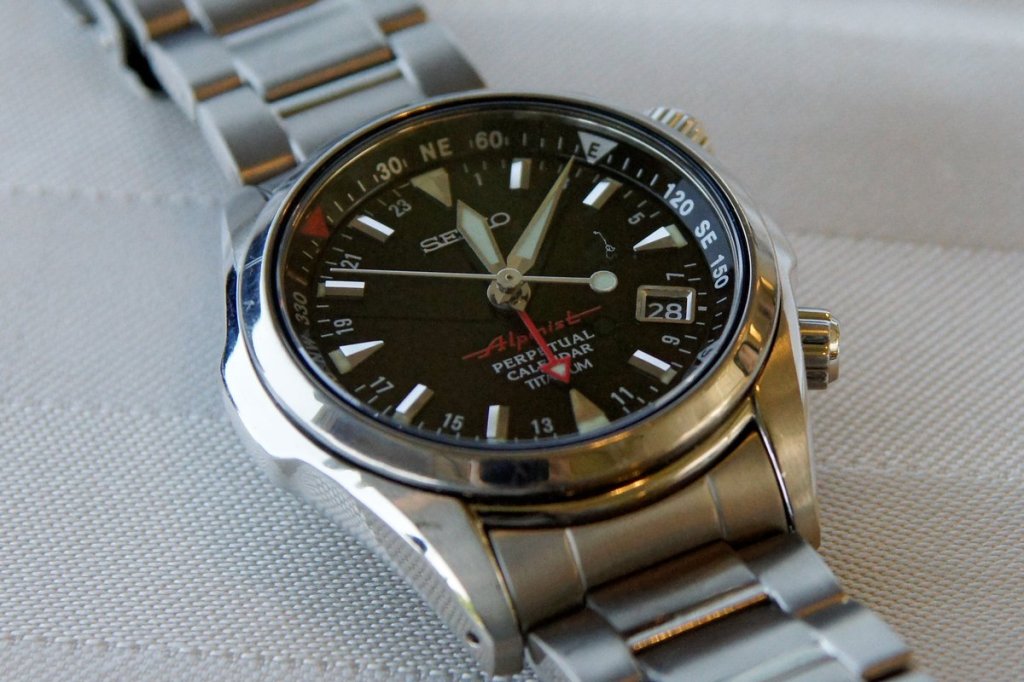
A titanium Seiko from the late 1990s. Modern Seiko titanium cases get the DiaShield super-hard coating. Photo: Wikimedia Commons, CC BY-SA 4.0
What about everyone else?
Plenty of brands harden their steel or titanium with generic DLC or PVD coatings, and some give those coatings trademarked names. Those are finishes, not metallurgy, and they live or die on coating quality rather than brand mythology, so they do not get individual entries here. If a brand’s “proprietary titanium” turns out to be a standard Grade 5 case with a standard black coating, that is a finish choice wearing a lab coat. The two treatments above are the ones with documented, distinct technology behind the name.
Keep digging
For the alloy underneath these treatments, see Grade 5 titanium. For how a case goes together, see Case construction, and for the brand behind Super Titanium, the brand directory.
Why it matters
Titanium’s weakness was never weight or strength; it was the surface. Citizen’s Duratect is the only treatment here that hardens the metal itself, which is why Super Titanium is the one collectors cite from experience rather than brochures. Seiko’s DiaShield is a competent coating with a coating’s limits. Everything else with a trademarked name deserves the question: treatment of the metal, or layer on top of it?
Thanks for reading this.

