
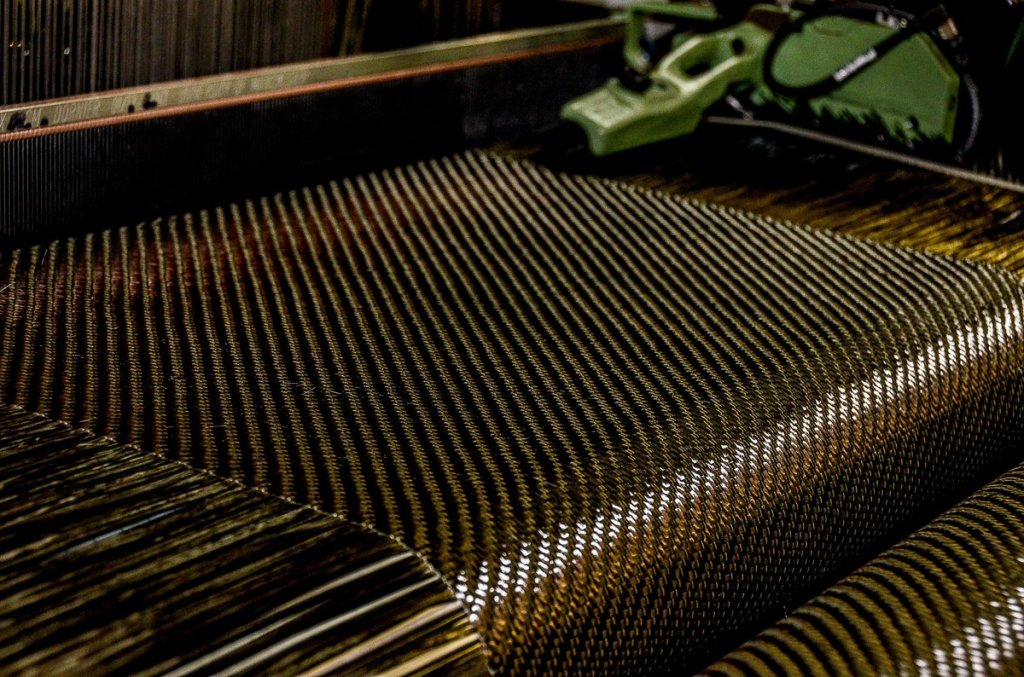
Carbon composites are the reason a 44mm sports watch can feel like it is barely there. The material is carbon fiber, either woven into sheets or chopped into fragments and pressed into molds, bound in resin. It is extremely light and very strong for its weight, and it gave watch designers a way to build big, aggressive cases without the wrist penalty of steel or gold.

Woven carbon fiber, close up. Watch cases use this or its chopped-and-pressed cousin. Photo: Wikimedia Commons, CC BY-SA.
Two kinds of carbon
Woven carbon fiber is the familiar one: visible weave, technical look, used in sheets or layered shells. Forged carbon is the marbled one. Short carbon fibers are chopped, mixed with resin, pressed into a mold under heat and pressure, and machined afterward. Because the fibers land randomly, every forged carbon component has a unique pattern, like a fingerprint. That uniqueness is a genuine property of the process, and it is also the entire marketing pitch. Audemars Piguet introduced forged carbon to watchmaking in 2007 with the Royal Oak Offshore Alinghi Team Chronograph, and the brand has returned to it repeatedly, including a newer colored-fiber version called Chroma Forged Technology.
Why watchmakers like it
The numbers are the argument. Panerai’s Carbotech, its proprietary carbon composite made by pressing carbon fiber layers with PEEK (a high-performance polymer), is 64 percent lighter than titanium and 80 percent lighter than steel, according to the brand. A 44mm Carbotech Luminor Marina lands around 100 grams, where the same watch in steel would run 150 or more. That matters because it lets designers go big without the watch becoming a paperweight. Richard Mille built an empire on this logic, layering its thin-ply NTPT carbon into tonneau cases that would be unwearable in gold, while Hublot uses carbon fiber and forged carbon across the Big Bang line. Panerai’s Carbotech watches have a striped, almost wood-grain look that photographs extremely well, which surely did not hurt adoption.
There is a second, quieter appeal: design freedom. Carbon composite cases are molded rather than machined from bar stock, so shapes that would be expensive or impossible to mill in metal become feasible. Skeletonized lugs, sharp compound curves, and deeply sculpted case flanks all get easier when the case starts as a pressed blank. That is part of why carbon became the house style of the avant-garde independents and the motorsport-adjacent limited editions: it looks like the future, and it lets designers draw like it.

A “21st century watch design” concept by Charles David Watches (2006), from the era when new materials started reshaping case design. Photo: Wikimedia Commons, GFDL 1.2.
The downsides
Up close, carbon composite can look plasticky, because at the surface it partly is: resin holding fibers. The “unique pattern” claim is real, but so is the price premium attached to it, and you are paying for looks as much as engineering. Long-term aging is the open question. Steel has centuries of data; carbon composites in watches have under two decades. UV exposure, resin yellowing, and the long-term stability of the bond are less proven than any metal, and collectors generally agree the jury is still out. Finally, repairs are basically replacement. A cracked carbon case does not get refinished. It gets swapped, assuming the part is still available.
Keep digging
Compare with Ceramic and Aluminum, the other lightweight options, and browse the brands doing the most with it under Brands.
Why it matters
Carbon composites let watches be enormous and wearable at the same time, which reshaped sports watch design in the 2000s. Just buy with open eyes: you are paying a premium for lightness and looks, the long-term aging story is still being written, and damage means replacement, not repair.
Thanks for reading this.

