
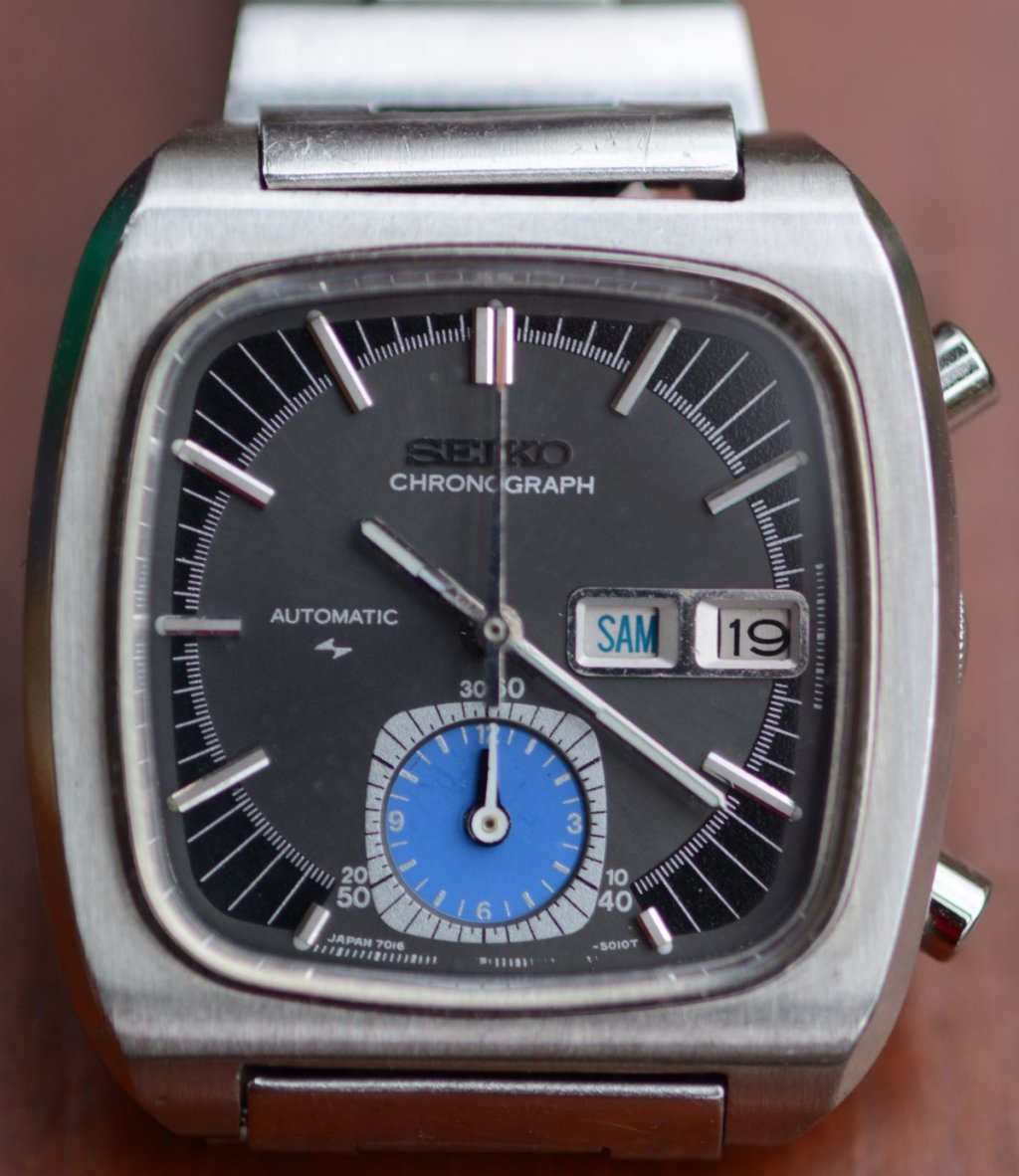
A flyback chronograph is a chronograph that can be reset and restarted with a single push of a button, while it is still running. On a normal chronograph, you have to stop the timing, reset the hands to zero, and then start again: three separate operations. The flyback does all of it in one motion, which is why the French call it retour en vol, return in flight. It was invented for pilots, and it remains one of the most satisfying buttons in all of watchmaking to press.

A Breguet Type XX, the flyback chronograph built for French naval aviation. Photo: Wikimedia Commons, CC BY-SA 3.0 fr.
Longines and the 13ZN
Longines has the strongest claim to the flyback. The brand was already a chronograph specialist by the 1920s, and a small number of its 13.33Z watches from 1929 are recorded with flyback functionality built in. Longines filed a patent on the mechanism in 1935, which was granted a year later, and commercialized it as the calibre 13ZN, produced from 1936 to 1947. The 13ZN was a column-wheel chronograph with the flyback built in from the start, and it is widely regarded as one of the finest chronograph movements ever made. The point was aviation: a pilot navigating by dead reckoning needed to time each leg of a flight and start the next timing immediately, and doing that with gloved hands through three pusher presses was asking for trouble. One press of the flyback pusher ended the old timing and began the new one.
How it actually works
There is a good reason a normal chronograph cannot be reset while running. The reset works by swinging hammer arms onto heart-shaped cams on the chronograph wheels, forcing the hands back to zero. If the chronograph is still coupled to the movement when the hammers fall, the mechanism fights itself, and something is going to break. So on a standard chronograph, the reset is mechanically blocked until you stop the timing first. A flyback adds a separate lever that briefly disconnects the chronograph from the drive train the moment you press the reset pusher. The hammers fall on the heart cams, the hands snap to zero, and then the lever releases and timing resumes, all within the same press. It is mechanically violent: resetting under load puts real stress on the parts, which is why flyback movements have to be built tougher than ordinary chronographs.

Detail of a column-wheel chronograph movement; flyback versions add a decoupling lever to this architecture. Photo: Wikimedia Commons, CC BY-SA 2.0.
The Type XX era and after
For about twenty years, the flyback was effectively a Longines exclusive: no other manufacturer is recorded as having made one until the military contracts of the early 1950s. The landmark example is the Breguet Type XX, built to specification for the French naval air service, the Aéronautique navale. It was a purpose-built pilot’s watch, black dial, rotating bezel, and a flyback chronograph at its heart, because the same aviation logic still applied. The Type XX became one of the great military chronographs of the 20th century. In the decades since, the flyback has moved from the cockpit into mainstream watchmaking, appearing in everything from affordable tool watches to haute horlogerie. The original aviation use case is mostly gone now, but the function survives because one-press reset-and-restart just feels better than the three-press dance. Some pleasures need no further justification.
Why it matters
The flyback matters because it is a complication born of a genuine need rather than a marketing meeting. Pilots really did need to restart their timing mid-flight without fumbling, and Longines really did solve it. That the solution turned out to be so mechanically elegant, and so viscerally fun to use, is why it is still here long after its original users hung up their flight suits. It is proof that the best complications are the ones that make the watch easier to operate, not harder.
Thanks for reading this.

