
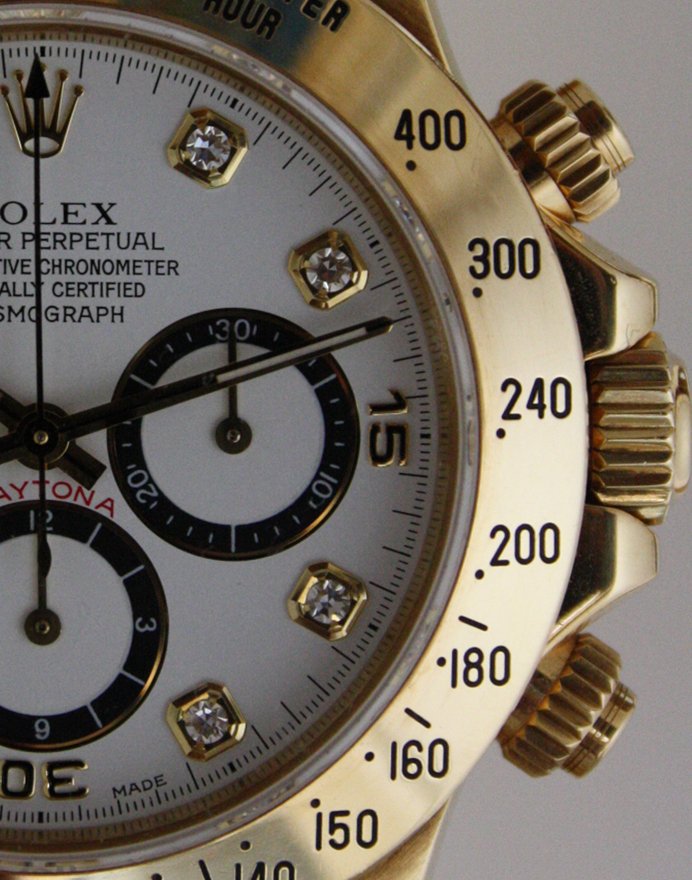
Pushers are the buttons flanking the crown on a chronograph. The top one, at two o’clock, starts and stops the stopwatch. The bottom one, at four o’clock, resets it. That is the entire job description, and the whole romance of the chronograph lives or dies on how those two buttons feel under your thumb. A pusher with a crisp, confident click makes a thirty-dollar quartz chrono feel like an instrument. A mushy one makes a five-figure Swiss piece feel like a gumball machine prize.
The layout we all know took decades to settle. Louis Moinet built the first chronograph in 1816 for tracking the stars, and Nicolas Rieussec commercialized one in 1821 so King Louis XVIII could time horse races, but those were pocket instruments. The wrist chronograph arrived in the 1910s, and early ones cheated: Longines’ 13.33Z of 1913 used the crown itself as the pusher. Gaston Breitling gave the wrist chronograph a separate pusher at two o’clock in 1923, and his son Willy added the second pusher at four in 1934. That three-pusher arrangement, crown in the middle, start/stop above, reset below, has been the industry standard for ninety years. When something survives ninety years of watch design fads, it is either perfect or everyone is too tired to argue.

A pilot chronograph with classic pump pushers at two and four. Press, click, done. Photo: Wikimedia Commons, CC0 (public domain).
Pump pushers versus screw-down pushers
The ordinary kind is the pump pusher: a spring-loaded plunger you press straight in, like a doorbell. Simple, reliable, and honest about what it is. The fancier kind is the screw-down pusher, which wears a threaded collar that locks it against the case. Locked down, the pusher cannot be pressed and water cannot sneak past it, which is why dive-rated chronographs use them. To time anything you first unscrew both collars, which turns every lap time into a small ceremony.
The famous example is the Rolex Daytona. When Rolex gave the Daytona a proper Oyster case with the reference 6240, screw-down pushers came with it, and they have stayed ever since: every modern Daytona still makes you unscrew before you time your pasta. Plenty of other chronographs never bothered or quietly dropped the idea, because screw-down pushers add faff to the exact moment you want speed, and almost nobody takes a chronograph diving anyway. There is a real tradeoff here between water resistance on paper and usability on the wrist, and different brands have answered it differently. Neither answer is wrong. One of them is just more annoying at the track.
Corrector pushers
There is a second species of pusher that does not time anything. Calendar watches, the ones with day, date, month, or moonphase displays, usually have small recessed pushers spaced around the case flank, one per display. They sit nearly flush so you cannot press them by accident, and you operate them with a wooden toothpick or a stylus, advancing each calendar indication with a careful prod. They are fiddly by design: the whole point is that a bump against a doorframe should not advance your moonphase by a day. If you own a perpetual calendar, you already know the quiet dread of these little buttons, and the special stylus lives in the box for a reason.
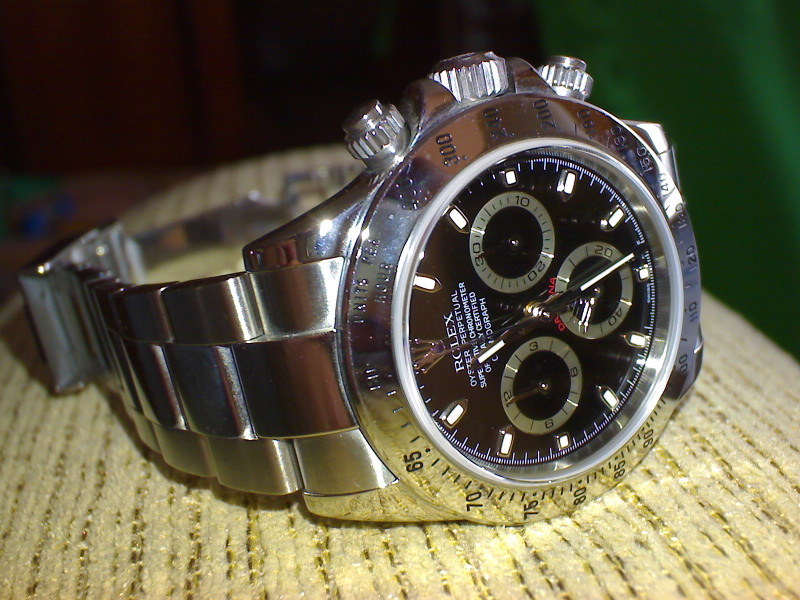
The Daytona’s screw-down pushers, locked against the case. Unscrew to time, screw back down to swim. Photo: Wikimedia Commons, CC BY-SA 3.0.
Feel is a quality signal
Ask anyone who handles a lot of chronographs and they will tell you: you can judge a movement by its pushers. A well-made chronograph gives you a short, positive travel and a clean break, the mechanical equivalent of a good keyboard switch. A cheap one feels long, vague, and gritty, like pressing an elevator button in a tired hotel. Some of that comes down to the chronograph mechanism itself: column-wheel movements are generally praised for a smoother, more deliberate pusher action than simpler cam-actuated ones, which is part of what you are paying for. You do not need to know which system is inside to use the test. Thumb knows.
Why it matters
Pushers are the interface of the most popular complication in watches. The chronograph is many buyers’ first mechanical complication and often their only one, and the pushers are where the romance either lands or evaporates. They are also a compact lesson in design tradeoffs: pump versus screw-down is water resistance versus convenience, recessed versus proud is safety versus usability, and every brand draws those lines somewhere slightly different. Press the buttons. The watch is telling you what it thinks of you.
Thanks for reading this.

