
Moritz Grossmann is a small independent watch maker in Glashütte, Saxony, founded on November 11, 2008 by the watchmaker Christine Hutter under the name of a Glashütte pioneer who died in 1885. It is a revival, with more than a century between the original and the new company. Hutter secured the name with her family’s help, presented a first watch in 2010 and inaugurated a manufacture in Glashütte in 2013.
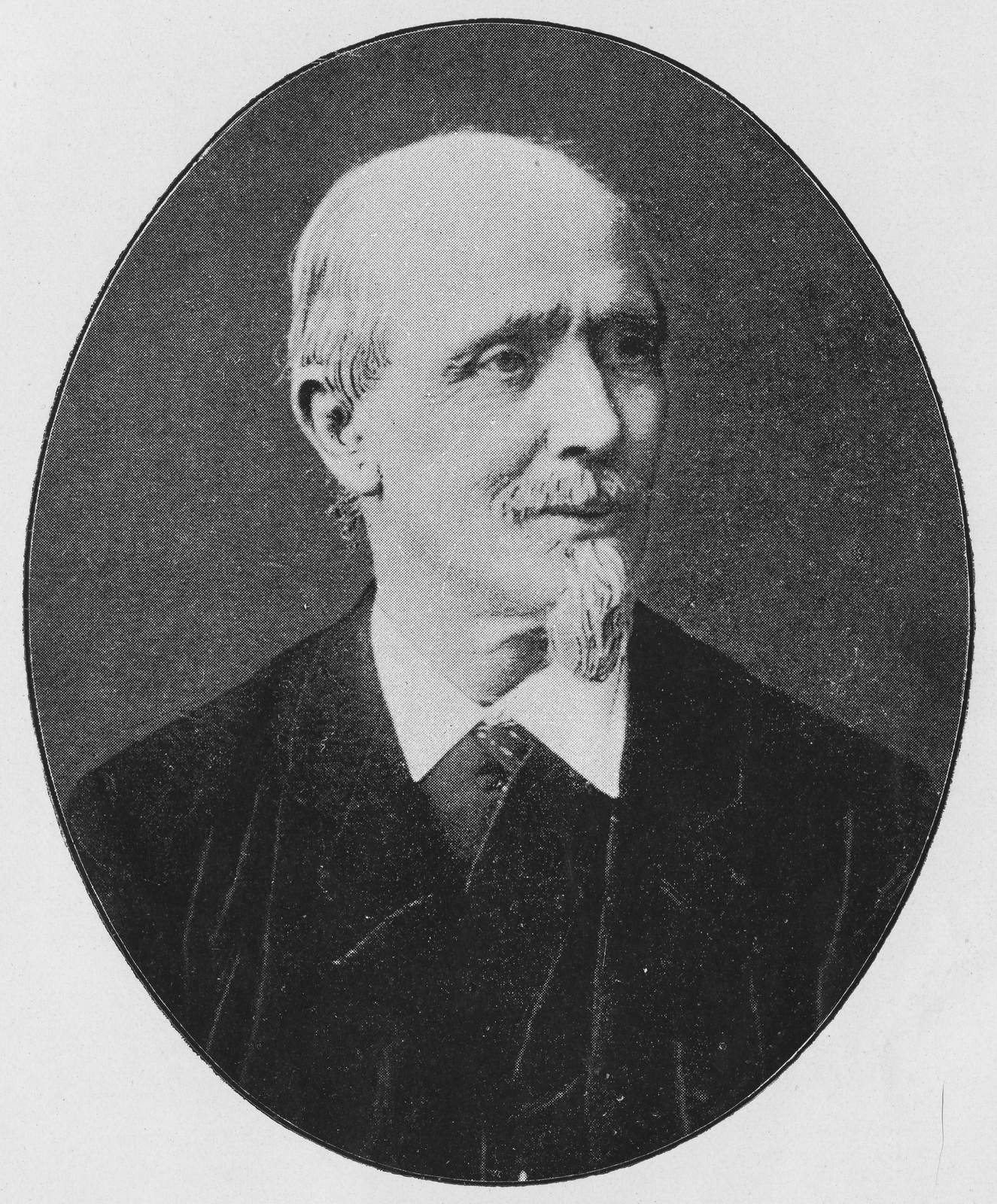
Portrait of Karl Moritz Grossmann (1826 to 1885). Photo: Wikimedia Commons, public domain.
A watchmaker who wrote
Moritz Grossmann was born in Dresden on March 27, 1826. After his journeyman years he returned to Saxony in 1854. In 1866 his treatise on the detached lever escapement won a prize from the British Horological Institute in London, and in 1876 he was elected a representative of the Royal Saxon Landtag. In 1878 he initiated the German School of Watchmaking in Glashütte and outlined its curriculum, and he wrote a pocket dictionary for watchmakers. He died unexpectedly on January 23, 1885, after a speech on world time.
A name found in Glashütte
Christine Hutter was born in Eichstätt in 1964 and trained as a watchmaker in Munich. Her career included Wempe, Maurice Lacroix, Glashütte Original and A. Lange & Söhne, and she became managing director of Haute Horlogerie Schindler SA in Switzerland. She moved to Glashütte in 1996, where she came across the Moritz Grossmann name and set out to build a business under it. Her family helped her acquire the trademark rights, and contacts she had made in Switzerland helped her launch. On November 11, 2008 she founded Grossmann Uhren GmbH in Glashütte.
The first watches
The company presented its first watch of the new era, the Benu, in 2010. In 2013 the manufacture building at Uferstrasse 1 in Glashütte was inaugurated, and the Benu Power Reserve, the Atum family and the Benu Tourbillon followed. The Tefnut and Tefnut Lady came in 2015, the Atum Pure and Tefnut Pure in 2016 and the Atum Date in 2017. In 2018 the company marked its tenth anniversary. At that point Hutter said it made fewer than 500 watches a year, with a goal of no more than 1,000 and growth in small, healthy steps. Nearly all work is done in house.

Memorial plaque for Karl Moritz Grossmann in Glashütte, his adopted hometown. Photo: Wikimedia Commons, CC BY-SA 3.0.
A hammer instead of a rotor
The Atum Hamatic was shown as a prototype at Baselworld 2018 and released in 2019. Its caliber 106.0 has a pendulum mass shaped as a hammer, a heavy gold head on a fine stem that winds in both directions. Because its weight sits farther from the axis than a central rotor’s, it produces high torque, and a special ratchet lets movements of about five degrees wind the mainspring. The movement beats at 3 Hz with a 72-hour power reserve. The case is 41 mm wide and 11.35 mm high, and the watch launched in rose or white gold at 44,800 euros. The dial recalls Grossmann’s historical pocket watches, including the pear-shaped hour hand tip. The hands are made in the manufacture and annealed to a brown-violet hue.
Sources
- History, Moritz Grossmann
- “Ten years of Moritz Grossmann,” Quill & Pad
- “Moritz Grossmann Atum Hamatic,” Time and Watches
Thanks for reading this.
From the Dispatch: