
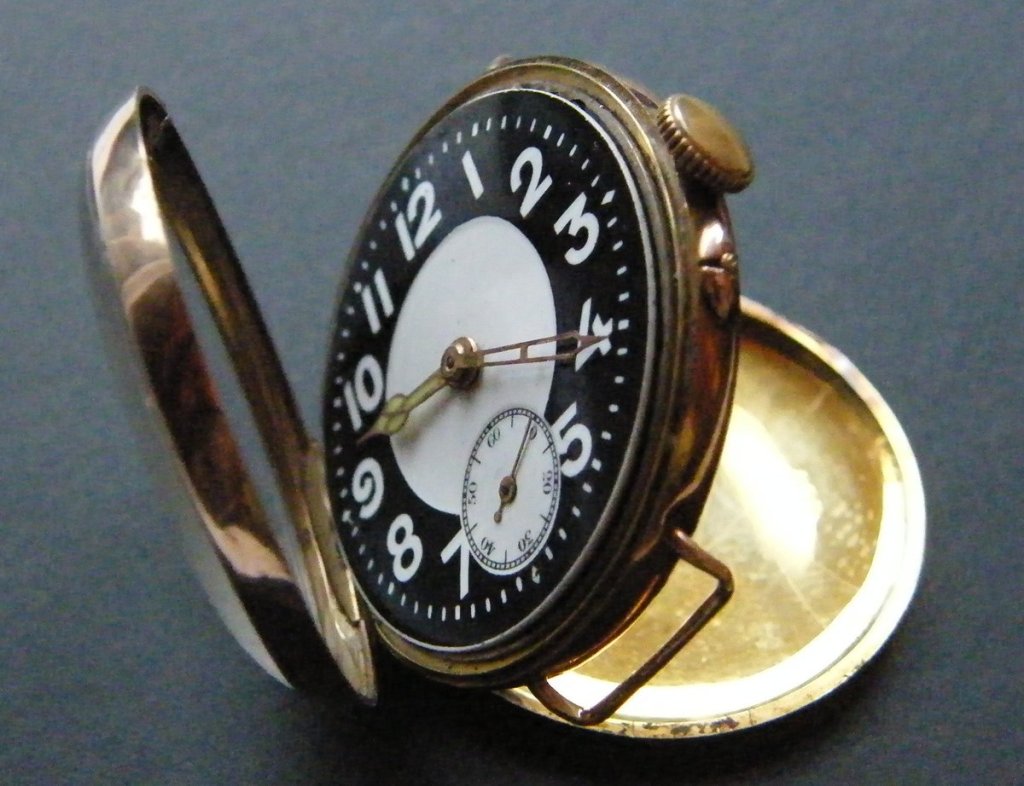
On June 8, 1810, the workshop ledger of Abraham-Louis Breguet recorded an unusual commission: a “montre bracelet,” an oblong repeating watch meant to be worn on the wrist, for Caroline Murat, the Queen of Naples and Napoleon’s youngest sister. It was delivered in 1812. The watch itself is lost. The ledger entry survives, and with it, the earliest documented purpose-built wristwatch in history.
That sentence needs unpacking, because the history of the wristwatch is about half documentation and half marketing. What follows is the documented part, with the lore labeled as lore.
The Queen of Naples watch
Caroline Murat was one of Breguet’s best clients, and the 1810 commission was characteristically extravagant: a thin oblong repeater, worn on a wristlet of hair and gold thread. Breguet’s archives record the order and the delivery. What the archives cannot tell us is what it looked like in any detail, because the watch disappeared long ago and no drawing survives. Breguet, the brand, understandably claims the first wristwatch on the strength of this entry. The claim is fair as far as it goes: nobody has produced an earlier documented commission for a watch designed from the start to be worn on the wrist. But “first” in watch history usually means “first we have paperwork for,” and the paperwork here is one ledger line for a lost watch. It counts. It just counts with an asterisk.

Abraham-Louis Breguet, painted around 1800. His workshop ledger holds the earliest documented commission for a purpose-built wristwatch. Photo: Wikimedia Commons, public domain.
A century of jewelry
For the next hundred years, the wristwatch was women’s jewelry, full stop. The pieces were called wristlets, small watches on bracelets, and no serious man wore one. Men wore pocket watches. The wrist was for ladies, and a gentleman strapping a watch to his wrist would have looked as odd as a gentleman carrying a parasol. Patek Philippe’s museum holds a bracelet watch made in 1868 for a Hungarian countess, the Countess Koscowicz, which is often cited as the first Swiss wristwatch. (More on Patek Philippe here.) There are older claims. An arm-worn watch given to Elizabeth I by the Earl of Leicester in 1571 gets cited a lot. But these were one-off jewels with clockwork inside. The wristwatch as a category belonged to women.
The navy order
The first time anyone made men’s wristwatches in quantity, it was for the military. Girard-Perregaux is traditionally credited with delivering 2,000 wristwatches to officers of the German Imperial Navy in 1880. This comes from the brand’s own history, and historians have noted the lack of independent documentary evidence, so treat it as disputed rather than settled: a widely repeated claim about a real production order, for real naval officers, in 1880, decades before wristwatches went mainstream. An officer needs his hands free and the time visible, which is the same logic that would later sell the wristwatch to everyone else. (More on Girard-Perregaux here.)
The aviator
Then came the story every watch brand wishes it had. Alberto Santos-Dumont was a Brazilian in Paris, rich, charming, and obsessed with flying: first airships, then the box-kite aeroplane he called the 14-bis, which made the first powered flight in Europe in 1906. He was friends with a young jeweler named Louis Cartier. The famous story is that Santos-Dumont complained he could not check his pocket watch while both hands were busy flying, so in 1904 Cartier made him a flat, square wristwatch on a leather strap. Cartier put the Santos into commercial production in 1911, and it has been in the catalog, in some form, ever since. (More on Cartier here.)

Alberto Santos-Dumont, photographed around 1901. The famous story says he asked his friend Louis Cartier for a watch he could read while flying. Photo: Wikimedia Commons, public domain.
How much of that story is exactly true is hard to say. The 1904 piece was a one-off gift for a friend. The product launch came in 1911, and Cartier has had over a century to polish the telling. But the bones are solid: Santos-Dumont was real, the friendship was real, the 1904 watch was real, and the commercial Santos of 1911 is documented. It is the rare piece of brand lore that survives contact with the archives more or less intact.
Why it matters
The wristwatch spent its first century as a curiosity: a queen’s jewel in 1810, ladies’ bracelets for decades, a naval experiment in 1880, an aviator’s custom piece in 1904. Every one of those was a commercial dead end. What finally put the watch on men’s wrists was a war. Millions of men needed the time at a glance and came home unwilling to give it up. (That is the next chapter.) The lesson is one the watch industry keeps relearning: the winning form factor is rarely the most elegant one. It is the one that fits the job people are actually doing.
Thanks for reading this.

