
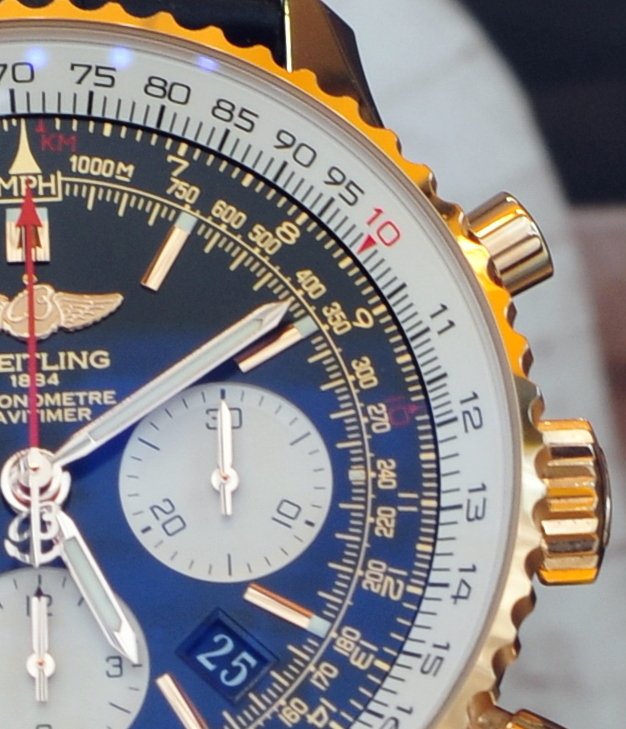
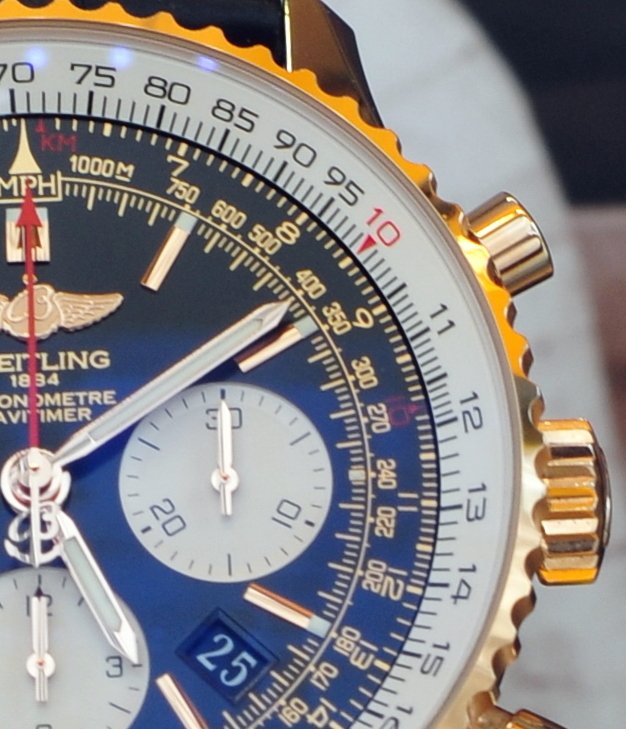
A chapter ring is a separate ring, distinct from the dial itself, that carries the hour markers, the minute graduations, or both. It sits at the perimeter of the dial, flat or sloped, bridging the space between the dial’s edge and the case. The sloped ring carrying minute markers on a Seiko diver is a chapter ring, as is the ring carrying a tachymeter scale around a chronograph dial. The part is defined by two things together: it is its own component, and the markings that tell the time are on it rather than on the dial plate.
The word chapter is old. It comes from clockmaking, where the hours on a dial were called chapters and the ring that carried them was the chapter ring. Antique clock references define it as a separate metal plate on the face of a clock, wheel-shaped, sitting on top of the dial plate, and often silvered or enamelled to contrast with the background behind it.
How it works
A chapter ring is made, printed, and finished as its own part, then fitted over or around the dial during assembly. Modern chapter rings are usually metal or plastic, printed with their graduations, and sometimes lumed. Vintage examples were brass, silvered, or enamel. Because the ring is separate, it can differ from the dial in color, material, and finish, and it can be replaced or refinished during a service without remaking the dial beneath it.
Position creates its working conditions. The ring sits at the edge of the crystal, where fingers and case knives pass during servicing, so chapter rings are handled more roughly than dial centers and tend to show wear first. A vintage diver with a clean dial and a worn minute track is showing that difference in exposure.
The chapter ring is routinely confused with the rehaut, and the distinction is functional. A chapter ring carries markings used to tell time, usually minute or hour graduations. A rehaut is the flange between dial and crystal; it may be blank, it may carry branding, as on a Rolex flange engraved with repeated lettering, or it may be pressed into service carrying a scale. One physical part can do both jobs, sitting where a rehaut sits while carrying a chapter ring’s graduations, which is where the blurred usage comes from.
The graduations themselves are normally printed on the ring rather than applied to it, which keeps the ring thin and its production simple: one printed component instead of a ring carrying a dozen fitted markers. Printing also lets the ring change character independently of the dial, so the same basic dial can be paired with a plain minute track, a colored track, or a timing scale by changing a single part. That interchangeability is a direct result of the ring being separate, and it is one of the practical reasons manufacturers kept the construction long after dial printing alone could have done the whole job on a flat surface.
History
The chapter ring begins with a reading problem on clocks. A longcase clock is read from across a room, so its hours need size and contrast that the dial plate alone did not always give. Making the time-telling zone a separate ring, in its own material, answered that: a silvered or enamelled ring against a darker or plainer plate puts contrast exactly where the hours are. Seventeenth-century longcase clock dials, such as those by Joseph Knibb, show the settled form: a distinct ring, in a contrasting finish, carrying the hours on top of the dial plate.
Separateness had a second benefit in the hand-made era. A ring could be replaced or refinished without remaking the whole dial, which mattered when every dial was made individually. The construction logic, one component for the surface and another for the graduations, was established on clocks before watches adopted it.
Watches inherited the concept directly. Early wristwatches and pocket watches often carried their numerals on a distinct outer ring, for the same reasons the clocks had: the design of the dial simplifies when the time-telling zone is its own component in its own material. As dial printing improved and mass production favored fewer parts, the separate ring retreated from ordinary watches and survived where it still solved a specific problem.
Two modern uses kept it in production. On dive watches, the dial is crowded with large luminous markers and has no clean space for a minute track; a sloped chapter ring, angled to catch light, carries the minutes on its own plane, in its own color, and can be lumed or replaced independently. On chronographs, a tachymeter scale needs more room than the dial can spare, so the scale moves to the ring around it and the dial stays uncluttered. A further step appears on compressor-style dive watches such as the Longines Legend Diver, where a rotating 60-minute scale sits on an internal ring turned by a second crown: a chapter ring made adjustable, so the timing mark can be set against the minute hand.
Where it stands now
The chapter ring is now a specialist component rather than a default one. It is standard equipment on dive watches in the Seiko pattern, sloped and printed with minute markers; it carries tachymeter and other timing scales on chronographs; and it appears in rotating internal form on compressor-style watches. On most other watches its job has been absorbed by printing directly on the dial or by markings on the rehaut. The identification test remains the original one: if the graduations sit on a ring that is a separate part from the dial, that ring is a chapter ring, whatever angle it sits at and whatever it is made of.
Sources
Thanks for reading this.