
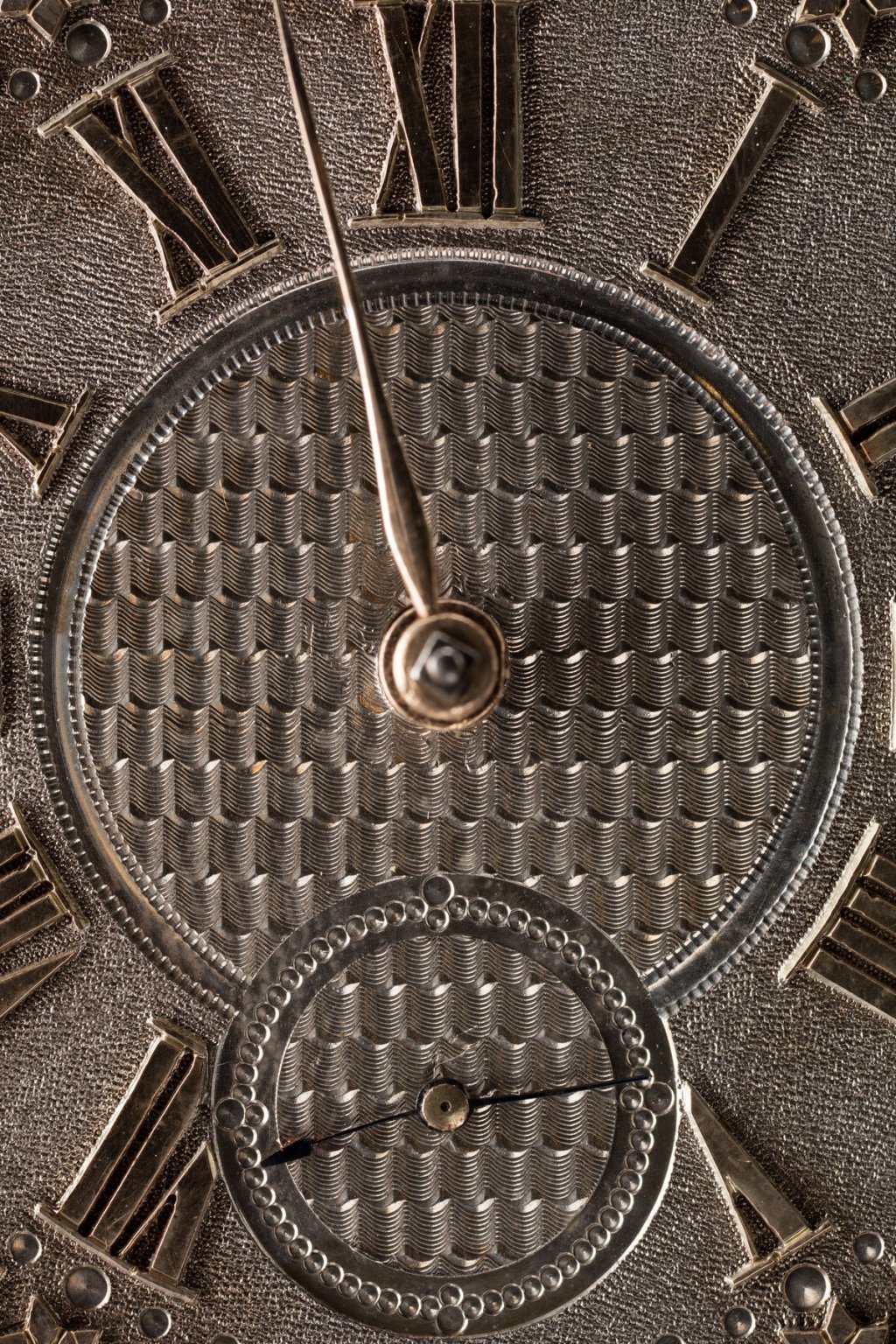
Small seconds is a little sub-dial, usually sitting at 6 o’clock, with its own slim hand circling once a minute. It is the oldest way to put a seconds display on a watch, inherited directly from the pocket watch, and it remains the dressiest way to do it. If central seconds is the sporty default, small seconds is the quiet traditionalist in the corner who was here first.

An open-face pocket watch with subsidiary seconds: the layout every small-seconds wristwatch descends from. Photo: Wikimedia Commons, CC BY 2.0.
Inherited from the pocket
Pocket watches put their seconds in a sub-dial because the movement layout gave them no choice. In a traditional movement, the fourth wheel, the one that turns once per minute, sits off to the side of the center, so the natural place for a seconds hand is wherever that wheel’s arbor pokes through the dial, which worked out to 6 o’clock. Railroad chronometers and marine watches all used this layout, and when the wristwatch took over in the early 20th century, it simply carried the arrangement along. Many early wristwatches were literally converted pocket-watch movements strapped to a wrist, sub-dial and all. Small seconds was not a design decision. It was just how watches were built.
The military made it the rule
During the Second World War, the British Ministry of Defence ordered purpose-built wristwatches from twelve Swiss makers, the famous “Dirty Dozen,” delivered in 1945 and marked W.W.W. for wrist watch waterproof. The specification demanded a black dial, Arabic numerals, luminous hands, and small seconds at 6 o’clock. The seconds display was not decorative. Soldiers needed to synchronize watches to the second, and a running seconds hand was the only way to confirm the watch was actually alive and keeping time. Omega, Longines, IWC, and Jaeger-LeCoultre were among the twelve suppliers, and those little sub-dials are a big part of why the Dirty Dozen watches remain so collectible today.
How it works
Mechanically, small seconds is the easy version. The fourth wheel already turns once per minute, so the watchmaker just extends its arbor up through the dial and puts a hand on it. No extra gearing, no added friction, no redesign of the movement. This is exactly why central seconds took so long to become standard: putting the seconds hand in the middle requires either an extra wheel train or a movement designed around it from the start. Small seconds was the default because it was free. It still is, which is why you find it on hand-wound dress watches where thinness and simplicity matter more than a big sweeping hand.
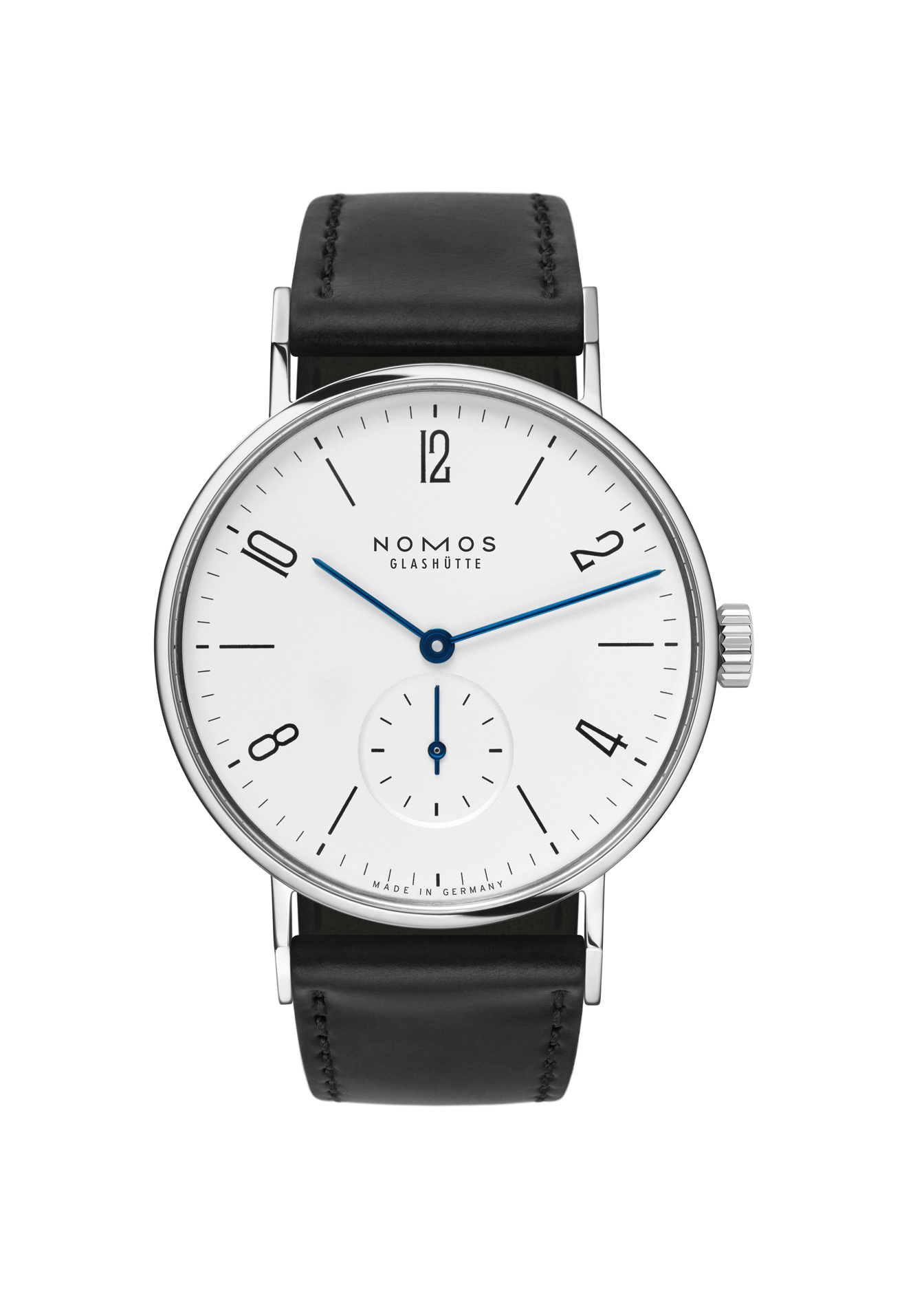
The Nomos Tangente, made since 1992: small seconds as Bauhaus design, not nostalgia. Photo: Wikimedia Commons, CC BY-SA 4.0.
Why it matters
Small seconds matters because it is the visual signature of the traditional dress watch. A sub-dial at 6 balances the dial, breaks up the empty space, and signals that the watch was designed rather than merely assembled. Modern makers like Nomos have built entire design languages around it. And in an age when most people check the time on a phone, a little hand circling a sub-dial once a minute is a pleasingly stubborn way to insist that seconds are still worth displaying properly.
Thanks for reading this.

