
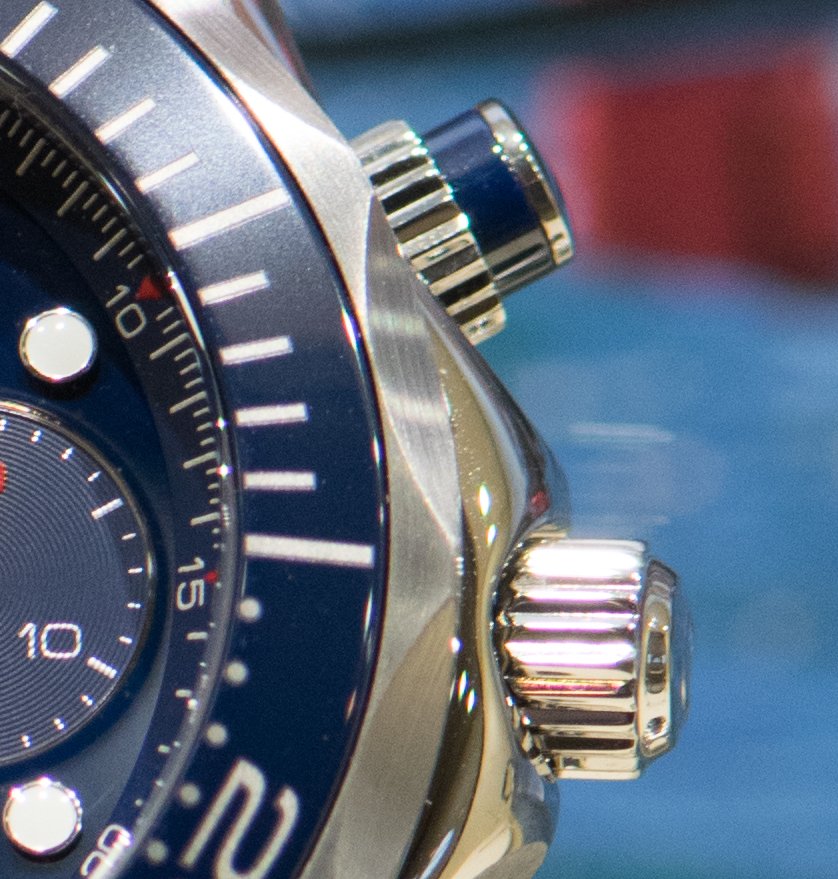
A screw-down crown is exactly what it sounds like. Instead of just pushing in against a spring, the crown threads onto a tube set into the case, like a tiny jar lid, compressing its gaskets as it seats. To use the watch you unscrew the crown counterclockwise until it pops out to the winding position. You wind, you set, you push the crown back in, and you screw it down again. It is a small ritual, and like all small rituals it feels fussy until it becomes automatic, at which point you will find yourself unscrewing imaginary crowns on watches that do not have them.
The idea is nearly a century old. When Rolex introduced the Oyster in 1926, the headline feature was a crown that screwed down against a gasket, which the brand claims made it the first truly waterproof wristwatch. The modern systems, though, date to the 1950s. Rolex’s own literature says it developed the Twinlock crown in 1953, with a double sealing system, and fitted it to the first Submariner. The third-generation system, the Triplock, arrived in 1970 on the Sea-Dweller, the brand’s professional deep-diving watch, and spread to the Submariner in 1977. Today it equips all of Rolex’s divers and a good number of its other sport models.

A Rolex Submariner ref. 16610, fitted with the Triplock crown: three gaskets, good for 300 metres. Photo: Wikimedia Commons, public domain.
How it actually seals
The magic is less in the screwing than in the gaskets. On the Twinlock system there are two of them: one inside the crown that presses against the top of the tube when screwed down, and one inside the tube, around the winding stem, that keeps sealing even when the crown is unscrewed. That second gasket also steadies the stem, which is why a Twinlock crown feels more precise than a simple push-pull. The Triplock adds a third sealed zone, a second O-ring inside the tube that Rolex describes as acting like an airlock, keeping out water and even fine particles if the crown somehow works loose underwater. Rolex marks the systems on the crown itself: Twinlock crowns generally carry a line or one or two dots under the coronet, while Triplock crowns traditionally feature three dots, with variations depending on the metal. It is one of the few times the tiny engraving on your watch is genuinely useful information rather than decoration.
Which watches need one, and which do not
Dive watches are generally expected to have them, and anything rated to 100 metres or beyond will usually have a screw-down crown, with screw-down pushers and caseback to match. There are exceptions: plenty of tough 200-metre digitals get by with gasketed push-in crowns and do just fine.
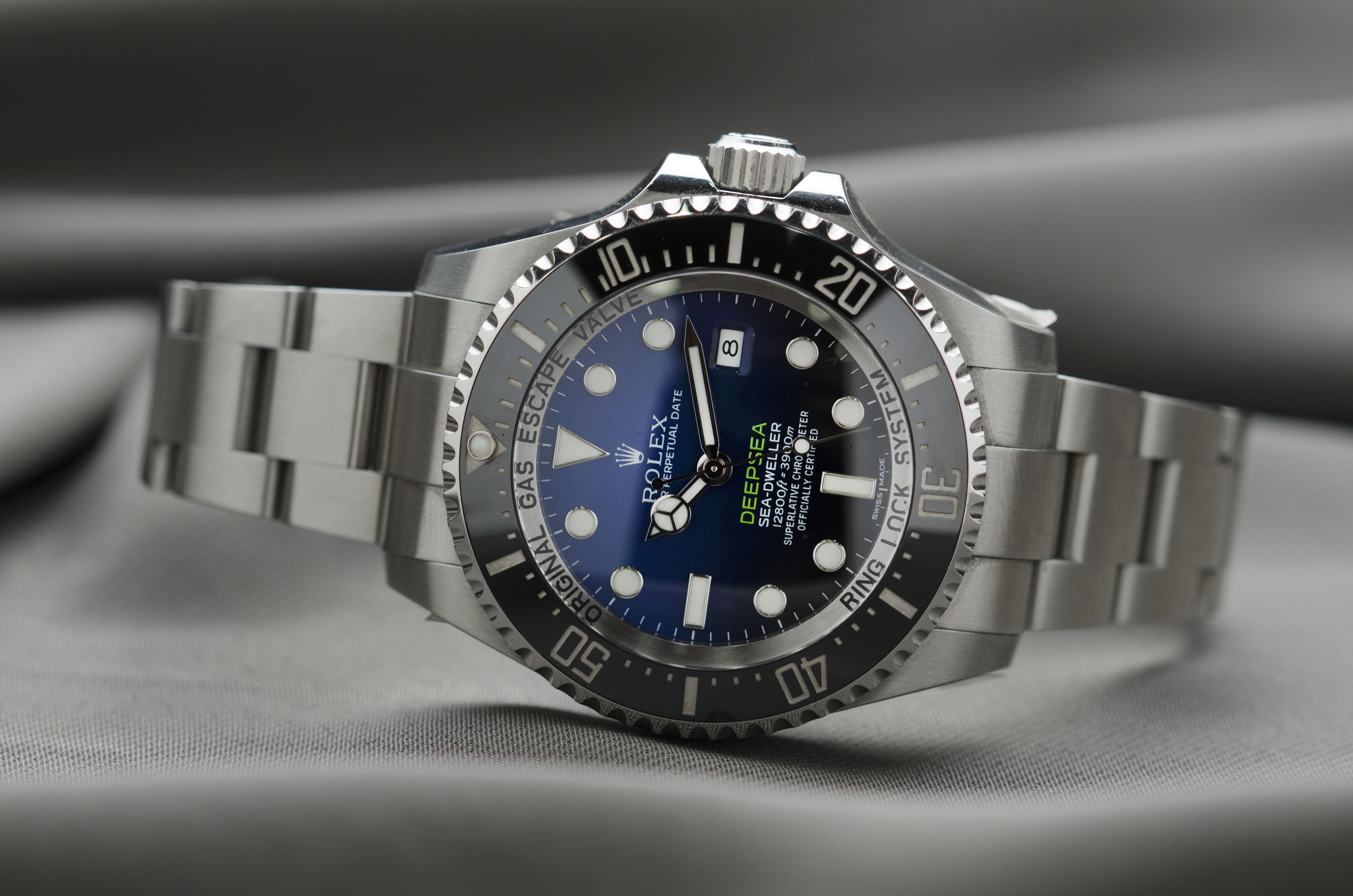
The Rolex Deepsea Sea-Dweller, with the Triplock triple-sealed crown and a 3,900-metre rating. Photo: Wikimedia Commons, CC0 (public domain).
The ritual, and how to not ruin it
Unscrew counterclockwise until the crown releases with a small pop. Never force it. If it feels gritty, rinse the watch first, because grinding dried salt or sand into the threads is how tubes get chewed up. Wind or set as needed, then push the crown firmly in and screw it down clockwise, finger-tight. Finger-tight is the whole specification. You are sealing gaskets, not torquing a lug nut, and overtightening just wears the threads faster.
The real danger is cross-threading: starting the crown at a slight angle so the threads grind instead of engaging. Do that repeatedly and you will strip the tube, which is a watchmaker repair, not a DIY fix. The old trick is to turn the crown counterclockwise first, with light inward pressure, until you feel the threads drop into place with a faint click, then screw down clockwise. It takes two seconds and it is the closest thing watch ownership has to a sacred practice. Also worth knowing: because of that second gasket in the tube, a Twinlock or Triplock crown still seals somewhat even when unscrewed, per Rolex. Do not treat this as permission to swim with the crown open. Treat it as a safety net for the one time you forget.
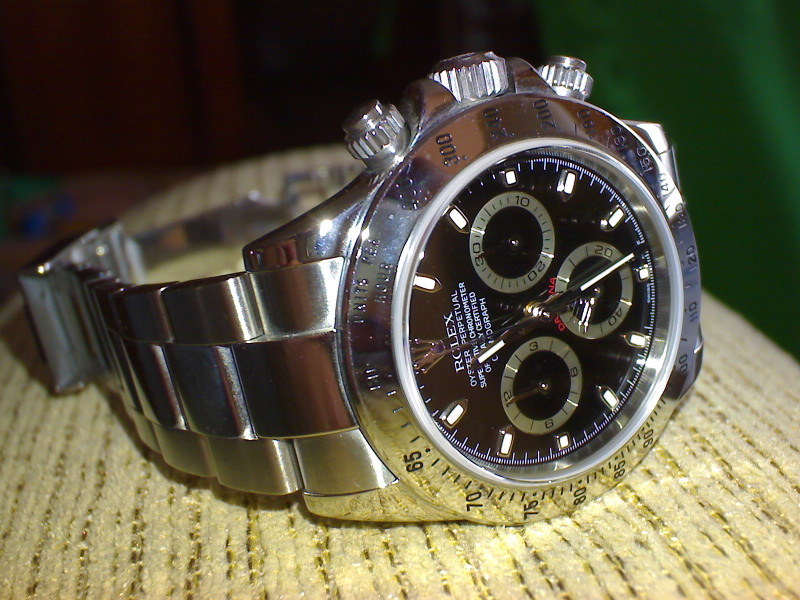
A Rolex Daytona. The crown screws down, and so do its pushers, which is why operating one feels like a small pre-flight checklist. Photo: Wikimedia Commons, CC BY-SA 3.0.
Why it matters
The screw-down crown is the reason your dive watch can be a dive watch. It turned the crown from the weakest seal in the case into a non-issue, and the screw-down crown is one of the most common solutions for achieving substantial water resistance in conventional watches, particularly dive watches. It is not the only solution, though, and the rating ultimately depends on the complete case and sealing system. It also asks something of you, which is the interesting part: a few seconds of attention, every time, done correctly. Watches are full of features that demand nothing. This one demands a ritual, and it rewards the ritual by keeping the ocean out. That seems like a fair trade.
Thanks for reading this.

