
One piece of metal
A monocoque case is machined from a single piece of metal. There is no separate caseback. The movement goes in through the front, after the crystal is removed, which makes these watches “front loaders.” The crown, which normally passes through the case wall, is handled with a two piece winding stem that splits apart so the movement can slide in and out.
The whole point is sealing. A conventional case has a seam where the caseback meets the middle case, and every seam is a place water can get in, sealed only by a gasket and crossed fingers. Remove the caseback and you remove that seam. For a watch built to go deep underwater, that is a real advantage, not a marketing story.
The Tuna, the king of the monocoque
The most famous monocoque watch is the Seiko 6159-7010, the “Grandfather Tuna,” released in 1975. Seiko’s engineer Ikuo Tokunaga set out to build a true professional saturation diving watch, and the result was enormous, titanium, rated to 600 meters, and machined as a single piece. An L-shaped gasket sealed the front, and a ceramic-coated shroud wrapped the case, which is where the tuna can nickname came from. It ran the automatic caliber 6159, making it one of the very few mechanical Tunas.
The quartz Tunas that followed kept the monocoque approach. The Golden Tuna and the black “Darth Tuna” are one piece monocoque titanium cases with no caseback to speak of, and that uninterrupted back is pure business, as one collector put it: a solid slab of metal with the tsunami wave and the Seiko markings engraved right into it. No seam, no gasket, no debate.

A conventional screw-down caseback. The seam around its edge is exactly what a monocoque case does away with. Photo: Wikimedia Commons, CC BY-SA 4.0.
Other travelers on the one piece road
The Tuna is the headline act, but it is not alone. Developed around 1970 and commercially introduced in 1971, Omega’s enormous Seamaster 600 Ploprof, built for professional divers, used a monobloc case for the same reason Seiko did: one fewer seam between the watch and the ocean. A handful of vintage dress and military watches were made as one piece cases too, usually for the same sealing logic, and the idea keeps resurfacing in modern reissues whenever a brand wants to make a point about water resistance.
It never became the standard, and the reason is serviceability. A front loader is a pain to work on. The watchmaker has to remove the crystal, split the two piece stem, and handle the movement through the dial side, all of which takes special tools and patience. A screw down caseback comes off in seconds. The industry voted with its repair benches, and the multi piece case won, which is why monocoques feel like such odd, stubborn objects. They are. That is the appeal.

A conventional three part case, front and back. The monocoque throws the back plate away entirely. Photo: Wikimedia Commons, CC BY-SA 4.0.
What it is not: the Rolex Oyster
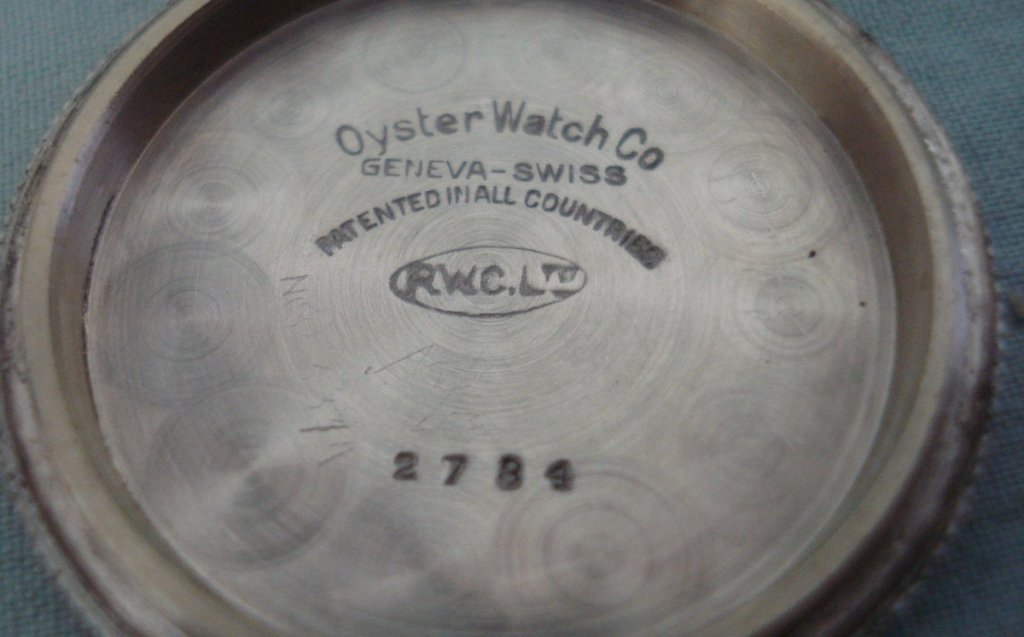
Here is a point worth getting right, because it gets mangled constantly. The early Rolex Oyster, launched in 1926, was a screw-back case, not a monocoque. It had a separate caseback that screwed down with a threaded ring, and a screw down crown. That was revolutionary enough in 1926, when most watches were about as waterproof as a paper bag. But a threaded caseback is still a caseback. The Oyster made watches water resistant with threads and gaskets, not by eliminating the back. Do not let anyone tell you otherwise.
Why it matters
Monocoque cases are a lesson in engineering trade-offs. You gain the best possible seal and lose easy service, and the whole history of the idea is brands deciding, one watch at a time, that the seal was worth the trouble. They are also a useful reality check when shopping: when a brand brags about water resistance, ask where the seams are. A watch with one fewer seam is telling the truth in metal, which is rarer than you would think.
Thanks for reading this.

