
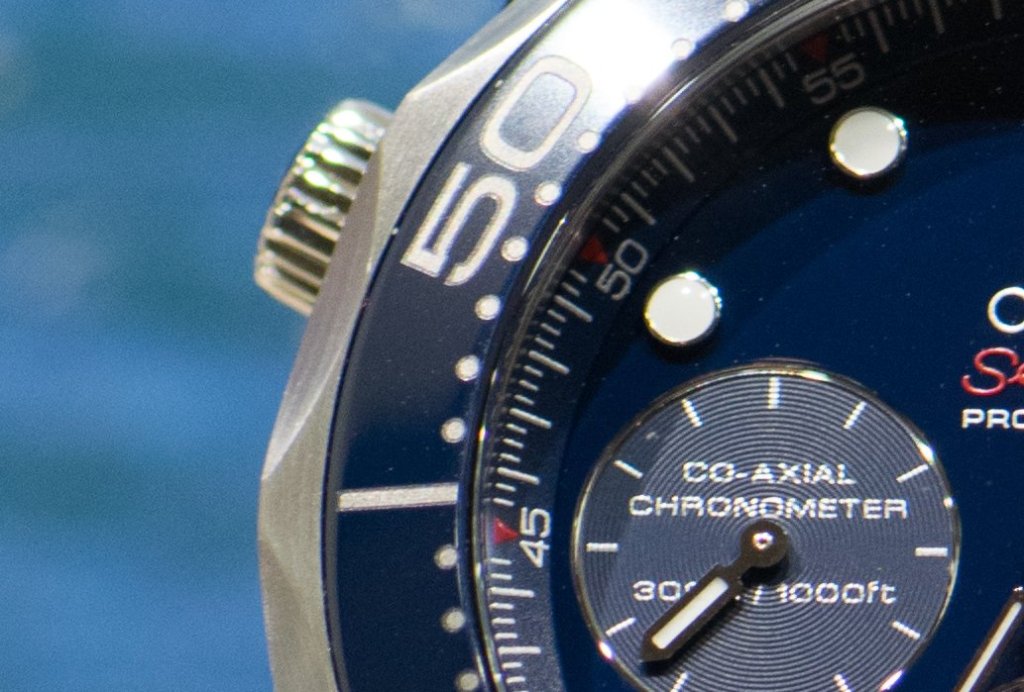
A helium escape valve is a tiny one-way valve set into the side of a dive watch case, and its entire job is to let helium out. If you have never needed to let helium out of your watch, congratulations: you are exactly like nearly everyone who owns one. To understand why this little valve exists at all, you have to go somewhere most watch owners will never go, which is a pressurized metal tube on the seafloor, breathing a gas mixture that is slowly turning your watch into a bomb.
The background is saturation diving. When divers work at great depth for days at a time, they live in pressurized habitats and breathe heliox, a controlled helium-oxygen mix. Replacing nitrogen with helium reduces the risk of nitrogen narcosis and the work of breathing dense gas at depth, and the oxygen concentration has to be carefully controlled too. The catch is that helium is a monatomic gas, and its small atoms can diffuse through sealing materials and microscopic pathways that would otherwise keep water out, and over hours and days they seep straight through the watch’s gaskets and into the case. Helium does not hurt the movement. The problem comes during decompression, when the pressure outside the watch drops faster than the trapped gas can escape. The case is built to resist crushing outside pressure, not bursting inside pressure, and the crystal can pop clean off. This is not theoretical. It happened to divers’ watches, which is how the valve got invented.
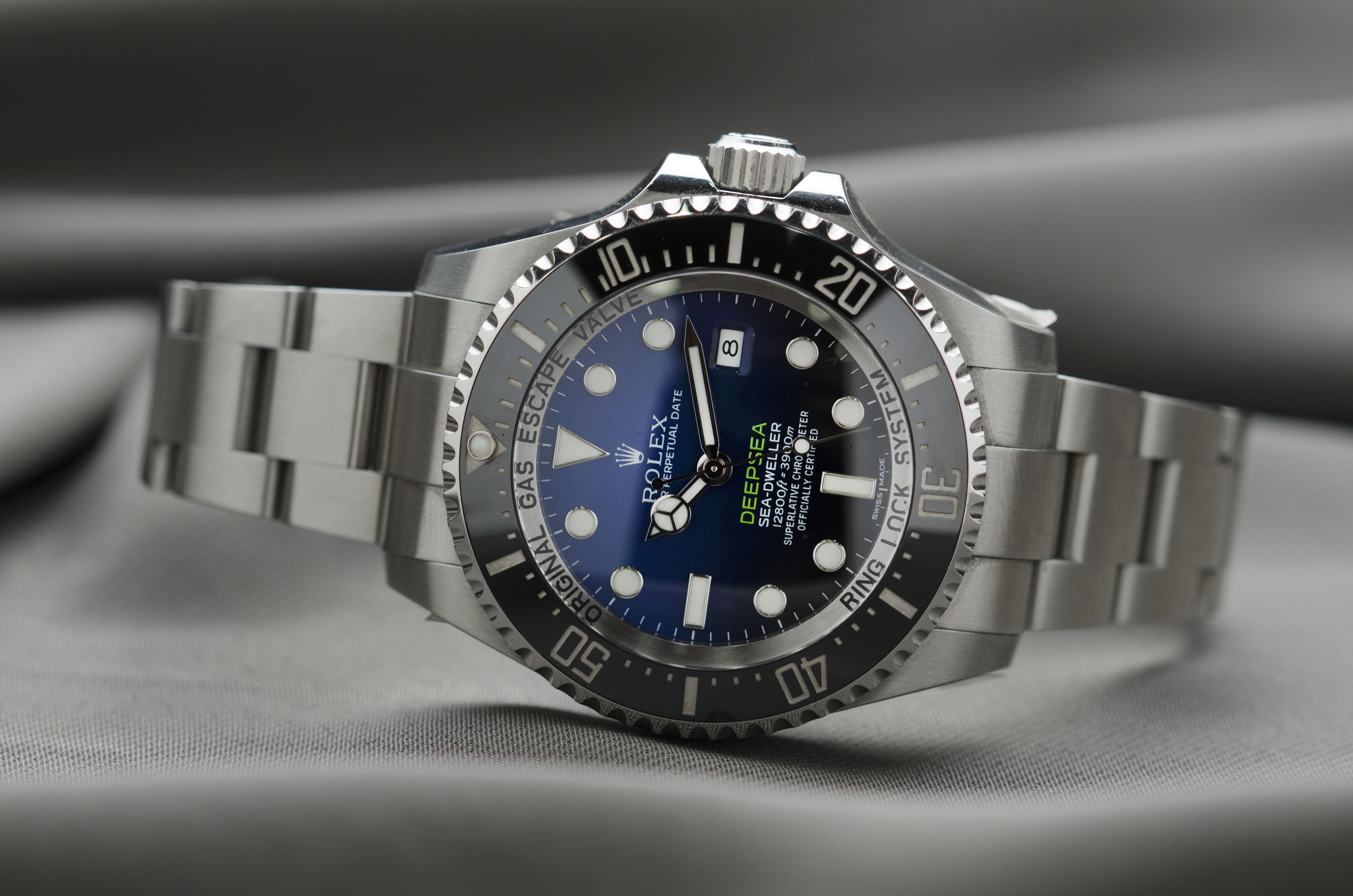
The Rolex Deepsea Sea-Dweller carries a helium escape valve as part of its 3,900-metre professional kit. Photo: Wikimedia Commons, CC0 (public domain).
Who invented it
The original idea came from Robert A. Barth, a US Navy diver who pioneered saturation diving during the SEALAB missions of the 1960s and watched what pressure differentials did to equipment. In the watch world, two brands ran with it in parallel: Rolex and Doxa, who developed the valve together. Rolex filed its helium-valve patent on November 6, 1967, with Swiss publication following in 1969. The Doxa SUB 300T Conquistador, which Doxa dates to 1968, was the first dive watch available to the public with a helium valve fitted, which means Doxa technically beat Rolex to market even though Rolex filed first. The Sea-Dweller, meanwhile, was developed with COMEX, the French deep-diving company whose divers actually lived the saturation life, and it arrived in 1967 as the professional answer to a problem most divers would never encounter. There is something admirable about that, and something funny.
How it works
The Rolex and Doxa approach is automatic: a small spring-loaded valve that stays shut under normal conditions and opens when the difference between inside and outside pressure grows strong enough to overcome the spring. Gas vents, pressure equalizes, the crystal stays put. You do nothing. You will probably never even know it happened, which, given the price of the watches that carry it, is either reassuring or a little sad.
Omega took a different path with a manual valve. On Seamaster models that have one, it sits at ten o’clock, looking like a second small crown, and after a saturation dive you unscrew it yourself to vent the case. It is simpler mechanically and it gives the owner something to do, which Omega presumably counts as a feature. Both approaches solve the same problem. Only one of them trusts you to remember.
Do you need one?
My read is that for essentially every owner, the helium escape valve is marketing. Saturation diving is a tiny, specialized profession, and the number of valve-equipped watches that will ever see the inside of a diving bell rounds to zero. The valve adds a hole in the case, which is darkly funny for a feature whose job is protecting water resistance, and it adds cost and complexity to solve a problem you do not have. Even Omega seems to agree these days: when it redesigned the fourth-generation Seamaster Planet Ocean 600M in 2025, the helium valve was removed. When the brand that spent decades putting a second crown on its dive watches decides you do not need it, that is about as close to an official verdict as this industry produces.

The Submariner is rated to 300 metres and has never had a helium escape valve, which rather makes the point. Photo: Wikimedia Commons, public domain.
Why it matters
The helium escape valve matters for two reasons, and only one of them is helium. The first is historical: it is a genuine piece of professional diving history, born from Navy experiments and COMEX saturation work, and the Doxa-Rolex development race of the late sixties is one of the better stories in tool-watch lore. The second is what it teaches you about reading a spec sheet. When you see a feature engineered for an environment you will never visit, you are looking at marketing wearing a lab coat, and learning to spot that is one of the most useful skills in this hobby. The valve is real engineering. It is just engineering for somebody else.
Thanks for reading this.

