
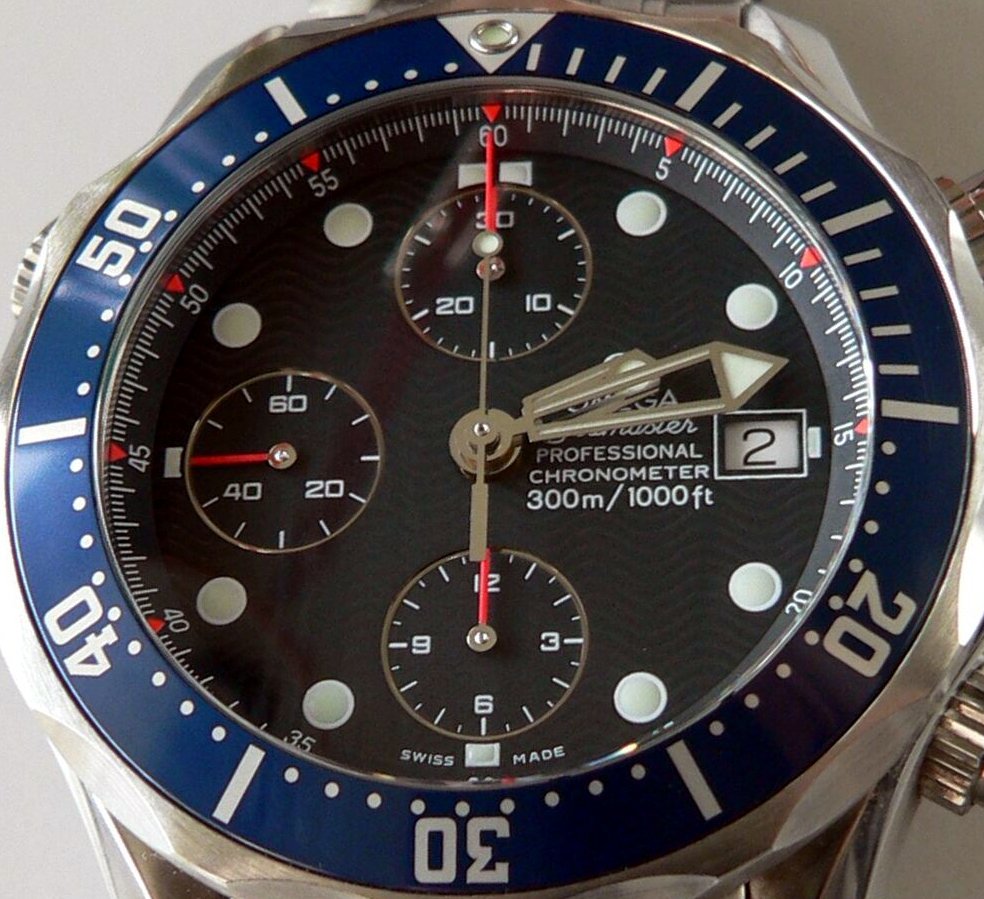
The bezel is the ring around the crystal. On a dress watch it is decoration, a polished frame that sets off the dial the way a mat sets off a photograph. On a tool watch it is an instrument, something you grip and turn to measure the world. Either way, it is the part of the watch you handle most and look at first, which makes it strange how little attention it gets compared to dials and movements. Ask a collector about their watch and you will get twenty minutes on the caliber. Ask about the bezel and you get a shrug, though it is the first thing to show wear and often the most expensive part to replace.
The bezel’s double life starts here: it is the easiest part of a watch to make functional. The case has to be sealed, the dial has to be legible, the movement has to keep time, but the ring around the outside is just sitting there, begging for a job. Some watches gave it none, and those are the slim polished bezels on dress pieces, there to catch light and look expensive. Others gave it everything. The modern tool-watch bezel was born on dive watches in the early 1950s, when the Rolex Submariner arrived with a rotating ring marked in sixty minutes so a diver could time an ascent. Turn it to align zero with the minute hand, and you can read elapsed time at a glance, even through a dive mask. It is one of those designs so obviously correct that every dive watch since has been a variation on it.

The Submariner’s unidirectional dive bezel: sixty minutes, one direction only, readable through a dive mask. Photo: Wikimedia Commons, public domain.
The great bezel families
Dive bezels turn in one direction only, and the reason is pure safety logic. If you knock a bidirectional bezel mid-dive, it might show more elapsed time than has actually passed, telling you that you have air you do not have. A unidirectional bezel can only be knocked toward less time, which cuts your dive short instead of extending it. Early dive bezels turned both ways; the industry eventually settled on one direction because the failure mode mattered. It is a small detail that encodes a genuine respect for consequences.
The GMT bezel is the colorful one. When Rolex introduced the GMT-Master in the mid-1950s, it paired a 24-hour hand with a rotating 24-hour bezel, red for day and blue for night, the famous “Pepsi” colors. The original ref. 6542 wore a bakelite insert that looked fantastic and cracked if you looked at it wrong; Rolex switched to aluminum in 1959 and ceramic in 2007, each step trading a little soul for durability. The bezel still rotates both ways on a GMT, since misreading it will not drown you, it will just make you call home at 3 a.m.

A GMT-Master II ref. 16710. The red-and-blue “Pepsi” bezel is the famous variant of the rotating 24-hour ring. Photo: Wikimedia Commons, CC BY-SA 3.0.
Then there is the tachymeter bezel, the slide-rule ring on racing chronographs like the Daytona, marked so you can compute speed from elapsed time over a measured mile. In the smartphone age it is functionally a fossil, which is precisely why people love it.
Materials
Bezels have been made from nearly everything: polished steel, brushed steel, aluminum inserts, bakelite, ceramic, even sapphire and diamond-set rings on the dressy end. Each material tells you when the watch was made. Bakelite means early GMT and handle with care. Faded aluminum, gone ghostly gray or tropical brown, means decades of sun and commands a premium from collectors who fetishize wear. Ceramic, Rolex’s Cerachrom and its equivalents, means modern: nearly scratchproof, nearly fadeless, and, the traditionalists grumble, nearly characterless. They have a point and they are also wrong, which is the usual state of bezel discourse.
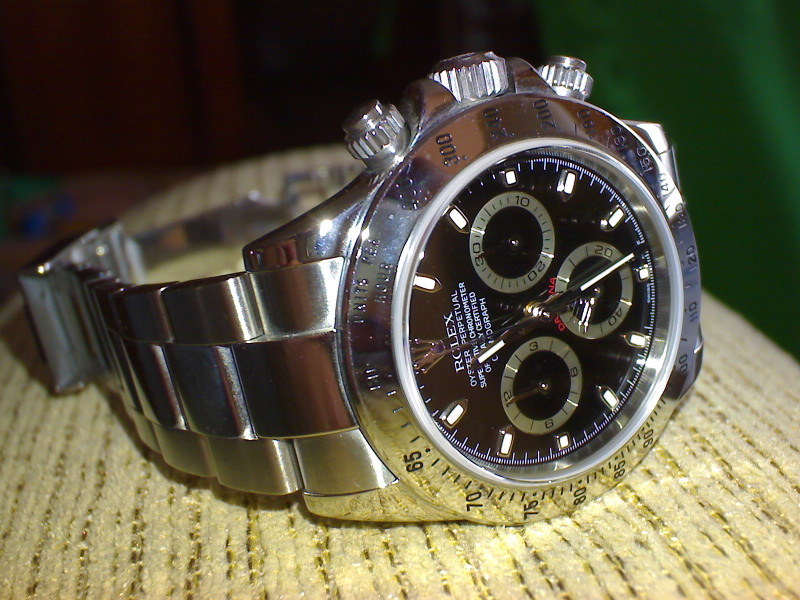
The Daytona’s tachymeter bezel, for computing speed the analog way. Photo: Wikimedia Commons, CC BY-SA 3.0.
The three bezel types
This article is the overview. The Reference splits bezels three ways, by how they behave rather than what they measure. Fixed bezels do not move: the polished rings on dress watches, the tachymeter rings on most racing chronographs, decoration or scale but not adjustable. Rotating bezels turn, whether the one-way dive ring or the two-way GMT ring, and the direction they turn is doing real work. Internal bezels live under the crystal, turned by a second crown or a pusher, which keeps them safe from knocks at the cost of fiddly setting. Each has its own article.
Why it matters
The bezel is the most-handled part of your watch, the first thing to show wear, and the component most likely to tell a stranger what the watch is for before they read a single word on the dial. It is also where a huge amount of watch history is hiding in plain sight: bakelite to aluminum to ceramic is the story of materials science, one-way versus two-way is the story of safety engineering, and the tachymeter is the story of a world that used to do math with jewelry. Give the bezel its due. It has been doing quiet work for seventy years while the dial took all the credit.
Thanks for reading this.

